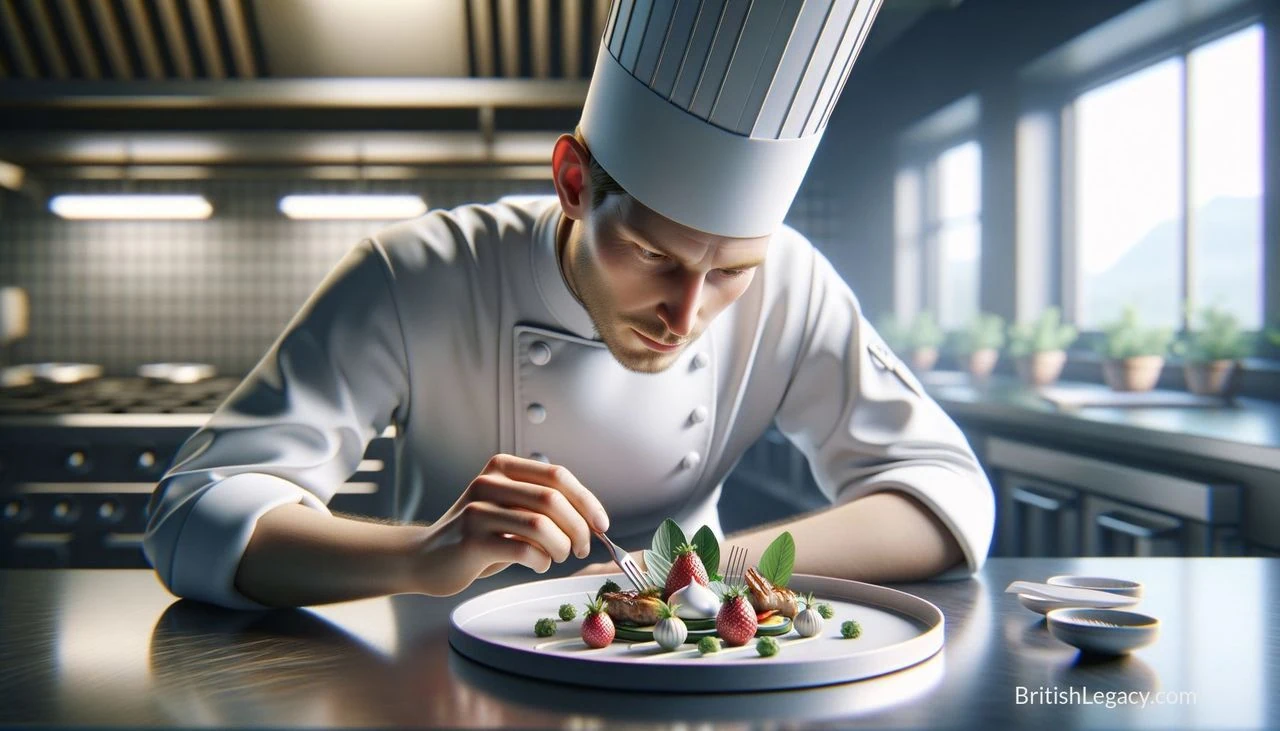
At Morston Hall in Norfolk, Galton Blackiston’s cooking is closely associated with the county’s ingredients and food traditions. The restaurant, which he runs with his wife, Tracy, has held a Michelin star since 1999, according to the account of his career. Its named dishes include Norfolk duck and beef, alongside Cromer crab: regional ingredients given a place in a modern restaurant menu.
A career centred on Morston Hall
Blackiston’s career began in a series of country house hotels. The available account does not name those earlier workplaces or give dates, but describes them as the setting in which he developed his skills and appreciation of quality produce. His work at Morston Hall became the defining focus of his public culinary profile.
Morston Hall is in Norfolk, and Blackiston’s cooking there is presented as modern British cuisine with an emphasis on local and seasonal ingredients. That approach gives the menu a clear regional character. Rather than treating provenance as a passing detail, its named dishes point to Norfolk produce and to Cromer, a coastal town associated in the article with the crab used in one of them.
Duck, crab and Norfolk beef
Three dishes in particular illustrate the menu’s regional emphasis: pan-roasted Norfolk duck, Cromer crab risotto and a trio of Norfolk beef. The duck is described with seasonal vegetables, while the risotto pairs rice with Cromer crab. The beef dish brings together several cuts from the region. These examples show how a menu can draw on local names and produce while presenting them in familiar restaurant forms: a roast-meat dish, a risotto and a selection of beef cuts.
The source also characterises Blackiston as committed to local and seasonal ingredients. Seasonality means that the menu’s emphasis is not simply on where food comes from, but also on what is available at different times of year. The article associates this approach with support for local producers, although the extent of that support is not specified. What can be described more concretely is the link the named dishes make between the restaurant and its Norfolk setting.
Sharing recipes and cooking on screen
Blackiston’s work has also reached readers through two named cookbooks: Hook Line Sinker and A Return to Real Cooking. The first title suggests an interest in fish, while the second signals a broader return to everyday cooking; the available account gives no publication dates or further bibliographic detail. It describes both books as ways of conveying his culinary approach and methods. Together with his restaurant work, they place his cooking in a home-kitchen context as well as a professional one.
His television appearances have included Saturday Kitchen and Great British Menu. Those programmes gave viewers a route to encounter his cooking beyond Morston Hall. The account does not identify particular episodes or dishes shown, so the significance here is the range of settings in which his food has been presented: a restaurant, cookbooks and television programmes.
Why Galton Blackiston deserves a place in British Legacy
Blackiston’s place in a record of British food culture rests on a specific connection between a working restaurant and its regional setting. At Morston Hall, Norfolk duck and beef and Cromer crab appear in the names of dishes that define the menu’s local character. The restaurant’s Michelin star, reported as held since 1999, is part of that account of sustained work. Together, these details show how a chef can make regional produce central to contemporary British restaurant cooking, rather than treating place as decoration.
His books and television appearances extend that connection beyond the dining room. Readers can encounter his approach through Hook Line Sinker and A Return to Real Cooking, while appearances on Saturday Kitchen and Great British Menu bring his work to television audiences. The evidence supports a focused legacy: a Norfolk chef associated with local and seasonal ingredients, distinctive regional dishes and several ways of sharing cooking with the public. That is a tangible contribution to Britain’s culinary story, rooted in the food and place most clearly identified with his career.