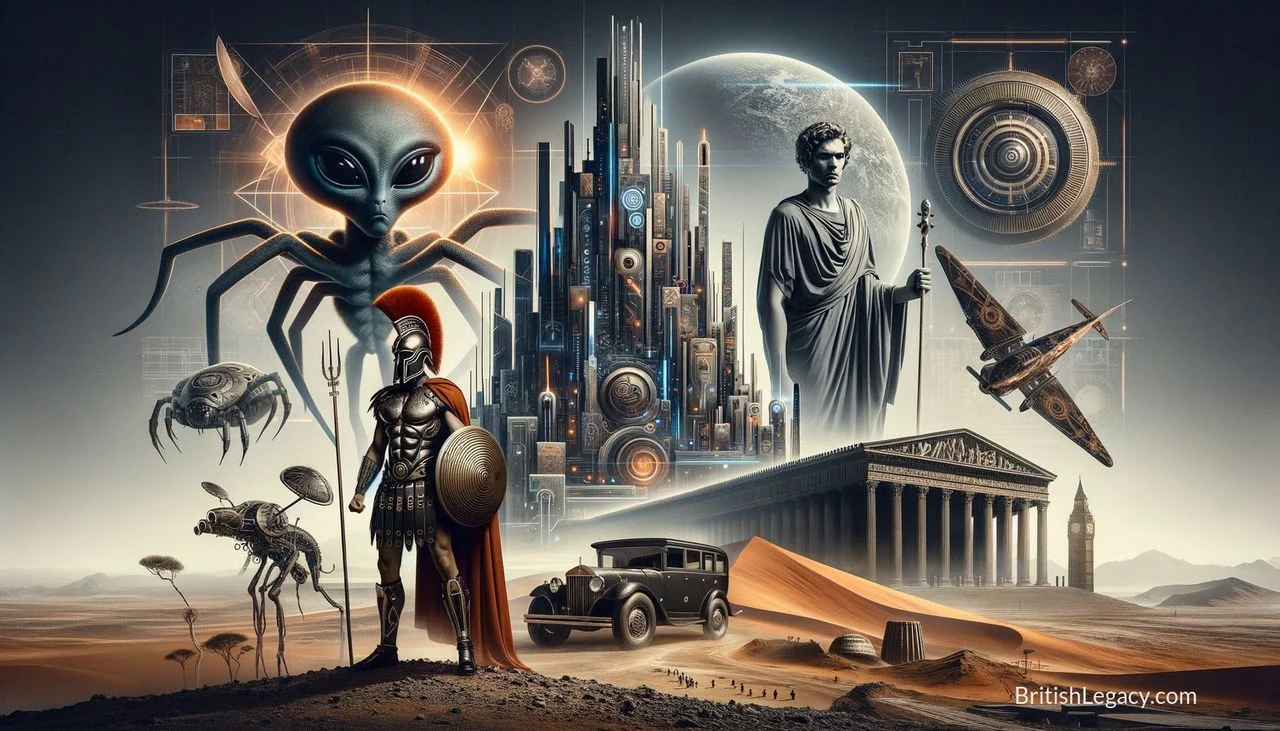
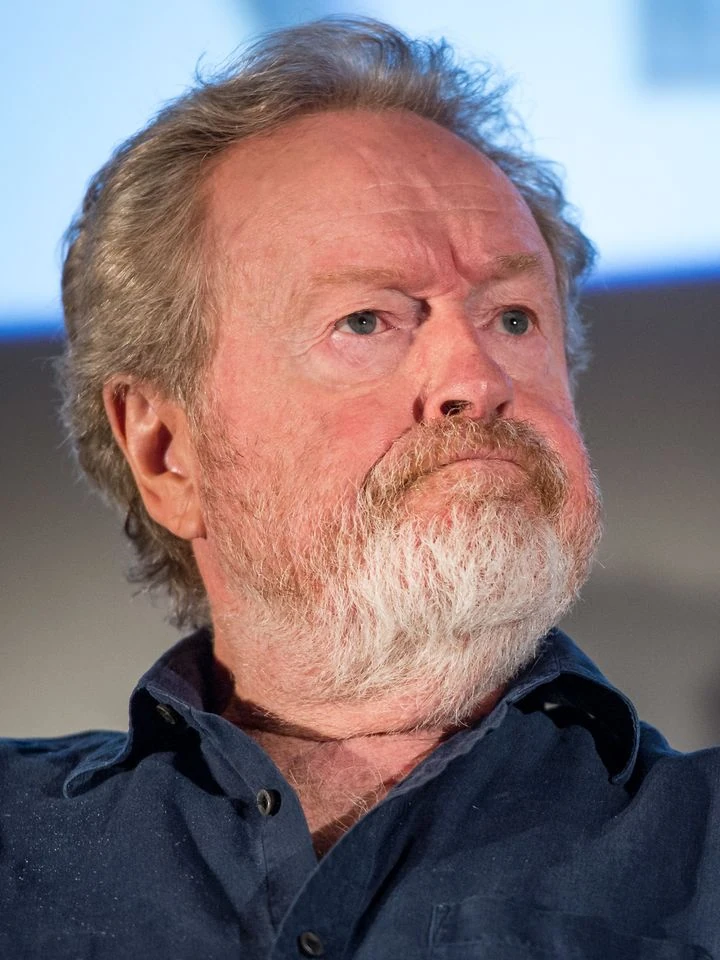
Ridley Scott’s films move between distant worlds and sharply observed human conflict, but their settings often feel tangible before a character has spoken. That attention to visual atmosphere grew out of a British career that began in art and television design, passed through the country’s advertising industry and went on to shape some of modern cinema’s most recognisable films. From Alien and Blade Runner to Gladiator, Scott has made images that stay with audiences long after the story ends.
From South Shields to the Royal College of Art
Scott was born in South Shields, County Durham, on 30 November 1937. His father, Francis Percy Scott, served in the Royal Engineers during the Second World War; his mother, Elizabeth, brought up Ridley and his brothers through years in which the family moved around England, Wales and Germany. After the war, they returned to the North-East and eventually settled on Teesside. Scott later recalled his mother’s strong influence on the household and described her as his first female role model.
He attended Grangefield Grammar School in Stockton-on-Tees and studied art at West Hartlepool College of Art before moving to London’s Royal College of Art. There he contributed to the college magazine ARK and helped establish its film department. For his final show he made Boy and Bicycle, a black-and-white short featuring his younger brother Tony and his father, filmed in West Hartlepool and Seaton Carew. Scott’s training in drawing and design would remain central to the way he planned films.
After graduating in 1963, he joined the BBC as a trainee set designer, working on programmes including the police series Z-Cars and the science-fiction anthology Out of the Unknown. In 1965 he began directing television episodes. Three years later, he and Tony founded Ridley Scott Associates (RSA), a film and commercial production company. During the 1970s Scott directed advertisements alongside filmmakers including Alan Parker and Hugh Hudson. His 1973 Hovis advert, “The Bike Ride”, filmed on Gold Hill in Shaftesbury, became a familiar piece of British television advertising. He also made Chanel No. 5 commercials, treating them as carefully designed short films.
Alien worlds and cityscapes
Scott’s first feature as a director was The Duellists (1977), a Napoleonic-era drama adapted from Joseph Conrad. Shot in continental Europe, it won an award for best debut film at Cannes. His next feature, Alien (1979), brought international recognition. Made at Shepperton Studios in England, the science-fiction horror film placed its crew in a claustrophobic industrial setting far from familiar domestic life. Scott’s decision to make Ellen Ripley a woman, played by Sigourney Weaver, gave the film a central heroine who became an enduring figure in the series.
Blade Runner followed in 1982. Its first cinema release was a commercial disappointment, but the film’s densely imagined future Los Angeles came to be widely regarded as a landmark in science fiction. Scott later supervised a restoration and a new version, The Final Cut, released in 2007. Its city imagery has been repeatedly imitated, while the film’s questions about identity and what it means to be human continue to draw discussion. The journey from a difficult first reception to lasting influence also illustrates Scott’s continuing involvement in how his films are presented to audiences.
Scott’s work in the 1980s ranged from fantasy in Legend (1985) to the romantic thriller Someone to Watch Over Me (1987) and the crime drama Black Rain (1989). He continued to make films across genres in the following decade. Thelma & Louise (1991), a road film starring Geena Davis and Susan Sarandon, became one of his major critical successes and brought him his first Academy Award nomination for best director. It also sits alongside Alien and Blade Runner among his films selected for preservation in the United States National Film Registry.
Historical scale, modern stories
Scott’s films have often shifted between periods and places without losing their close attention to designed environments. Gladiator (2000), starring Russell Crowe, combined a historical setting with the scale of a modern action film. It won five Academy Awards, including best picture and best actor, and Scott was nominated for best director. The film’s production also involved the British visual-effects and animation company The Mill. A later historical epic, Kingdom of Heaven (2005), was substantially reshaped in a director’s cut that restored material missing from its cinema version.
Other projects included the war film Black Hawk Down (2001), for which Scott received another Academy Award nomination for best director, and American Gangster (2007). In 2012 he returned to the world of Alien with Prometheus, followed by Alien: Covenant in 2017. The Martian (2015), starring Matt Damon as astronaut Mark Watney, brought science fiction back into a survival story with a lighter touch. It was a critical and commercial success and earned Scott an Academy Award nomination for best picture.
His later directing work includes The Last Duel and House of Gucci, both released in 2021, Napoleon (2023) and Gladiator II (2024). Alongside his feature films, Scott has continued to work as a producer. In 1995 he and Tony founded Scott Free Productions in Los Angeles. Their television work included the series The Good Wife; Scott was also an executive producer on The Man in the High Castle. He directed the BBC–HBO television film The Gathering Storm, about Winston Churchill in the years before the Second World War, and later directed the first season of Raised by Wolves.
A British industry with an international reach
Scott’s career connects British creative training and production with an international screen industry. His work in commercials was part of a wider movement of British directors who took experience in advertising into feature filmmaking. RSA gave him a base for that work, while his subsequent films and productions have reached audiences across cinema and television. The connection is not simply a matter of birthplace: British studios, collaborators and institutions have been part of a working life that has also been based in the United States and Europe.
He has been recognised by the British film industry as well as by international awards bodies. Scott was knighted in the 2003 New Year Honours for services to the British film industry. In 1995, he and Tony received the BAFTA for Outstanding British Contribution to Cinema; in 2018, Scott received the BAFTA Fellowship for lifetime achievement. In 2024 he was appointed a Knight Grand Cross of the Order of the British Empire for services to the UK film industry. The Royal College of Art, where he studied, awarded him an honorary doctorate in 2015.
Why Ridley Scott deserves a place in British Legacy
Ridley Scott deserves a place in British Legacy because his career shows how British art education, television craft and commercial filmmaking can feed into work with global reach. He began with design and set work, learnt to plan images as carefully as scenes, and developed that visual discipline through television and advertising before directing feature films. His achievements are specific and lasting: Alien and Blade Runner helped define influential forms of science-fiction cinema, while Thelma & Louise and Gladiator demonstrate his range across very different stories. His films’ visual worlds have become part of popular culture, and several have been recognised for preservation as culturally, historically or aesthetically significant.
His legacy also includes work beyond the director’s chair. Through RSA and Scott Free Productions, Scott helped build production companies that connected advertising, film and television; his projects have involved British studios and creative businesses as well as international partners. His honours recognise services to the UK film industry, but the value of his contribution is visible in the work itself: British-trained craft carried into films watched around the world, and a model of filmmaking in which production design and atmosphere help tell the story. That combination of local foundations and international influence makes his place in British film history clear.
Sources
Ridley Scott — Wikipedia, revision 1378714215
Adapted in part from Ridley Scott by Wikipedia contributors, under CC BY-SA 4.0. Text has been edited and combined with the existing article; this adapted text is shared under the same licence. Contributor history.