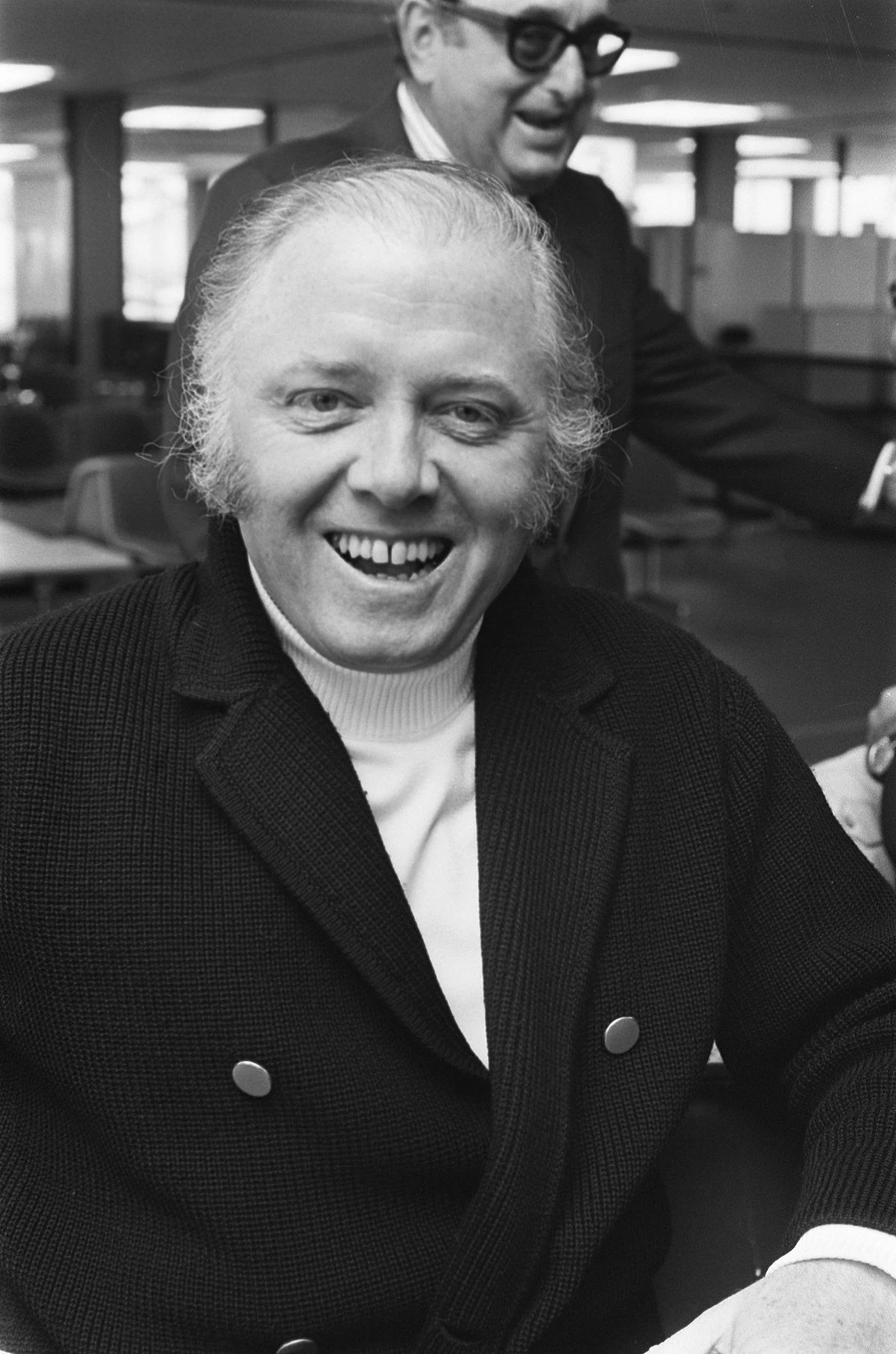
Richard Attenborough moved between acting, producing and directing, and helped bring stories of war, political struggle and personal conviction to international audiences. His career began on a Leicester stage before taking him to the West End, the Royal Air Force’s film unit and, eventually, the director’s chair. Gandhi became his best-known directing achievement, but it was one part of a working life that also included Brighton Rock, The Mousetrap, public service and sustained support for education and the arts.
From Leicester stages to the wartime screen
Born in Cambridge on 29 August 1923, Attenborough was the eldest of three sons of Mary and Frederick Attenborough. His father was an academic administrator and principal of University College, Leicester. Attenborough was educated at Wyggeston Grammar School for Boys and began acting at Leicester’s Little Theatre. His stage debut came in 1937, as Lucius in Julius Caesar. He later studied at the Royal Academy of Dramatic Art (RADA), remaining associated with the Leicester theatre as a patron.
His screen career began in 1942 with an uncredited part in Noël Coward and David Lean’s In Which We Serve. His first major credited film role was Tommy Draper in The Hundred Pound Window (1944). During the Second World War, he served in the Royal Air Force and joined its Film Production Unit at Pinewood Studios. After training, he flew on operations over Europe, filming from the rear-gunner’s position to document the results of bombing raids. He also appeared in the RAF film Journey Together (1945).
Attenborough’s early performances often cast him as a spiv or outsider. His breakthrough came as Pinkie Brown, the teenage gang leader in the 1948 adaptation of Graham Greene’s Brighton Rock, a role he had first played on stage. He continued to work steadily in British films, including comedies made by John and Roy Boulting. In The League of Gentlemen, released in 1960, he acted in a film produced by Beaver Films, the company he had formed with Bryan Forbes.
Actor, producer and West End performer
Attenborough’s acting career ranged from comic parts to sharply controlled menace. He appeared with Steve McQueen and James Garner in The Great Escape (1963), playing RAF Squadron Leader Roger Bartlett, and took leading roles in Séance on a Wet Afternoon and Guns at Batasi, for which he won the BAFTA Award for Best Actor. His portrayal of John Christie in 10 Rillington Place (1971) brought another striking change of register. Later film audiences knew him as John Hammond in Jurassic Park and its sequel, as Kris Kringle in Miracle on 34th Street, and as Sir William Cecil in Elizabeth.
The theatre remained important alongside film. In 1952, Attenborough and his wife, actress Sheila Sim, were among the original cast of Agatha Christie’s The Mousetrap. He originated the role of Detective Sergeant Trotter in the West End production, which became the world’s longest-running stage play. The couple held a share of the production’s profits. Attenborough later wrote that he sold part of his share to finance a restaurant and disposed of the remainder to help keep Gandhi afloat: the theatre’s commercial success had, in his account, helped sustain an ambitious film project.
He also built a career behind the camera. His feature directorial debut was the screen version of the musical Oh! What a Lovely War (1969), which he co-directed and produced. Young Winston (1972) followed, then A Bridge Too Far (1977), an all-star account of Operation Market Garden. The scale and variety of these projects established a directorial career alongside, rather than simply after, his years as an actor and producer.
Gandhi and the long work of directing
Attenborough spent 18 years trying to bring Gandhi to the screen. The film, released in 1982, dramatised the life of the Indian leader whose campaign of non-violent resistance helped bring about India’s independence from British rule. Ben Kingsley played Gandhi. The production’s combination of historical scale and an international story became the defining work of Attenborough’s directing career.
At the 1983 Academy Awards, Gandhi won eight Oscars, including Best Picture and Best Director for Attenborough and Best Actor for Kingsley. Attenborough also won BAFTA awards for directing and for the film, which received 16 BAFTA nominations, and Golden Globe awards for directing and best foreign-language film. The film’s achievement was not confined to awards: it placed a story rooted in India’s struggle for independence at the centre of a major British-led international production.
His subsequent films continued to take on political and biographical subjects. Cry Freedom (1987) told the story of anti-apartheid activist Steve Biko; Chaplin (1992) starred Robert Downey Jr. as Charlie Chaplin; and Shadowlands (1993) explored the relationship between C. S. Lewis and Joy Gresham. Attenborough’s final film as director and producer was Closing the Ring (2007), a love story set in Belfast during the Second World War.
Institutions, education and public life
Attenborough’s work extended beyond film production. He chaired the British Film Institute from 1981 to 1992 and served as president of RADA and the British Academy of Film and Television Arts. At the University of Leicester, he helped establish the Richard Attenborough Arts Centre, which opened in 1997 and was designed to improve access for disabled people, including as practitioners. He became chancellor of the University of Sussex in 1998 and held the position until 2008.
He supported the United World Colleges movement and was closely associated with Waterford Kamhlaba in southern Africa, where he championed non-racial education. With Sheila, he founded the Richard and Sheila Attenborough Visual Arts Centre. He also established the Jane Holland Creative Centre for Learning at Waterford Kamhlaba in memory of his daughter, who died in the Indian Ocean tsunami of 2004. For 33 years he served as president of the Muscular Dystrophy campaign before becoming its honorary life president in 2004; the charity later created a fellowship fund in his name to support clinical research and training in the UK.
A lifelong Chelsea supporter, Attenborough was a club director from 1969 to 1982 and later held senior honorary roles, becoming life president in 2008. He was created a life peer in 1993 as Baron Attenborough of Richmond upon Thames, taking the Labour whip in the House of Lords. He had been knighted in 1976 for services to film and received the BAFTA Fellowship in 1983. His other honours included India’s Padma Bhushan and recognition from South Africa for his contribution to the struggle against apartheid.
Attenborough married Sheila Sim in 1945. They had three children. Their eldest daughter, Jane, died with her mother-in-law and daughter in the 2004 tsunami; the loss was a profound blow to the family. Attenborough died at Denville Hall in Northwood on 24 August 2014, five days before his 91st birthday. At his request, his ashes were interred at St Mary Magdalene church in Richmond beside those of Jane and his granddaughter Lucy.
Why Richard Attenborough deserves a place in British Legacy
Attenborough’s place in British Legacy rests first on the range of work he made possible across British film and theatre. He began as a child performer in Leicester, became a recognisable screen actor in films such as Brighton Rock and The Great Escape, and helped produce work through Beaver Films before directing major productions of his own. His story is not simply one of a successful actor turning to directing: it shows how performance, production and business decisions could support a long-term creative ambition. His effort to finance and complete Gandhi, including through the sale of his share in The Mousetrap, makes that connection especially tangible.
His contribution also reached beyond the screen. As a leader at the BFI, RADA and BAFTA, and as chancellor of the University of Sussex, he served institutions that shape British film, performance and education. The Leicester arts centre associated with his name was designed to improve access for disabled artists and participants, while his support for Waterford Kamhlaba reflected a commitment to education without racial barriers. His work on Cry Freedom and his backing for the Muscular Dystrophy campaign extended that public engagement in different directions. These achievements give his legacy substance beyond fame or awards: they connect a major filmmaking career with institutions, access to the arts and opportunities for others.
Sources
Richard Attenborough — Wikipedia revision · Richard Attenborough — Wikipedia
Adapted in part from Richard Attenborough by Wikipedia contributors, under CC BY-SA 4.0. Text has been edited and combined with the existing article; this adapted text is shared under the same licence. Contributor history.