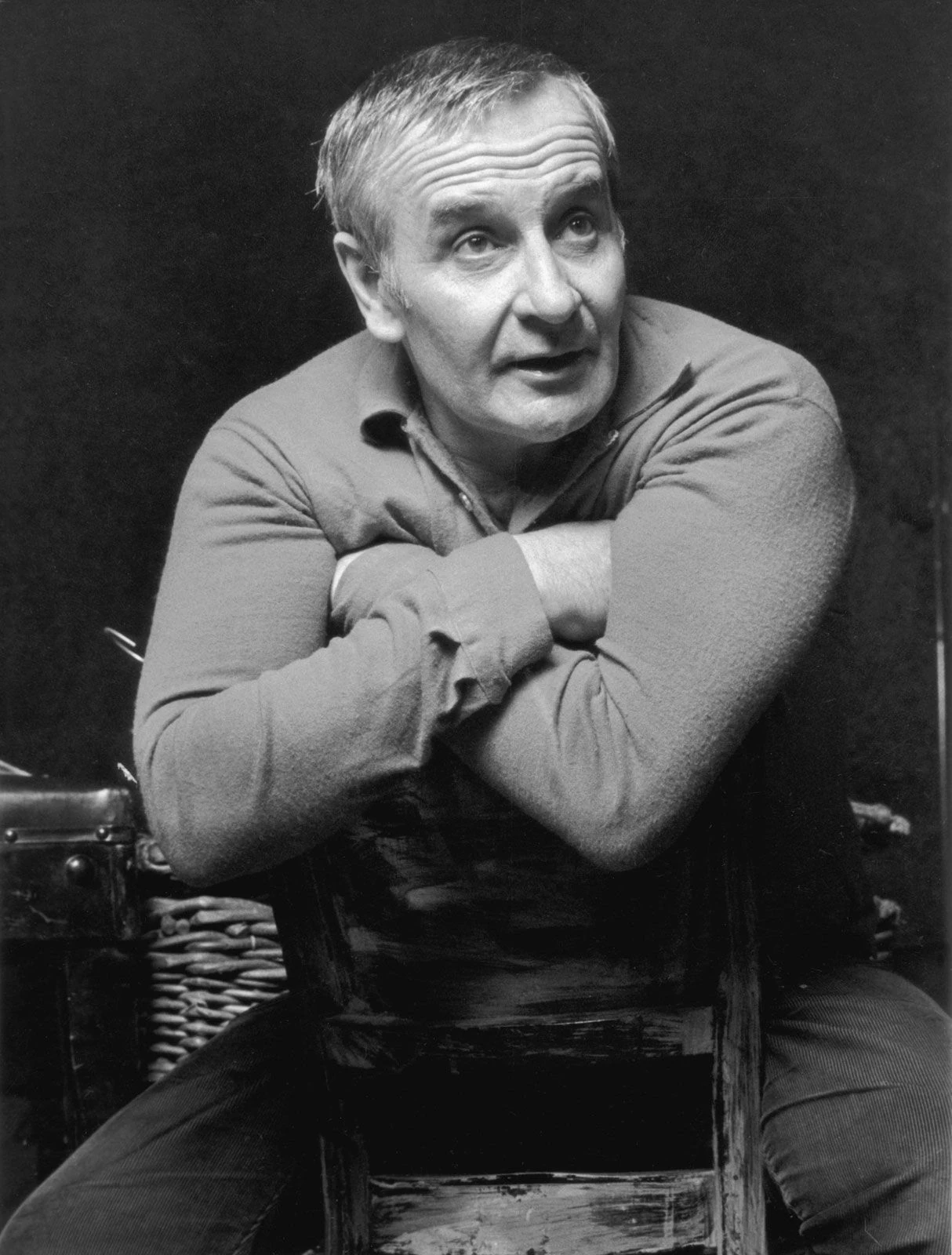
Lindsay Anderson’s films found drama in the institutions people were expected to accept: the school, the workplace, the hospital and the social order beyond them. A leading figure in Free Cinema and the British New Wave, he moved between documentary, feature film, theatre and criticism. His best-known films include This Sporting Life, if.... and O Lucky Man!; together, they show a director drawn to conflict between individual freedom and systems of authority.
From Bangalore to Oxford
Anderson was born Lindsay Gordon Anderson in Bangalore, then part of British India, on 17 April 1923. His father, Alexander Vass Anderson, was a British Army officer from Scotland; his mother, Estelle Bell Gasson, was born in South Africa. After his parents separated, Estelle returned to England with Lindsay and his elder brother. The family’s circumstances crossed countries, but Anderson’s education and later working life became closely connected with Britain.
He attended Saint Ronan’s School in Worthing and Cheltenham College, where he formed a lifelong friendship with Gavin Lambert, later a novelist, screenwriter and Anderson’s biographer. In 1942 he won a scholarship to Wadham College, Oxford. His studies were interrupted by the Second World War: he served in the British Army from 1943 to 1946, first with the 60th King’s Royal Rifle Corps and later as a cryptographer in the Intelligence Corps in Delhi. Returning to Oxford, he changed from classical studies to English and graduated in 1948.
Alongside his studies, Anderson developed as a writer on film. With Lambert, Peter Ericsson and Karel Reisz, he founded the magazine Sequence, which ran from 1947 to 1952. He later wrote for Sight and Sound and the New Statesman. His criticism was not a retreat from filmmaking: it was part of his effort to argue for cinema that took its moral and social responsibilities seriously.
Free Cinema: making room for ordinary lives
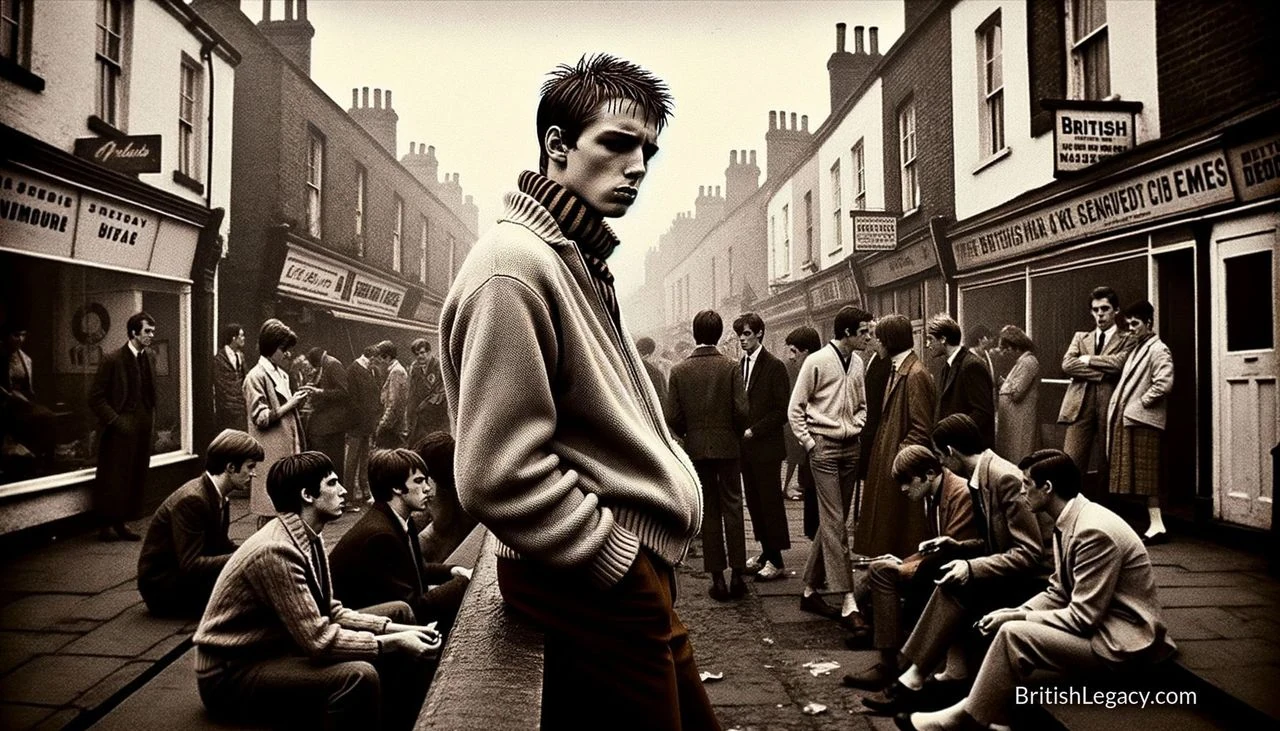
Anderson began directing with Meet the Pioneers (1948), a documentary about a conveyor-belt factory. He and Reisz organised screenings at the National Film Theatre for independently made short films, helping to shape the movement that became known as Free Cinema. Its advocates wanted British films to break away from class-bound assumptions and show life beyond metropolitan convention. Anderson’s work belonged to a wider change in British filmmaking, not simply a new style of direction.
His short documentaries looked closely at work, place and daily experience. O Dreamland (1953) observed visitors at a Margate amusement park; Every Day Except Christmas (1957) followed a day at the old Covent Garden market. In Thursday’s Children (1954), co-directed with Guy Brenton, he turned to the education of deaf children. The film won the Academy Award for Best Documentary Short. The subjects differed, but the attention to particular people and environments carried into his dramatic films.
Anderson’s first feature, This Sporting Life (1963), was adapted from David Storey’s novel, with Storey’s story of rugby league player Frank Machin brought to the screen by Richard Harris and Rachel Roberts. The film’s working-class world is shaped by physical labour, ambition and emotional strain. It drew enthusiastic reviews, but was not a commercial success. Harris and Roberts both received Academy Award nominations for their performances. Anderson’s unsentimental approach linked the film to the social realism then emerging in British cinema, while its close attention to Machin’s private life made the struggle more than a sporting tale.
Mick Travis and the institutions under pressure
Anderson’s best-known screen work is the trilogy in which Malcolm McDowell plays Mick Travis. The first film, if.... (1968), sets the discontent of pupils in an English public school against its hierarchy and discipline. Its movement between realism and surrealism gives the institution a heightened, unstable quality. The film won the Palme d’Or at the 1969 Cannes Film Festival and was a box-office success internationally. It also earned Anderson a BAFTA nomination for Best Direction.
O Lucky Man! (1973) follows Travis through a sequence of encounters and reversals in a road movie inspired in part by The Pilgrim’s Progress. Its satire ranges across ambition and corruption, but its reception was more divided: critics were polarised and its commercial performance was moderate. The trilogy’s final film, Britannia Hospital (1982), turned a hospital into the setting for a comic and unsettling fantasia. It drew on traditions including Hammer horror and Carry On comedies. The film failed critically and commercially, a difficult outcome for Anderson after the more favourable response to if.....
He continued to work across forms. In 1985 he made Wham! in China: Foreign Skies, documenting the group’s visit to China. Anderson’s own version, titled If You Were There, was not released after George Michael objected to it; Michael’s version became the released film. Anderson’s last theatrical feature was The Whales of August (1987), filmed in Maine with Bette Davis and Lillian Gish. He also acted occasionally, appearing as the Master of Caius College in Chariots of Fire (1981).
A director for the Royal Court
Anderson’s work in theatre was substantial in its own right. He had a long association with London’s Royal Court Theatre, becoming co-artistic director in 1969 and associate artistic director from 1972 to 1975. He directed new work by David Storey, including The Contractor, Home and The Changing Room. These productions connected his stage work to the same interest in class, work and social relationships that ran through his films.
His directing also reached beyond the Royal Court. He staged plays in the West End and in New York, including Home and The Kingfisher, and directed works by Shakespeare, Chekhov and Joe Orton. His theatre career was not a side note to his filmography: it made him a prominent director on both stage and screen, moving between contemporary British writers and established plays.
Television offered another, more uneven, strand of work. In the mid-1950s he directed episodes of The Adventures of Robin Hood, his first experience directing professional actors on screen, and he later directed Alan Bennett’s television play The Old Crowd (1979). He also made Look Back in Anger for television, directed the satirical miniseries Glory! Glory!, and presented a documentary about Free Cinema. His final work, Is That All There Is? (1992), was an autobiographical film for BBC television. His writing about cinema continued alongside these projects, including the book About John Ford (1981).
Why Lindsay Anderson deserves a place in British Legacy
Anderson’s British legacy rests on more than a handful of celebrated films. Through Free Cinema, he argued for a national cinema that looked beyond metropolitan and class-bound conventions. His documentaries gave screen time to places and working lives that could otherwise be overlooked, from a factory conveyor belt to Covent Garden market. That commitment to observing Britain in its varied realities helped prepare the ground for the social realism of later dramatic films. This Sporting Life brought that approach into a feature about labour, sport and ambition; if.... used a school to examine authority and rebellion, and carried its argument to an international audience.
His contribution also crossed institutional boundaries. At the Royal Court, Anderson helped bring new writing by David Storey and others to the stage, while his work in film, television and criticism kept him engaged with how stories are made and whose lives they show. His career included commercial disappointments as well as success, and his films were not received uniformly. That uneven record makes his achievement more specific, not less: he pursued work that took formal risks and confronted uncomfortable subjects rather than limiting himself to safe formulas. For British Legacy, Anderson represents a consequential strand of British cultural life—one in which independent filmmaking, socially alert theatre and critical debate developed in close conversation.
Sources
Lindsay Anderson — Wikipedia, revision 1375266677
Adapted in part from Lindsay Anderson by Wikipedia contributors, under CC BY-SA 4.0. Text has been edited and combined with the existing article; this adapted text is shared under the same licence. Contributor history.