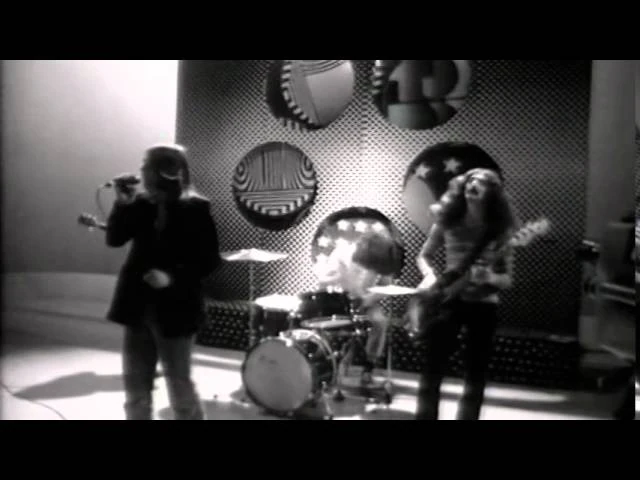
Black Sabbath made music that sounded unlike the prevailing rock of the late 1960s: slower, darker and built around riffs that seemed to press down on the listener. The band took shape in Aston, Birmingham, where Tony Iommi, Bill Ward, Geezer Butler and Ozzy Osbourne had come together after earlier groups broke up. Their route to a new sound began with practical circumstances as well as imagination. Iommi’s factory injury changed how he played guitar; a horror film gave the band a name and a song; and the four musicians’ early work soon became a foundation for heavy metal.
Their history was not a straight line from breakthrough to triumph. Black Sabbath changed singers, endured long stretches of shifting line-ups and returned to the stage in several different forms. But the music made by the original quartet in the early 1970s remained a point of reference, while the band’s later records and reunions extended its story. In 2025, Birmingham honoured the founding members with the Freedom of the City, and they played a final show together at Villa Park. The story that began in the city ended, at least as a performing band, at home.
Aston, Earth and the birth of a darker sound
Guitarist Iommi and drummer Ward had played together in Mythology before seeking to form a heavy blues-rock band in Aston in 1968. They recruited Butler on bass and Osbourne on vocals; Butler and Osbourne had previously played together in Rare Breed. The group initially used the name Polka Tulk Blues Band, shortened it to Polka Tulk and then became Earth. The exact origin of the first name is uncertain, but the members soon moved on from it.
While playing in England, the group discovered that audiences were confusing them with another band called Earth. A cinema near their rehearsal room was showing the 1963 horror film Black Sabbath, and the title suggested a new direction. Butler and Osbourne wrote a song of that name, drawing on horror and adventure writing and a vision Butler described of a dark figure at the foot of his bed. Its ominous sound, built around the tritone, led the band to concentrate on similar material. They adopted the name Black Sabbath in August 1969.
The change was more than a new label. The band’s first recordings as Black Sabbath made unease central to the music, setting them apart from the brighter currents of late-1960s popular culture. Down-tuned guitars and dark lyrics helped establish a recognisable sound, but the group did not rely on atmosphere alone. The interplay between guitar, bass and drums gave the songs movement and force, while Osbourne’s voice added a human, unsettled edge.
Black Sabbath recorded their debut album in two days at Regent Sounds Studio in November 1969. The musicians played largely live in the studio, with little time for repeat takes. Released in February 1970, Black Sabbath reached number eight in the UK Albums Chart. Its title track and “N.I.B.” introduced listeners to the band’s distinctive mixture of blues-rooted playing, foreboding mood and heavy riffs. Contemporary critical opinion could be hostile, but the record found an audience and later came to be recognised as a pioneering heavy-metal album.
The records that established the sound
Paranoid, recorded only months after the debut, turned that early attention into a breakthrough. The title track was written quickly in the studio when the band needed another song for the album. Released as a single in September 1970, it reached number four in the UK and became the group’s only British top-ten single. The album followed in October and reached number one. “War Pigs” and “Iron Man” gave it two further lasting centrepieces: one a denunciation of war, the other a heavy, dramatic tale of a transformed figure.
The band’s early success continued with Master of Reality in 1971. It retained the heavy sound but made room for acoustic songs alongside “Children of the Grave” and “Sweet Leaf”. The album’s lower guitar tunings helped deepen the group’s musical character, without restricting it to a single pace or texture. On Vol. 4 (1972) and Sabbath Bloody Sabbath (1973), the band experimented further with piano, strings, orchestration and synthesiser, and with more elaborate arrangements. They could extend the music without abandoning the directness of the riff.
The first three albums are often treated as the band’s defining opening run, but the next records show how quickly Black Sabbath widened its musical vocabulary. Sabbath Bloody Sabbath followed a difficult writing period in Los Angeles. The band returned to England, where rehearsals in the dungeons of Clearwell Castle helped restore a sense of atmosphere and momentum. The album’s title track began with a riff Iommi found there; keyboard player Rick Wakeman of Yes appeared as a session musician on “Sabbra Cadabra”. Released in November 1973, the record drew stronger critical notice than its predecessors.
Sabotage followed in 1975, while the later 1970s brought Technical Ecstasy and Never Say Die!. Those albums reflected an unsettled period for the group, including disagreements, exhaustion and personnel strain. Osbourne left during preparations for Never Say Die!, briefly returned, and was eventually dismissed in 1979. That departure closed the first phase of the original line-up, but not the band’s recording life.
How the players made the music work
Iommi’s guitar sound was shaped in part by an accident at a sheet-metal factory, where he lost the tips of two fingers on his right hand. He considered giving up music, but was encouraged by the example of Django Reinhardt, the jazz guitarist who had lost the use of two fingers. Iommi made artificial fingertips from plastic and leather and found lighter strings easier to play. He also lowered the guitar’s tuning. These adjustments helped him continue, and became part of the sound listeners associate with Black Sabbath.
The effect was not simply a matter of making the guitar lower or louder. Iommi’s riffs were memorable, but their unusual intervals and measured pace gave them tension. Butler’s bass did more than double the guitar line: it answered and pushed against it. Ward’s drumming could swing, accelerate and crash, giving songs room to shift rather than settling into a static wall of sound. Osbourne’s vocal style, less polished than that of a conventional rock virtuoso, suited the music’s unease. Together, the four musicians made heaviness expressive rather than merely forceful.
Butler’s lyrics ranged across horror, religion and science fiction, while also taking on war and destruction. “War Pigs” directs its anger at those responsible for sending others to die. The band’s darkness could be theatrical, but it was not confined to supernatural subjects: human decisions and political violence belonged in the same landscape. That range helped the music speak beyond its initial shock. It could unsettle listeners while giving them strong melodies and song structures to hold on to.
Black Sabbath’s influence spread through heavy metal and into related forms, including doom metal, grunge, sludge, thrash and alternative rock. Their example was not only a particular guitar tone. The band showed that popular music could be slow, ominous and emotionally difficult without losing its hooks. Musicians including Judas Priest, Metallica, Slayer, Pantera, Nirvana and Soundgarden have been named among those influenced by their work. Such lists are less telling than the breadth of the connection: different generations and styles found something usable in Sabbath’s approach to weight, mood and the riff.
New singers, reunions and a continuing name
In 1979, former Rainbow vocalist Ronnie James Dio replaced Osbourne. His voice and approach to phrasing differed markedly from his predecessor’s, giving the band another way to work with Iommi’s guitar. The Dio line-up recorded Heaven and Hell (1980) and Mob Rules (1981), albums that demonstrated Black Sabbath could make substantial new music without the original singer. Ward left during the Heaven and Hell touring period and was replaced by Vinny Appice. Dio and Appice departed in 1982 after disagreements during the recording of the live album Live Evil.
Further changes followed. Ian Gillan, formerly of Deep Purple, sang on Born Again (1983), after which Iommi became the only continuous member as the group went through a succession of singers and rhythm sections. Tony Martin’s tenure included The Eternal Idol, Headless Cross and Tyr. In 1991, Dio returned alongside Butler and Appice for Dehumanizer, before departing again the following year. The later line-ups did not all receive the same attention or commercial response, but they belong to a history in which the name Black Sabbath remained a working band rather than simply a reference to its first records.
The original quartet reunited for performances in 1997 and recorded two Birmingham shows for the live album Reunion, released the following year. Its recording of “Iron Man” won the band their first Grammy Award for Best Metal Performance in 2000. They were inducted into the UK Music Hall of Fame in 2005 and the Rock and Roll Hall of Fame in 2006. A Grammy Lifetime Achievement Award was presented in 2019.
The founding line-up began working together again in 2011, although Ward left before the recording of the next studio album. 13, released in 2013, featured Iommi, Butler and Osbourne, with Brad Wilk on drums and Rick Rubin producing. It reached number one in both the UK and US album charts, giving the band their first number one on the US Billboard 200. “God Is Dead?” won a Grammy for Best Metal Performance in 2014.
Black Sabbath’s farewell tour, The End, concluded with two shows in Birmingham in February 2017. The band later reunited in part for the closing ceremony of the 2022 Commonwealth Games in Birmingham, where Osbourne and Iommi performed with touring musicians. The founding members came together again for Back to the Beginning, a final concert at Villa Park on 5 July 2025. The show was billed as the last for both the band and Osbourne as a solo performer. Proceeds supported Cure Parkinsons, Birmingham Children’s Hospital and Acorns Children’s Hospice. Osbourne died on 22 July 2025, seventeen days after the performance.
Birmingham claims its musical inheritance
Black Sabbath’s connection to Birmingham is specific and lasting: the band formed in Aston, began its working life in the city’s music scene and repeatedly returned there for major moments. In 1997, the original quartet’s reunion shows at the NEC gave the city a central place in the group’s renewed public story. Their final 2017 concert also took place in Birmingham, and Osbourne and Iommi performed together again there at the 2022 Commonwealth Games.
In 2025, Birmingham recognised the founding members with the Freedom of the City. The honour acknowledged their local association, their influence on heavy metal and their importance to the city’s cultural and musical identity. A week before the Villa Park show, the band members received the award. The concert itself completed a striking return: musicians who had once played together in Aston were back in their home city for a final performance as Black Sabbath. This civic recognition matters because it places the band’s achievement within the history of the place where it began, rather than treating Birmingham as a mere backdrop.
Why Black Sabbath deserves a place in British Legacy
Black Sabbath deserves a place in British Legacy because the band helped create a musical language that travelled far beyond its point of origin. The four founding members formed in Birmingham, and the sound they developed was not a generic export detached from its beginnings. Iommi’s altered technique, shaped by a factory accident, became part of a distinctive guitar voice. Butler’s lyrics brought war and human destruction into a body of work also preoccupied with horror and fantasy. Ward’s responsive drumming and Osbourne’s unmistakable vocals made the music feel both physical and vulnerable. Their early albums established a form of heavy rock that later musicians could adapt, challenge and extend.
The significance is evident in the band’s reach across subsequent styles, from doom metal and thrash to grunge and alternative rock, and in the way their records continued to find listeners across generations. It is also visible in the band’s Birmingham landmarks: the reunion at the NEC, the final concerts in the city, the Commonwealth Games appearance and the Freedom of the City awarded to the founding members. These are more than ceremonial additions to a discography. They show a city acknowledging musicians whose work made its name part of international music history. Black Sabbath’s legacy is therefore both musical and local: a lasting contribution to heavy music, and an example of how artists formed in one British city can change the sound of popular culture across the world.
Sources
Black Sabbath — Wikipedia revision 1375225908
Adapted in part from Black Sabbath by Wikipedia contributors, under CC BY-SA 4.0. Text has been edited and combined with the existing article; this adapted text is shared under the same licence. Contributor history.