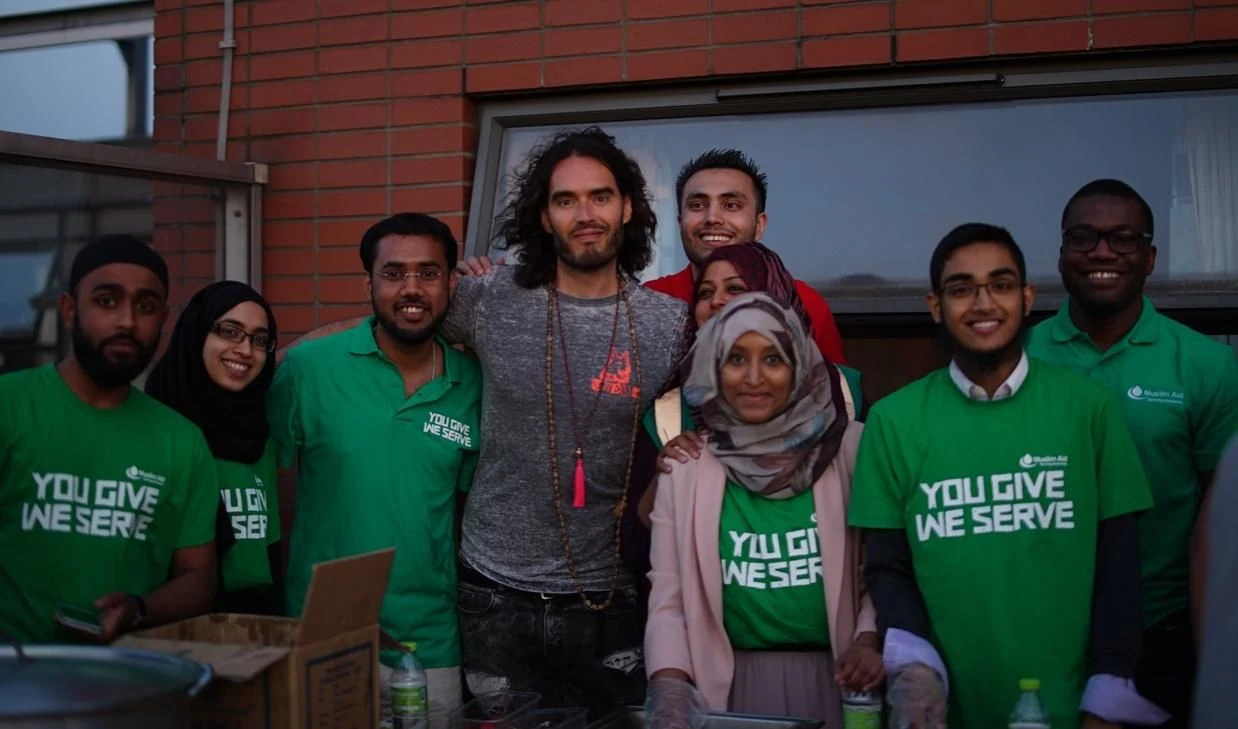
Russell Brand first became a familiar figure to British television audiences as the host of Big Brother’s Big Mouth. Stand-up, acting and radio followed, alongside a public persona built on quick-fire delivery and provocation. Later, he used books, a YouTube series and campaigning to argue about addiction, inequality and political power. Those roles brought attention, but also controversy: his views have shifted, his conduct has drawn criticism, and he has denied criminal charges brought against him. His story is not a simple progression from comedian to activist; it is a career in which entertainment, politics and public scrutiny have repeatedly collided.
From Grays to British television
Brand was born in Grays, Essex, on 4 June 1975. He made his theatrical debut as a teenager in a school production of Bugsy Malone and later studied at the Italia Conti Academy. He was expelled after his first year for poor attendance and illegal drug use, according to the biographical account. His early work included film extra roles and appearances on television, among them The Bill and the children’s series Mud.
His first presenting job came in 2000, as a video journalist for MTV UK. He later presented Big Brother’s Eforum and became widely known as the host of its successor, Big Brother’s Big Mouth, on E4. The programme gave him a platform for an exuberant, often provocative style of audience-facing comedy. He also presented Russell Brand’s Ponderland, which used stand-up to explore subjects including childhood and science.
Stand-up developed alongside that television work. Brand performed at the Edinburgh Festival Fringe in 2000 and returned with Better Now in 2004, a show that addressed his heroin addiction. His tours, including Shame and Scandalous, drew on personal stories and tabloid attention. He received three British Comedy Awards, including awards for best newcomer, live stand-up and outstanding contribution to comedy. His growing profile also took him beyond the UK: he hosted the MTV Video Music Awards in 2008 and 2009 and appeared in films including Forgetting Sarah Marshall and Get Him to the Greek.
Writing about addiction and recovery
Brand made his experience of addiction part of his public work. In 2012, he testified before a parliamentary committee about drug addiction, arguing that criminal penalties did not address the needs of people dependent on drugs. He also presented the BBC Three documentary Russell Brand: From Addiction to Recovery, which questioned how society treats addiction. The death of his friend Amy Winehouse in 2011 was among the events he said had prompted him to make the film.
His writing brought a more sustained account of his life and views. My Booky Wook, his first autobiography, appeared in 2007; Booky Wook 2: This Time It’s Personal followed in 2010. In 2014, he published Revolution, setting out his political arguments about wealth and power. The response was divided. Brand’s public profile gave those arguments a large audience, but did not make them immune to criticism: commentators disagreed both about his ideas and about his approach to political change.
His work on addiction also included practical support. Brand was a patron of Focus 12, a drug treatment programme that had helped him, and organised fundraisers for it. The charity closed in 2018. In 2015, he opened the Trew Era Café on the New Era housing estate in Hackney, using money from Revolution. The café employed people recovering from drug addiction. He donated it to the Rehabilitation for Addicted Prisoners Trust the following year. The project connected his public advocacy with a local workplace, while remaining distinct from the broader claims sometimes made about his charitable impact.
Politics on screen and in public
Brand’s political interventions became especially visible in 2013. He guest-edited a special issue of New Statesman on revolution and appeared on BBC Newsnight in an interview with Jeremy Paxman. Brand said he had never voted and urged viewers not to participate in a political system he considered ineffective. He described a more equal society based on redistributing wealth and taxing corporations. The interview made him a prominent voice in debate about non-voting, although critics questioned the force of political advice from someone who rejected the ballot box.
In 2014 he launched The Trews, a YouTube series that commented on current affairs and media coverage, and published Revolution. He also joined protests, including the People’s Assembly Against Austerity and a campaign by residents opposing rent rises at the New Era estate. His stance on voting later changed: ahead of the 2015 general election, he interviewed Labour leader Ed Miliband and urged his audience to vote Labour, while also backing Green Party candidate Caroline Lucas in Brighton. That reversal illustrates a recurring feature of his activism: positions were delivered with confidence, but could change under political pressure and in response to events.
His online work changed direction again during the COVID-19 pandemic. The Wikipedia account describes an increase in political activity and a shift towards more conservative activism, alongside accusations that his videos promoted COVID denialism and conspiracy theories. In 2022, after YouTube removed a video under its medical misinformation policy, he moved his channel to Rumble and launched the daily programme Stay Free. The change widened his reach among audiences sceptical of mainstream media, while also making the accuracy and framing of his claims a focus of public debate.
Public controversy and legal proceedings
Controversy has accompanied Brand’s work in broadcasting as well as politics. In 2008, a pre-recorded BBC Radio 2 programme included lewd phone messages left by Brand and Jonathan Ross for actor Andrew Sachs. Brand resigned from the BBC, Ross was suspended, and the BBC Trust later described the calls as a deplorable intrusion without editorial justification. Brand apologised. The episode became a defining example of the difference between provocation performed for an audience and conduct that others experience as an intrusion.
In September 2023, reporting by The Sunday Times, The Times and Channel 4’s Dispatches set out allegations of sexual assault and emotional abuse by several women concerning incidents between 2006 and 2013. Brand denied criminal wrongdoing and said his relationships had been consensual. The allegations are not findings of guilt. In April 2025, the Metropolitan Police charged him with five offences relating to alleged incidents involving four women between 1999 and 2005: one count each of rape, indecent assault and oral rape, and two counts of sexual assault. Brand denied the charges. The Wikipedia revision supplied for this feature states that he pleaded not guilty in May 2025 and that the trial was scheduled to begin in October 2026. It also records two further charges authorised in December 2025, which Brand denied. These proceedings require careful distinction between allegations, charges and proven facts.
Why Russell Brand deserves a place in British Legacy
Brand’s place in a record of modern British public life rests on an unusually visible crossing of entertainment and political argument. He moved from stand-up and E4 television into film, radio, books and online commentary, bringing an unmistakable comic persona to each. His career documents changes in how British audiences encounter public figures: first through scheduled programmes and radio, then through personal memoir and, later, a direct-to-audience YouTube channel. His three British Comedy Awards mark recognition within comedy, while his Newsnight interview and New Statesman edit show how celebrity could become a route into arguments about voting, inequality and the political system.
His work on addiction adds a more practical dimension to that record. Brand has spoken publicly about his recovery, gave evidence to a parliamentary committee, supported Focus 12 and opened the Trew Era Café as a workplace for people recovering from addiction. The café’s later donation to a rehabilitation charity was a concrete transfer of the project, rather than simply a public statement of concern. These efforts do not establish every wider claim made about his charitable influence, and his record remains contested. Including him in British Legacy therefore means holding together cultural impact, social advocacy, reversals and serious controversy. That fuller account is more useful than either uncritical praise or a biography reduced to a single phase of his public life.
Sources
Russell Brand — Wikipedia revision 1378550792
Adapted in part from Russell Brand by Wikipedia contributors, under CC BY-SA 4.0. Text has been edited and combined with the existing article; this adapted text is shared under the same licence. Contributor history.