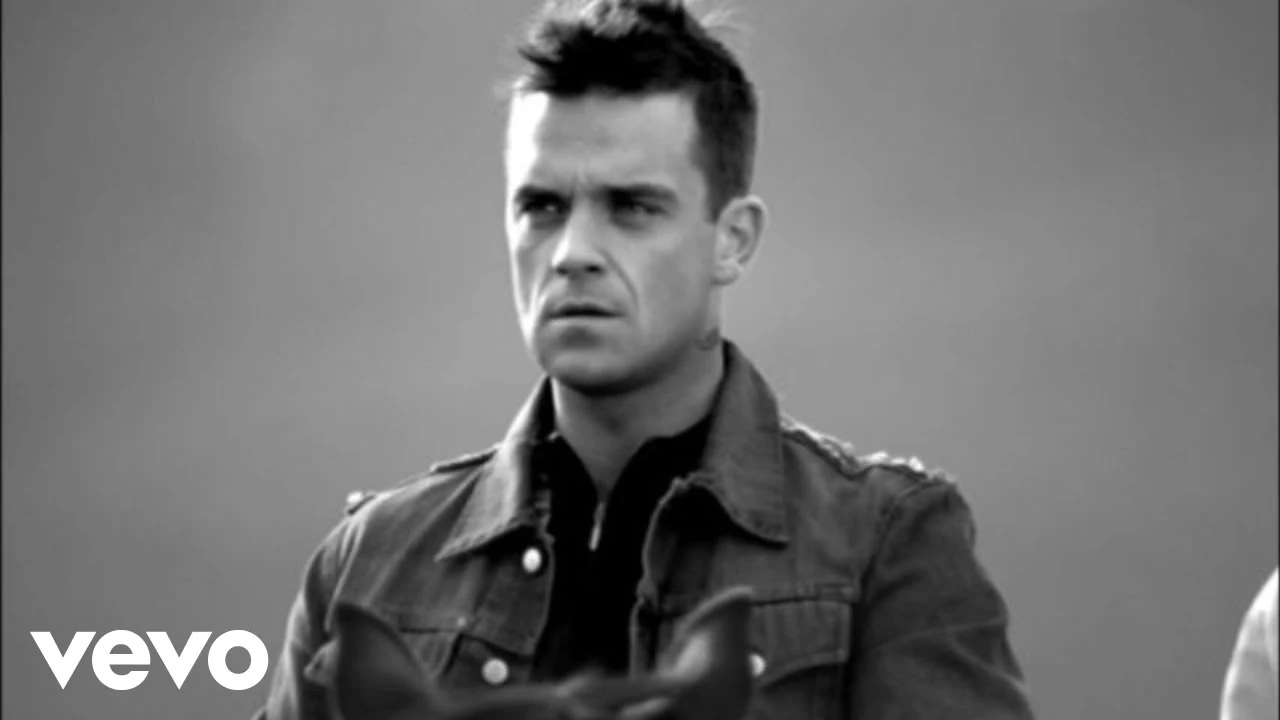
Robbie Williams’s career, as set out in the supplied account, spans two connected chapters: first as a member of Take That, then as a solo artist whose songs included “Angels”, “Rock DJ” and “Feel”. He left the group in 1995, released his debut solo album, Life Thru A Lens, in 1997, and later returned to Take That for the album Progress. Those milestones give the shape of a career that began in a British pop group and continued through a catalogue of solo releases.
Finding an audience with Take That
The supplied article dates Take That’s formation to 1990 and identifies Williams as its youngest member. It describes the group’s early appeal through polished pop songs and synchronised dance moves, and names “Pray”, “Relight My Fire” and “Back for Good” among its hits. Williams first found fame in this setting, before departing in 1995.
The original account characterises him as rebellious and vivacious, contrasting his persona with the group’s clean-cut image. Such descriptions are impressions rather than details developed or evidenced in the supplied material. The more concrete point in its narrative is the change of direction: leaving Take That preceded a solo career, rather than ending his association with the group permanently.
From “Freedom” to “Angels”
Williams’s first solo single, according to the supplied account, was a cover of George Michael’s “Freedom”. His debut album, Life Thru A Lens, followed in 1997. The article singles out “Angels” as the album’s hit and as a defining early moment in his solo career. It also calls the song a fixture at weddings and concerts; without further evidence, that assessment is best understood as the original article’s description of its popularity.
The article names “Millennium”, “Let Me Entertain You”, “Rock DJ” and “Feel” as other notable songs. It presents them as examples of a style combining introspective lyrics with accessible, rousing melodies. Its broader suggestion that these tracks topped charts is not accompanied by chart details, so the songs themselves provide a more secure outline of the repertoire discussed in the source.
A return to Take That
The account says Williams reunited with Take That on several occasions, highlighting the 2010 album Progress and its song “The Flood”. This later collaboration brings the group back into a story that began with his departure in 1995. The original article suggests the reunion introduced his work to a new generation, but does not provide evidence to establish that effect.
It also lists the BRIT Awards, MTV Europe Music Awards, Q Awards and NRJ Music Awards among his accolades. The claim that Williams has won more BRIT Awards than any other artist is not supported there by a count or date, so it is not repeated as a confirmed record. The article includes a humorous quotation attributed to Williams and refers generally to personal struggles, but gives no source or supporting detail for either; those claims are not needed to recount the career milestones it does supply.
Why Robbie Williams deserves a place in British Legacy
Williams’s place in British Legacy can be grounded in the specific career outline supplied: early fame with Take That, a departure in 1995, a solo debut with Life Thru A Lens, and songs including “Angels”, “Millennium”, “Rock DJ” and “Feel”. These details show a move from group membership to a distinct solo catalogue. Rather than relying on broad claims about influence, they identify the work and turning points through which the account presents his contribution to British pop.
The later reunion on Progress, including “The Flood”, adds another chapter to that story. Williams’s career, as described here, connects the group that first brought him to public attention with the solo work that followed, and then returns to the group years later. That documented sequence, together with the named songs and albums, gives British Legacy a concrete account of his place in popular music without overstating what the available material establishes.