For generations of viewers, David Attenborough has been a guide to places and forms of life they might never otherwise encounter. His work has ranged from the animal-collecting expeditions of Zoo Quest to ambitious series tracing evolution, ecology and the behaviour of species across the world. Alongside his work on screen, he helped shape BBC television from the inside. In later decades, his programmes increasingly addressed the damage people do to the natural world. The result is a career in which broadcasting, public service and conservation have remained closely connected.
A naturalist finds his way into television
David Frederick Attenborough was born in Isleworth, Middlesex, on 8 May 1926, and grew up in Leicester, where his father was principal of University College, Leicester. As a child, he collected fossils, stones and other natural specimens. In 1936 he attended a lecture by the conservationist Grey Owl with his brother Richard. Richard later recalled that the lecture made a strong impression on David, helping to establish an interest in conservation that remained with him.
Attenborough attended Wyggeston Grammar School for Boys before studying geology and zoology at Clare College, Cambridge. He graduated in natural sciences and then completed two years of national service in the Royal Navy. His first civilian work was editing children’s science textbooks. In 1950 he applied unsuccessfully for a BBC radio producer’s post, but his application attracted the attention of Mary Adams, head of the BBC’s factual broadcasting department. She offered him a training course in the television service. He joined the BBC full-time in 1952 as a producer in its Talks department.
Natural history was not his first assignment. He worked on programmes including the quiz Animal, Vegetable, Mineral? and Song Hunter, a series about folk music. His route into animal programmes came through Animal Patterns, a studio series featuring animals from London Zoo. While making it, he met Jack Lester, the zoo’s reptile-house curator. They developed the idea for a series based on an animal-collecting expedition, and when Lester fell ill, Attenborough became its presenter.
Zoo Quest began in 1954, taking viewers beyond the studio and showing animals in their habitats. In 1957, Attenborough declined an invitation to join the newly established BBC Natural History Unit in Bristol, preferring not to move his family from London. Instead, he formed the BBC’s Travel and Exploration Unit, continuing with Zoo Quest and other documentaries. The series established an approach that would recur throughout his career: using travel and observation to make the living world accessible to a large audience.
Building a broader BBC
In 1965, Attenborough became Controller of BBC Two. The channel had launched the previous year and was still finding its identity. He sought a distinctive mix of programming, commissioning work across the arts, science, travel, history, sport and entertainment. Its schedules included Man Alive, Chronicle, The Old Grey Whistle Test, Monty Python’s Flying Circus and The Money Programme.
Attenborough also backed Civilisation, Kenneth Clark’s survey of Western art. The series helped establish the place of ambitious, presenter-led documentary on BBC Two. During his time as controller, he used colour television to demonstrate the benefits of the new format, including by bringing the coloured balls of snooker to the screen in Pot Black. In 1969 he became director of programmes, responsible for output across both BBC television channels.
The administrative work took him away from making programmes. He left the post in 1972 to return to full-time broadcasting. Looking back, he acknowledged that he had authorised the wiping of some television output to cut costs, including a series by Alan Bennett, a decision he later regretted. His years in management were therefore not simply a prelude to his on-screen career: they were also a period when he helped determine what British television could offer its viewers.
Making the natural world a television subject
After leaving management, Attenborough presented Eastwards with Attenborough, a journey through Indonesia, and began work on a larger project: Life on Earth. First broadcast in 1979, the series followed the history of life and became the starting point for an extended body of programmes made with the BBC Natural History Unit. Its scale required a partnership with an American network to secure funding. New filming techniques and international travel helped bring previously unfilmed animal behaviour to the screen. Attenborough’s limited time on camera left room for the animals and environments themselves.
The Living Planet followed in 1984, exploring how living things adapt to their surroundings. The Trials of Life, broadcast in 1990, examined animal behaviour through the stages of life. Later programmes widened the view further. Life in the Freezer surveyed Antarctica; The Private Life of Plants used time-lapse photography to reveal plant growth and movement; and other series turned to birds, mammals, invertebrates, reptiles and amphibians. With Life in Cold Blood in 2008, Attenborough completed the set of programmes on the major groups of terrestrial animals and plants he had been assembling over decades.
He also narrated programmes made by other teams. Wildlife on One ran from 1977 to 2005, while the BBC Natural History Unit’s The Blue Planet (2001) and Planet Earth (2006) brought marine life and global landscapes to television audiences. Attenborough narrated both; Planet Earth was the BBC’s first wildlife series shot in high definition. He returned as narrator and presenter for Planet Earth II in 2016 and as presenter for Blue Planet II in 2017. These projects made natural history a sustained part of British broadcasting, combining his writing and presenting with the work of production teams and technical specialists.
His work continued across different formats and subjects. He presented the polar series Frozen Planet in 2011, and later returned to prehistoric life in Dinosaurs: The Final Day and Prehistoric Planet, both broadcast in 2022. In 2009 he began presenting short radio monologues for BBC Radio 4 as David Attenborough’s Life Stories. The range of projects—from radio to high-definition wildlife film—reflects a career that adapted to new forms of broadcasting while keeping natural history at its centre.
From describing nature to confronting its decline
Environmental concerns became more explicit in Attenborough’s later work. State of the Planet (2000) examined the effects of human activity on the natural world. He later made programmes on climate change and population growth, and in 2007 contributed to the BBC’s Saving Planet Earth project. His conservation work extended beyond television: he backed efforts to protect albatross from longline fishing and supported a campaign to protect rainforest in Borneo. He also helped launch ARKive, a project to gather natural-history media into a digital library, and backed the World Land Trust’s appeal to establish a rainforest reserve in Ecuador.
In 2019, Attenborough narrated Our Planet, a series that placed greater emphasis on the destructive effects of human activity than much of his earlier work. That year he also presented Climate Change – The Facts and Extinction: The Facts. In David Attenborough: A Life on Our Planet (2020), he looked back on his career and set out his concerns for the future. He described the film as a “witness statement”. He spoke at the opening ceremony of the 2021 United Nations Climate Change Conference in Glasgow, COP26, and urged world leaders to act. In 2022 the United Nations Environment Programme named him a Champion of the Earth for his work documenting and advocating for the protection and restoration of nature.
His advocacy has not gone without criticism. Some environmentalists have argued that wildlife programmes can present wilderness as more separate from human pressures than it really is. Attenborough’s work has also changed over time: in 2018, while promoting Dynasties, he said repeated warnings about threats to wildlife could turn viewers away, while later films put environmental damage at their centre. That development is part of the record of a broadcaster responding to the subject he has spent a lifetime describing.
Recognition and a continuing public role
Attenborough’s work has received honours in Britain and internationally. Among his British distinctions are a CBE in 1974 for services to nature conservation, a knighthood in 1985, membership of the Order of the Companions of Honour in 1996 for services to nature broadcasting, and the Order of Merit in 2005. He received the BAFTA Fellowship in 1980 and was elected a Fellow of the Royal Society in 1983. In 2024 he received the Stephen Hawking Medal for Science Communication for lifetime achievement.
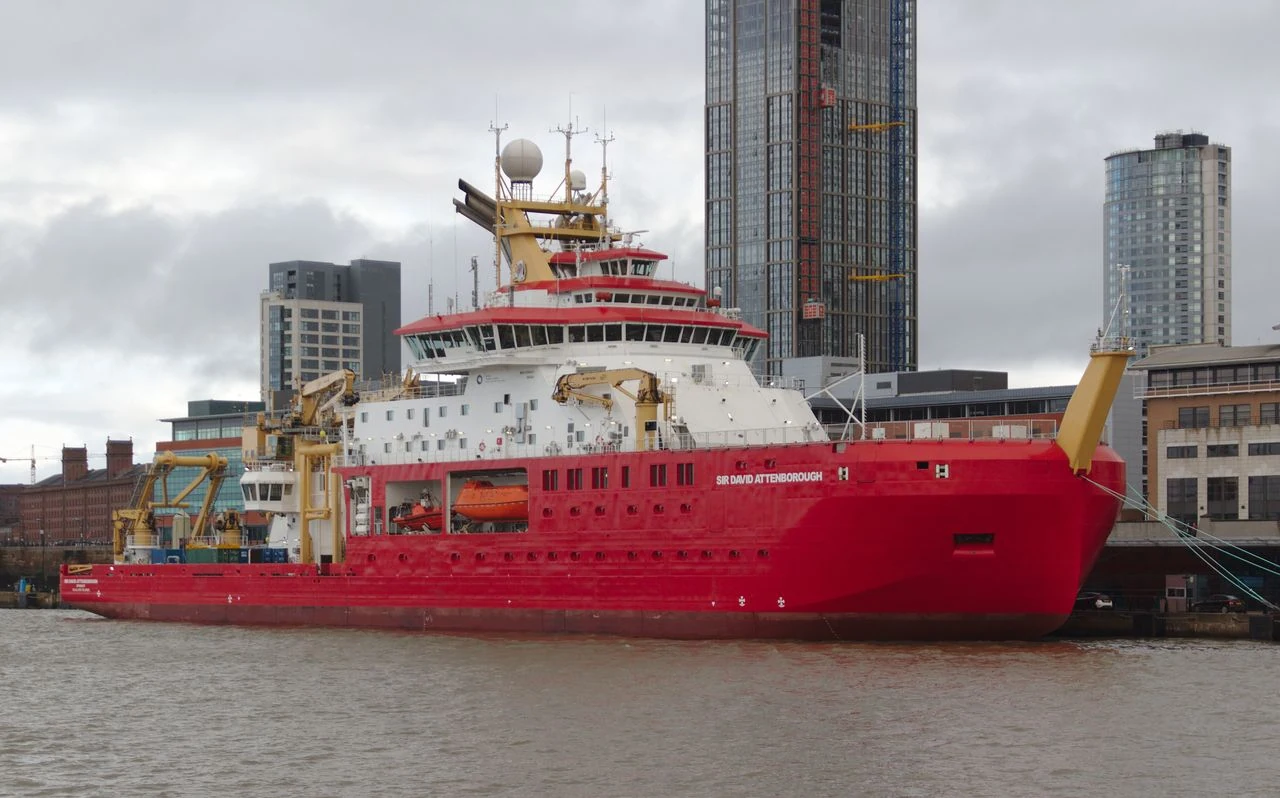
His influence is also visible in institutions and public projects associated with his work. The Natural History Museum in London opened the Attenborough Studio in 2009. A British polar research ship bears his name, and living and extinct species have been named in his honour. In 2022 the United Nations Environment Programme recognised his work on protecting and restoring nature. These honours and tributes reflect the reach of a career that joined television production to science communication and public interest in conservation.
Why Sir David Attenborough deserves a place in British Legacy
Attenborough’s place in British Legacy rests first on what he helped British television do. As Controller of BBC Two, he worked to make the channel’s schedule distinctive, supporting programmes across the arts, science and public affairs as well as ambitious documentaries. As a presenter and natural-history filmmaker, he helped make wildlife programming a long-running part of the BBC’s public-service output. Life on Earth, The Living Planet and the later “Life” series brought extensive accounts of evolution, ecology and animal behaviour into people’s homes. Their ambition depended on research, production teams and technical innovation, but Attenborough gave those programmes a consistent, intelligible guide.
His legacy also includes how he used that broadcasting role. From supporting conservation projects and helping launch ARKive to presenting programmes on climate change and biodiversity loss, he connected the pleasure of seeing nature with the need to protect it. His career has not been a simple march from discovery to advocacy: viewers and critics have debated how programmes should represent human damage, and his own work shifted towards more direct warnings. That combination of sustained public communication, creative television and practical support for conservation gives his British achievement substance. He helped audiences understand the natural world, helped shape the broadcaster that brought it to them, and used the reach of both to press for its future.
Sources
Adapted in part from David Attenborough by Wikipedia contributors, under CC BY-SA 4.0. Text has been edited and combined with the existing article; this adapted text is shared under the same licence. Contributor history.