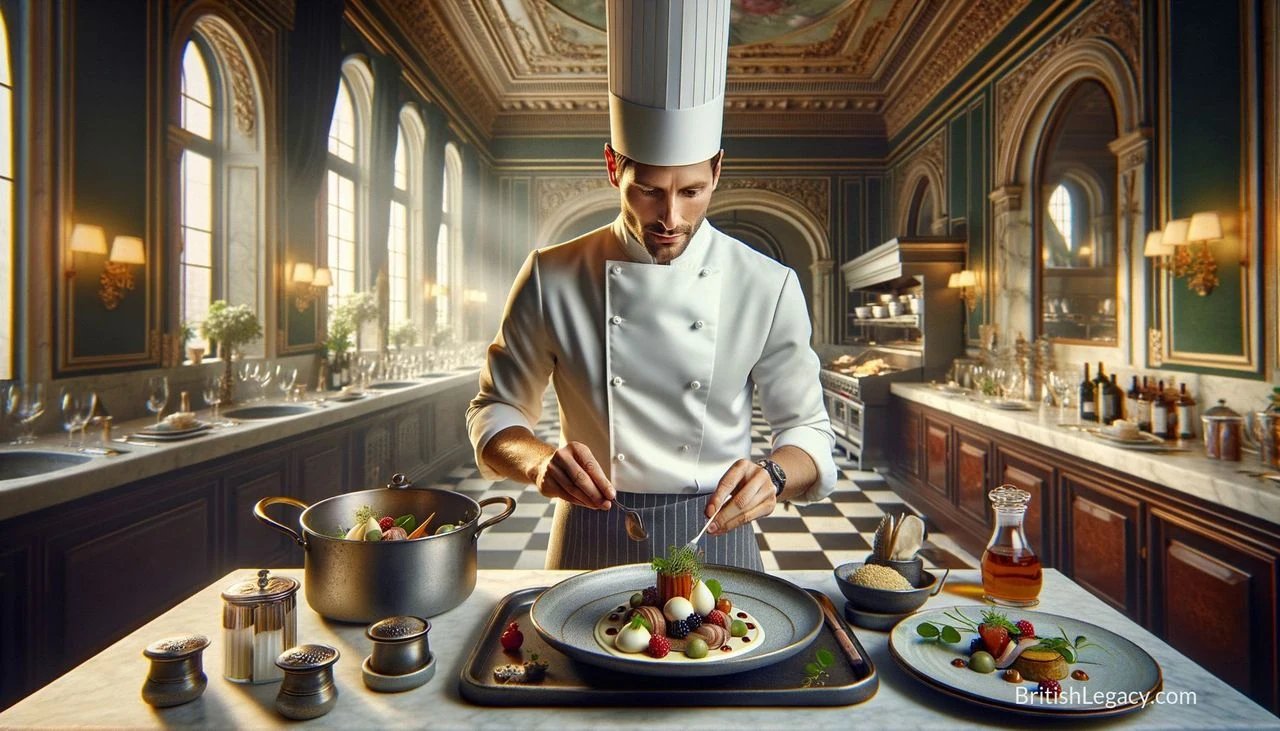
Since becoming executive chef at The Ritz in 2004, John Williams has led a kitchen associated with classical British cooking. The dishes described in accounts of his work range from roast grouse with game chips and bread sauce to Beef Wellington, lobster mousse and apple tarte Tatin. Together they suggest a repertoire that draws on familiar British forms while making room for French technique and elaborate presentation.
A career through London kitchens
Williams’s career before The Ritz included work at the Savoy and Claridge’s. The account of his early career describes the Savoy as where he established a foundation in classical cuisine, followed by a period at Claridge’s that developed his experience of British and French traditions. It gives no dates for these appointments, so the known sequence is more useful than an invented chronology: both kitchens preceded his appointment at The Ritz.
At The Ritz, Williams became responsible for the restaurant’s culinary programme. The restaurant received a Michelin star in 2017, a milestone associated with his tenure. That recognition offers a concrete measure of the kitchen’s standing, while the account’s broader claims about his personal role in securing it are best understood in the context of his position as executive chef.
British dishes and a broader repertoire
Roast grouse with game chips and bread sauce is among the dishes linked to Williams. Its combination of game, potatoes and a traditional accompaniment places it firmly within the account’s emphasis on British cooking. Beef Wellington offers another familiar reference point: beef enclosed in pastry, made through a process that demands careful preparation. These examples illustrate the classical idiom attributed to his kitchen without implying that every dish served there followed the same pattern.
The repertoire also includes dishes described as lobster mousse in pastry and caramelised apple tarte Tatin served with Calvados ice cream. The lobster preparation brings a lighter mousse together with a pastry casing; the dessert pairs cooked apples and caramel with an ice cream flavoured with Calvados. They extend the picture beyond traditional British main courses towards French-influenced cooking and patisserie. The available account identifies these as notable recipes but gives no dates or further context for when or where they were served.
Training and writing
Williams is also credited with training and mentoring younger chefs, and with involvement in culinary organisations and events. These activities suggest a professional life extending beyond service in the restaurant, although the organisations, events and individual trainees are not named. The account also says he has written several cookbooks, offering readers insight into his approach and techniques, but does not provide titles or publication dates.
Those details are worth treating with restraint: they point to teaching and writing as parts of his work, without making claims about the scale of his influence that cannot be substantiated here. Alongside his restaurant role, they describe a chef whose practice has included sharing culinary knowledge as well as directing a kitchen.
Why John Williams deserves a place in British Legacy
Williams’s place in British Legacy rests on a specific contribution: leading the kitchen at The Ritz while working in a classical idiom that includes recognisably British dishes. Roast grouse with game chips and bread sauce, and Beef Wellington, connect his repertoire to established forms of British cooking. The Michelin star awarded to the restaurant in 2017 marks a notable achievement during his tenure as executive chef, rather than an abstract claim of excellence.
His career also brings together several strands of Britain’s restaurant culture. Work at the Savoy and Claridge’s preceded his appointment at The Ritz; his described repertoire draws on both British and French traditions; and his reported cookbook writing and mentoring extend his work beyond the dining room. The evidence available does not name the people he trained or the books he published, so the case for his legacy need not depend on inflated claims. It lies in the combination of a senior role at a prominent British hotel, a Michelin-starred restaurant and a body of cooking framed around the preservation and practice of classical cuisine.