
Jessie J’s breakthrough arrived through two singles with very different faces. “Do It like a Dude” introduced an assertive new British pop voice; “Price Tag” followed with a tune that topped charts in the UK and elsewhere. Both led into Who You Are, an album that made Jessica Ellen Cornish an international name and established a defining feature of her career: a powerful soul-influenced voice placed inside contemporary pop.
From Chadwell Heath to the stage
Cornish was born on 27 March 1988 in Chadwell Heath, in the London Borough of Redbridge. She attended Mayfield High School and studied at Colin’s Performing Arts School. As an 11-year-old, she appeared in Andrew Lloyd Webber’s West End production of Whistle Down the Wind; she later joined the National Youth Music Theatre, performing in its 2002 production of The Late Sleepers.
At 15, she won Best Pop Singer on the television programme Britain’s Brilliant Prodigies, performing under her own name. She began studying at the BRIT School at 16 and joined the girl group Soul Deep the following year. She left after two years, concluding that the group was not progressing. Her classmates at the BRIT School included Adele and Leona Lewis, but Cornish’s route into the industry would take in several less visible stages before the public breakthrough.
She signed to Gut Records and recorded an album, but the label went bankrupt before releasing it. She then secured a songwriting publishing contract with Sony/ATV. Her work as a writer included songs for other performers, among them Miley Cyrus’s “Party in the U.S.A.” In 2008, she also supported Cyndi Lauper on the UK dates of Lauper’s Bring Ya to the Brink tour. A record deal with Lava Records, in a joint venture with Universal Republic, followed after a change in management helped negotiations move forward.
The singles that established Jessie J
Jessie J began recording her first album in 2005; it was completed in January 2011. “Do It like a Dude”, released in late 2010, became her first single and reached number two on the UK Singles Chart. She had written it with Rihanna in mind, but her label chose it as Jessie J’s introduction instead. The follow-up, “Price Tag”, reached number one in the UK and became an international success. Its hook carried a criticism of materialism, while its success brought the singer to a far larger audience.
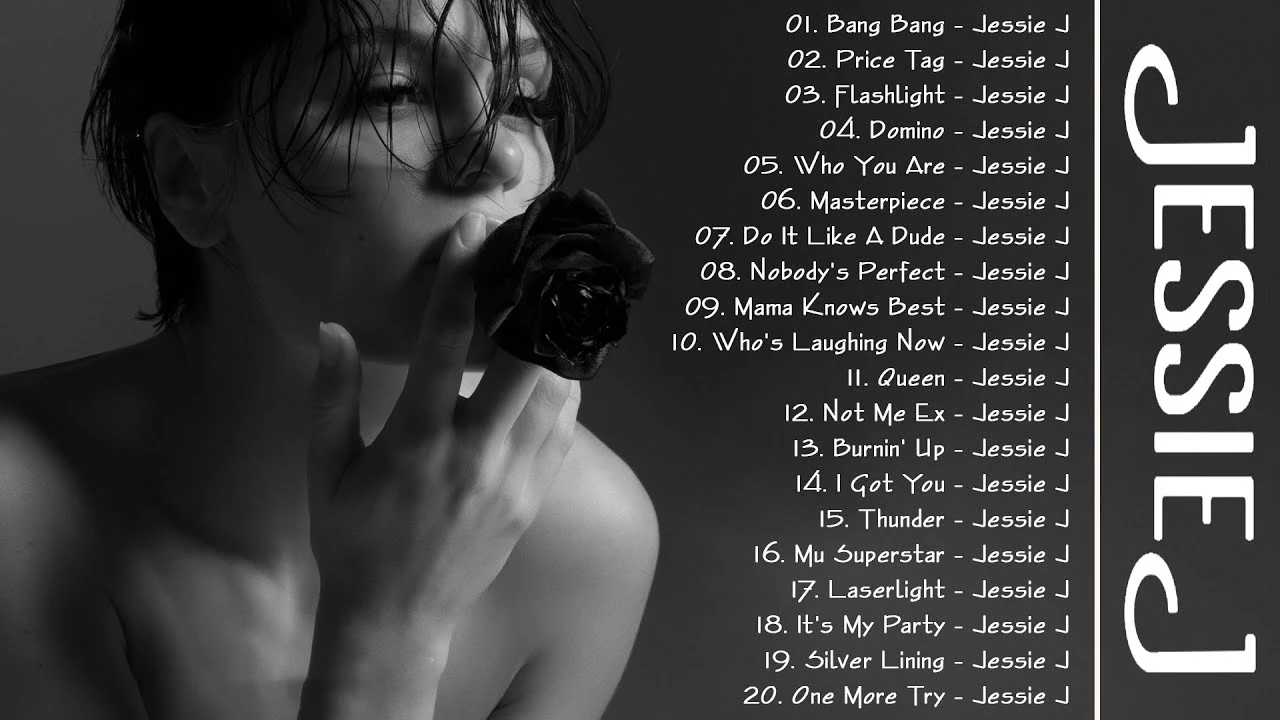
Who You Are was released in February 2011 and reached number two on the UK Albums Chart. Alongside “Do It like a Dude” and “Price Tag”, its singles included “Nobody’s Perfect”, “Who You Are”, “Domino” and “Laserlight”. “Domino” became her first US top-ten hit. When “Laserlight” reached the UK top ten in 2012, Jessie J became the first British female solo artist to score six top-ten singles from one studio album. That gave the album’s success a clear measure beyond its initial chart position.
The title track gave the record a more reflective centre. Jessie J described it as a positive role model for young people and one of her proudest songs. That focus on self-acceptance also helps explain why listeners could encounter contrasting sides of her work: performance-led singles built for a broad pop audience, alongside lyrics addressing uncertainty and identity. Her early success was not just a matter of vocal display; it depended on memorable songwriting and a recognisable personality within the songs.
From Alive to international television
In 2011, Jessie J was chosen to open for Katy Perry’s California Dreams tour, but withdrew after breaking her foot during rehearsals. She also appeared as the house artist at the MTV Video Music Awards, performing original songs and covers during commercial breaks. At the Summertime Ball at Wembley Stadium, injuries to her foot meant that she performed seated on a gilded throne. She returned to the concert circuit later that summer.
Her second album, Alive, followed in 2013. Its singles included “Wild”, which became a top-five hit in the UK and Australia, as well as “It’s My Party” and “Thunder”. The Alive tour took her into her first arena tour, and the album showed that her career was continuing beyond the first rush of hits. In 2014, she released Sweet Talker. Its lead single, “Bang Bang”, brought her together with Ariana Grande and Nicki Minaj, reached number one in the UK and peaked at number three in the United States. The album reached the UK top five.
Jessie J’s work also placed her in front of audiences who were not primarily encountering her through albums. She was a coach on the first two series of The Voice UK, in 2012 and 2013, then served as a coach on The Voice Australia in 2015 and 2016. In 2018, she won the sixth season of the Chinese singing competition I Am a Singer. Her television appearances extended a career already built on direct performance, while her competition win showed that her reach went well beyond the British charts.
Changing direction and continuing to perform
In 2018, Jessie J released R.O.S.E. as four connected EPs: Realisations, Obsessions, Sex and Empowerment. The project moved towards R&B, away from much of the pop sound of her earlier records. That same year she released the Christmas album This Christmas Day. The change in sound was a shift in emphasis: the music continued to draw on her voice and songwriting, but made room for a different arrangement of those strengths.
She returned to UK television as a coach on the third series of The Voice Kids UK in 2019. In 2021, she released “I Want Love”. In 2023, she said she had left Republic Records, explaining that being signed to a major label no longer fitted what she wanted from her career. In 2025, she released “No Secrets” and “Living My Best Life”; later that year she announced a sixth studio album, Don’t Tease Me with a Good Time, scheduled for release on 28 November. These later chapters sit alongside, rather than erase, the catalogue that first brought her to public attention.
Recognition, charity and audience
Jessie J’s early recognition included the 2011 Critics’ Choice Brit Award and the BBC’s Sound of 2011. Her connection with British music also has a public-service dimension. She appeared on the BBC charity telethons Children in Need and Comic Relief. In 2013, she shaved her head live during Red Nose Day to raise money for Comic Relief. She also performed at Children in Need Rocks Manchester in 2011 and supported the UK children’s charity Believe in Magic.
Her relationship with listeners has been part of her public identity. She calls her fans “heartbeats”, a name taken from her Heartbeat tour, and has credited their support for her career. The original imported article also presented an “Iconic Quotes” section, attributing to Jessie J the statements “I make music to touch people's lives and to inspire” and “Your flaws are perfect for the heart that’s meant to love you.” Those quotations are retained here as claims made by that article, not as independently verified quotations.
Why Jessie J deserves a place in British Legacy
Jessie J’s place in British music rests on achievements that can be traced from her beginnings on British stages to her international chart success. Her early training included a West End production and the National Youth Music Theatre; her education at the BRIT School placed her within a British environment for developing performers. She then built a career that moved between songwriting, solo recording, live performance and television. “Price Tag” topped the UK chart, Who You Are produced six UK top-ten singles, and “Bang Bang” extended her success to audiences in both the UK and the United States.
That record matters not simply because it is commercially successful, but because it shows how a British singer and songwriter could carry a distinctive vocal style across different settings. Jessie J’s work has included assertive pop singles, reflective songs, an R&B-led multi-part project and performances on British charity broadcasts. Her coaching roles brought her experience to televised singing competitions, while her support for Comic Relief and Children in Need connected her public profile to fundraising in the UK. Remembering her offers a fuller picture of contemporary British pop: not just a run of hits, but an adaptable performer whose career has linked stages, studios, television and charitable events. Her work and achievements give that story a specific voice.
Sources
Adapted in part from Jessie J by Wikipedia contributors, under CC BY-SA 4.0. Text has been edited and combined with the existing article; this adapted text is shared under the same licence. Contributor history.
.jpg)