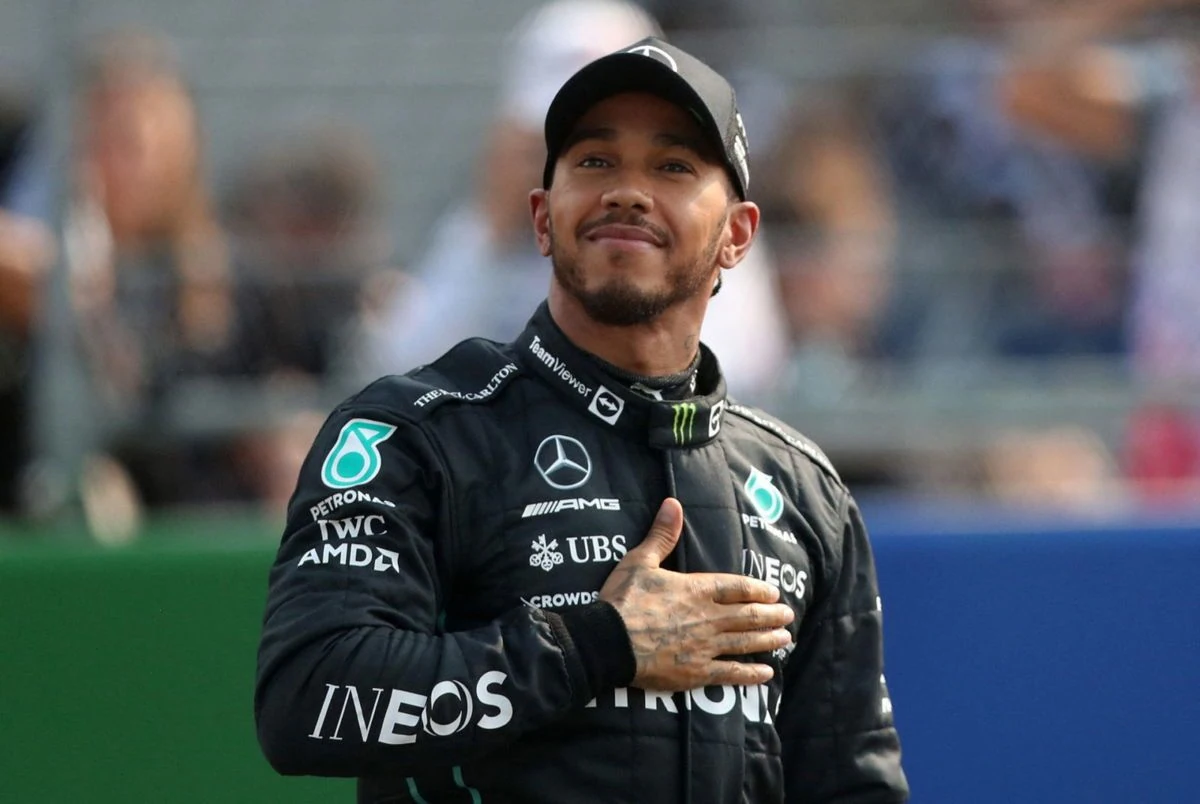
Lewis Hamilton’s route from karting circuits to seven Formula One world titles began in Stevenage, where his father helped make racing possible while working several jobs. Hamilton became the first black driver to compete in Formula One when he made his debut in 2007. His achievements on track have since made him one of the sport’s defining figures; his work for greater diversity has also connected that success to questions about who gets the chance to enter motorsport and engineering.
Early speed and a route into racing
Hamilton was born in Stevenage, Hertfordshire, on 7 January 1985. He began karting at six. His father, Anthony, took redundancy from an information-technology management job and worked in several roles to support his son’s racing, while continuing to attend events. Hamilton won the British cadet karting championship in 1995, aged ten. At the Autosport Awards, he introduced himself to McLaren team principal Ron Dennis and said that he hoped one day to race the team’s cars.
In 1998, McLaren signed Hamilton to its young-driver programme. He continued through international karting and junior single-seater racing, winning the Formula 3 Euro Series in 2005 and the GP2 championship in 2006. Those results brought him to McLaren’s Formula One team for 2007. The junior years mattered not simply as a succession of titles: they gave him experience across different cars and levels of competition, while his progress through McLaren’s programme established a route from karting to a top-level drive.
A remarkable Formula One debut
Hamilton finished third in his first Grand Prix, in Australia in 2007, and ended his debut season second in the championship, one point behind Kimi Räikkönen. He won four races that year. In 2008, he secured his first title at the season-ending Brazilian Grand Prix, passing Timo Glock on the final lap to take the fifth place he needed. At 23, he was then the youngest world champion, and the first British driver to win the title since Damon Hill in 1996.
Hamilton stayed with McLaren until the end of 2012, continuing to win races during seasons in which the team did not consistently have the leading car. He joined Mercedes in 2013, a move that preceded a remarkable run of success. New engine regulations in 2014 coincided with Mercedes becoming the dominant team. Hamilton won the championship that year and again in 2015, then added titles in 2017, 2018, 2019 and 2020. The last of those brought him level with Michael Schumacher’s record of seven drivers’ championships.
Across his years at Mercedes, Hamilton repeatedly faced strong challenges, including from team-mate Nico Rosberg and Ferrari’s Sebastian Vettel. He lost the 2016 title to Rosberg, then beat Vettel to the championship in successive seasons. In 2021, Hamilton and Max Verstappen arrived at the final race level on points. A controversial late safety-car procedure at the Abu Dhabi Grand Prix helped Verstappen take the title; a subsequent FIA investigation found that human error had led to a failure to follow the sporting regulations, while confirming the result as final.
Winning, losing and changing teams
Hamilton’s Mercedes career ended with the 2024 season. That year he won the British Grand Prix for a record ninth time, ending a winless spell of more than two years, and also won in Belgium. He moved to Ferrari for 2025, the first time in his Formula One career that he raced for a team without a Mercedes-powered car. His first season with Ferrari brought inconsistent results and no podium finishes, a sharp contrast with the championship-winning period at Mercedes.
The record books give one measure of Hamilton’s achievement. The supplied Wikipedia revision records 106 Grand Prix wins, 104 pole positions and 208 podium finishes, as well as his joint-record seven titles. These figures describe a sustained career at the front of the sport, not just one breakthrough season. His debut itself was also significant: he was the first black driver to race in Formula One, in a championship where he encountered racist abuse from spectators early in his career.
Opening doors beyond the cockpit
Hamilton has made the lack of racial diversity in motorsport a prominent part of his public work. In 2020, he established The Hamilton Commission with the Royal Academy of Engineering. Its remit was to examine how motorsport could engage more black people with science, technology, engineering and mathematics, and how to increase their employment in motorsport and related engineering fields. The commission connected a personal milestone—his position as the first black Formula One driver—to practical questions about access to education, recruitment and careers.
In 2021, he founded Mission 44, a charity intended to help young people from under-represented backgrounds pursue their ambitions. He pledged £20 million to support its work. Mission 44 and Ignite, a joint initiative with Mercedes, focus on education and increasing diversity in motorsport. Hamilton also took a public stand in support of Black Lives Matter in 2020, including by taking the knee before races. These actions do not by themselves demonstrate that the sport has become inclusive; they do show how he used his position to keep representation and opportunity in view.
His charitable work has also included support for children. Hamilton has worked with UNICEF, visiting projects in the Philippines, India, Haiti and Cuba, and helped raise funds through films shown during ITV’s Soccer Aid broadcasts. He became Save the Children’s Global Education Ambassador in 2013 and has supported other organisations through donations, fundraising and public appearances. The Lewis Hamilton Foundation, registered in 2008, provides grants and donations to charitable causes.
Why Lewis Hamilton deserves a place in British Legacy
Hamilton’s place in British sporting history rests first on a record-setting career. He won seven Formula One drivers’ championships, including his first in 2008, and became the first British driver to claim the title since 1996. His years at McLaren and Mercedes brought victories across changing competitive circumstances, while his 2024 British Grand Prix win made him the first driver to win that race nine times. Those results made him a visible representative of British motorsport around the world and gave his career a reach beyond any one team or season.
His wider legacy is also specific: Hamilton has used that visibility to address the barriers that shaped his own place in the sport. The Hamilton Commission examined routes into STEM and engineering; Mission 44 and Ignite direct support towards education and opportunities for young people from under-represented backgrounds. His work with UNICEF and other children’s causes adds a sustained charitable dimension. None of this makes the work of changing a sport complete, and the significance lies in the practical organisations and questions he has brought to public attention. Together, his competitive achievements and efforts to widen access offer a distinct British legacy: excellence at the highest level accompanied by an attempt to make the routes into that level more open to others.
Sources
Adapted in part from Lewis Hamilton by Wikipedia contributors, under CC BY-SA 4.0. Text has been edited and combined with the existing article; this adapted text is shared under the same licence. Contributor history.