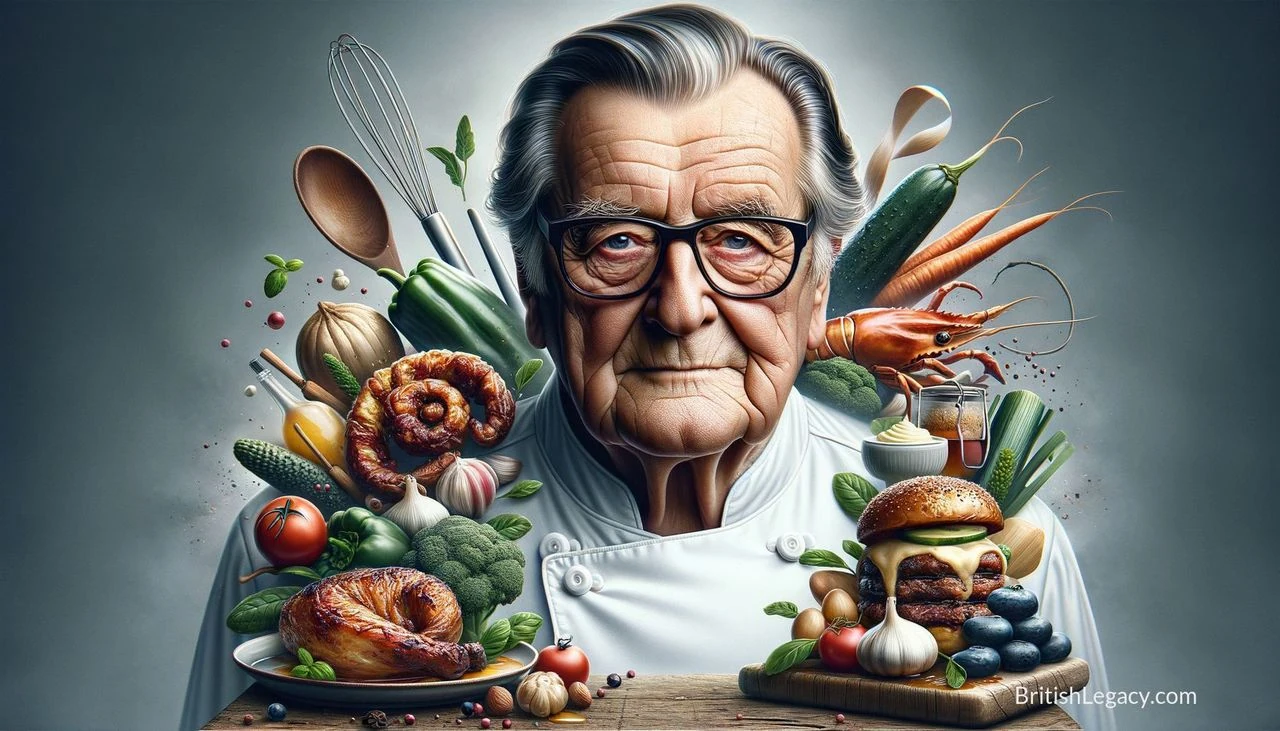
Marco Pierre White’s rise from a Leeds school-leaver to the first British chef to earn three Michelin stars was built in restaurant kitchens, from Harrogate and Ilkley to London. At Harveys, the restaurant he opened in 1987, his cooking brought two Michelin stars within two years. In 1995, aged 33, he became the youngest chef to earn three. He later gave the stars back, retired from cooking and turned towards restaurants, publishing and television.
From Leeds to the London kitchens
White was born in Leeds on 11 December 1961, the third of four sons of Maria-Rosa Gallina, who had emigrated from Veneto in Italy, and Frank White, a chef. His mother died when he was six. He left Allerton High School without qualifications and chose to train as a chef, following his father’s profession.
His early training took him to the Hotel St George in Harrogate and the Box Tree in Ilkley. In 1981, he moved to London and began classical training as a commis chef at Le Gavroche under Albert and Michel Roux. He went on to work with Pierre Koffmann at La Tante Claire, Raymond Blanc at Le Manoir and Nico Ladenis at Chez Nico at Ninety Park Lane. Before opening a restaurant of his own, he also worked at the Six Bells pub on the King’s Road, with Mario Batali as an assistant.
These kitchens formed the background to a career rooted in haute cuisine, with French, British and Italian influences. White’s route through established restaurants and then into ownership connected his training to a distinctive place in British restaurant culture. His early progress was rapid: in 1987, the year Harveys opened in Wandsworth Common, he received the Newcomer Award at the Cateys, the awards run by The Caterer.
Harveys and the Michelin milestones
Harveys became the first restaurant through which White made his name as a chef-patron. It won its first Michelin star soon after opening and a second the following year. Chefs who worked there included Gordon Ramsay, Phil Howard, Stephen Terry and Éric Chavot. The restaurant’s kitchen was therefore also a place where other careers began, although White’s own achievements remain distinct from the later reputations of those who trained there.
White went on to become chef-patron of The Restaurant Marco Pierre White, in the dining room of the former Hyde Park Hotel. In 1995, at 33, he became both the first British chef and the youngest chef to earn three Michelin stars. He later moved to the Oak Room at the Le Méridien Piccadilly Hotel. The three-star distinction marked the height of his cooking career, but it did not keep him in the kitchen indefinitely.
In 1999, after 17 years pursuing his ambition, White retired from cooking and returned his Michelin stars. He cooked his final meal for a paying customer at the Oak Room on 23 December. He explained his decision in terms of the demands of the work and the life he wanted beyond it: continuing to cook six days a week was one option, but he chose to step away, spend time with his children and reinvent himself. The decision made the end of his restaurant-kitchen career as consequential as its celebrated peak.
A different role in restaurants
Retirement from cooking did not mean leaving the restaurant business. White became a restaurateur and, with businessman Jimmy Lahoud, established White Star Line Ltd. Their partnership lasted several years and ended in 2007. In 2008, White opened MPW Steak & Alehouse in the Square Mile with James Robertson, a former maître d’hôtel who had worked for him from 1999 to 2003. The pair also operated the Kings Road Steakhouse & Grill from 2010; in 2016, the two restaurants became the London Steakhouse Co.
From 2010, White worked with hotel owner and operator Nick Taplin, who wanted to develop restaurant offers across his properties. Taplin opened a Marco Pierre White Steakhouse Bar & Grill at Cadbury House in North Somerset, followed by restaurants at Hoole Hall in Chester and The Cube in Birmingham. As interest from other hotel owners grew, White and Taplin developed a master-franchise arrangement and launched Black And White Hospitality in 2013.
The company’s model allowed property owners and investors to open restaurants under one of eight brands. The range included Marco Pierre White Steakhouse Bar & Grill, Mr White’s English Chophouse, Wheeler’s of St James’s Oyster Bar & Grill Room, Koffmann & Mr White’s, Marco’s New York Italian, Wheeler’s Fish & Chips, Bardolino Pizzeria Bellini & Espresso Bar and Marconi Coffee and Juice Bar. This work extended White’s public identity from that of a chef at the stove to a restaurateur whose name appeared across different types of venue.
Books and television
White’s books also carried his culinary work beyond the restaurant. White Heat, published in 1990, was one of several books he wrote. Later titles included Canteen Cuisine, The Mirabelle Cookbook and Wild Food from Land and Sea. His autobiography appeared as White Slave and was retitled The Devil in the Kitchen in North America and in paperback. These books gave readers access to recipes and to his account of the professional kitchens in which he had trained and worked.
Television brought a different audience. White presented ITV’s Hell’s Kitchen in 2007 and returned to the programme in 2009. His work also included Marco’s Great British Feast, filmed partly at the Yew Tree Inn in Hampshire, where he had a stake, and Channel 5’s Marco Pierre White’s Kitchen Wars in 2012. Across Australian programmes he appeared as a judge, mentor and presenter, including on MasterChef Australia: The Professionals and Hell’s Kitchen Australia. He also worked on other international versions of cooking competitions. In 2024, he partnered with the BBC on a digital cooking course for the BBC Maestro platform.
His television and business work extended his visibility beyond diners who could visit his restaurants. It also placed him in changing roles: not only demonstrating or judging cooking, but presenting restaurant service, mentoring contestants and attaching his name to branded venues. That shift followed his 1999 departure from the professional kitchen rather than reversing it.
Why Marco Pierre White deserves a place in British Legacy
Marco Pierre White deserves a place in British Legacy for a specific achievement in British restaurant history: in 1995, he became the first British chef to earn three Michelin stars, and, at 33, the youngest chef to do so. His route to that recognition ran through British kitchens and restaurants, from his early training in Harrogate and Ilkley to Le Gavroche in London and the restaurant he opened at Harveys. The milestones matter not as a general claim of culinary greatness, but as a documented change in the standing and visibility of a British chef in haute cuisine.
His influence also travelled through people and institutions. Harveys was a workplace for chefs including Gordon Ramsay, Phil Howard, Stephen Terry and Éric Chavot; White’s later work in restaurants, books and television carried his name into a wider public life. After returning his stars and leaving the kitchen, he helped develop restaurant businesses and a franchise model spanning hotel restaurants and several distinct brands. His career therefore connects high-end cooking with the practical business of running and promoting restaurants. The choice to retire in 1999 is part of that history too: it shows that the Michelin distinction did not dictate the rest of his working life. Taken together, these achievements make White a notable figure in Britain’s modern culinary story, both for what he attained in the kitchen and for the different roles he took on afterwards.
Sources
Marco Pierre White — Wikipedia revision 1370923476
Adapted in part from Marco Pierre White by Wikipedia contributors, under CC BY-SA 4.0. Text has been edited and combined with the existing article; this adapted text is shared under the same licence. Contributor history.