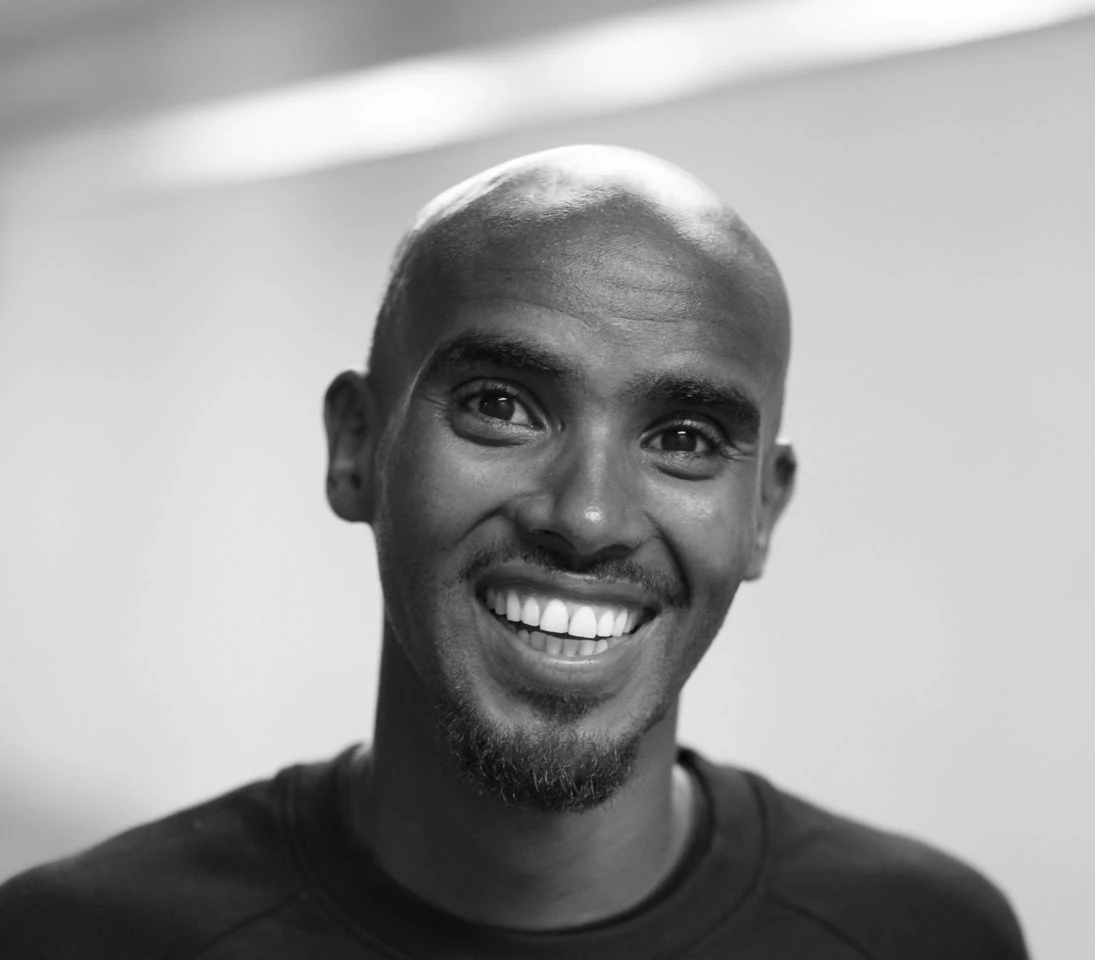
At the London 2012 Olympics, Mo Farah won the 10,000 metres and the 5,000 metres, turning a home Games into a defining chapter in British athletics. Four years later in Rio, he repeated the double. His four Olympic titles sit within a wider record of six World Championship golds and a career that moved from junior cross-country races in west London to the marathon. Behind the familiar victory pose was a runner whose tactical finishing speed helped him prevail in some of the sport’s most important races.
A childhood whose story changed
Farah was born on 23 March 1983 in Gabiley, in what was then the Somali Democratic Republic, under the name Hussein Abdi Kahin. His childhood and arrival in Britain became widely known only in 2022, when he disclosed that he had been trafficked to the UK from Djibouti at the age of nine, given the name Mohamed Farah and forced to work as a domestic servant. He later adopted that name as his own and became a British citizen in 2000. These facts replace earlier accounts that described him as born in Mogadishu and as having arrived with his family as a young child.
For a time, Farah was not allowed to attend school. At about 11 or 12, he began Year 7 at Feltham Community College in west London. His physical education teacher, Alan Watkinson, recognised his running ability. Farah later told Watkinson about his circumstances; the teacher contacted social services, which arranged for him to be fostered by another family. Watkinson also helped him apply for British citizenship.
Farah joined Hounslow Athletics Club and represented the borough at the 1994 London Youth Games. He finished ninth at the English schools cross-country championships in 1996 and won the first of five English school titles the following year. Athletics philanthropist Eddie Kulukundis paid the legal fees associated with his naturalisation, helping him travel to competitions. In 2001, Farah won the 5,000 metres at the European Junior Championships and began training at St Mary’s University, Twickenham. He developed through the British club and university system before becoming a full-time athlete.
From European titles to an Olympic double
Farah’s first senior breakthrough came in 2006, when he won silver in the 5,000 metres at the European Championships in Gothenburg. Later that year he won the European Cross Country Championships. The step from promising runner to world contender came in 2011: at the World Championships in Daegu he took silver in the 10,000 metres and gold in the 5,000 metres, becoming the first British man to win a World Championship medal over either distance. He had also set British records over 5,000 and 10,000 metres that year.
At the London Olympics, Farah won the 10,000 metres on 4 August 2012 and the 5,000 metres on 11 August. Great Britain had not previously won Olympic gold in the men’s 10,000 metres. The double made him one of the Games’ most recognisable British athletes. He repeated it at Rio 2016, becoming the second athlete, after Finland’s Lasse Virén, to win both events at successive Olympic Games. His Rio 10,000-metre victory came after a fall, but he recovered to win; a week later he took gold in the 5,000 metres.
Farah’s championship record extended well beyond the Olympics. He won six World Championship gold medals, including both distance events at Moscow in 2013 and Beijing in 2015. In 2017, at the London World Championships, he won the 10,000 metres and took silver in the 5,000 metres. His final World Championship track race ended a run of ten consecutive global final victories. He also won five European Championship titles, including distance doubles in 2010 and 2014.
Speed, records and the move to the roads
Farah built his races around a strong finish. He could stay with the leading pack and then use his sprint over the final lap to separate himself from rivals. The celebration known as the “Mobot” became another part of his public identity. He adopted the pose in 2012 after appearing on the television panel show A League of Their Own; Clare Balding suggested the gesture, and James Corden gave it its name.
His ability was not confined to the 5,000 and 10,000 metres. In 2013 he set a European record in the 1,500 metres, in a time of 3:28.81, and won both distance titles at the Moscow World Championships. The following year, he completed another 5,000- and 10,000-metre double at the European Championships in Zürich. In 2015, he repeated the world double in Beijing. Those successive doubles at the Olympics and World Championships became known as the “quadruple-double”.
After his final track season in 2017, Farah turned towards road racing. He won the Chicago Marathon in 2018 in 2:05:11, setting a European record, and finished third in the London Marathon that year. He returned to the track in 2021 in an attempt to qualify for the Tokyo Olympics, but did not meet the qualifying standard. His final competitive race was the Great North Run in September 2023.
Farah also set records beyond the championship distances. At a Diamond League meeting in Brussels in 2020, he covered 21,330 metres in one hour, setting a world record. His career brought British and European records across several distances, alongside his Olympic and world medals. These achievements reflected range as well as dominance: he was able to compete from the 1,500 metres through to the marathon.
Recognition and work beyond competition
Farah was appointed Commander of the Order of the British Empire in the 2013 New Year Honours for services to athletics. In the 2017 New Year Honours, he was knighted for the same service. That year he also won BBC Sports Personality of the Year. The honours followed his sustained championship success and placed his sporting contribution within the UK’s national public record.
His charitable work included a trip to Somalia in 2011, after which he launched the Mo Farah Foundation. In 2012, he won £250,000 for the foundation on the television game show The Cube. He also took part in the Olympic hunger summit at 10 Downing Street and supported campaigns concerning money transfers to relatives abroad and corporate tax avoidance in poorer countries. These activities provide a documented account of his work beyond racing without attributing particular programmes or outcomes to the foundation that are not established here.
Farah’s story became the subject of the 2022 BBC documentary The Real Mo Farah, which followed him as he revisited his childhood and reunited with members of his Somali family. The disclosure recast public understanding of the beginnings of a career that had long been celebrated through medals and records. It also made clear that his British sporting life began not with a straightforward family migration, but with the exploitation he later described.
Why Mo Farah deserves a place in British Legacy
Mo Farah’s place in British Legacy rests first on a record of achievement that is specific and exceptional. He won four Olympic gold medals in the 5,000 and 10,000 metres, becoming the first British athlete to win three Olympic athletics golds and the second athlete to retain both distance titles at successive Games. Six World Championship golds, including world doubles in 2013 and 2015, extended that success beyond the Olympic stage. His European titles and records across distances from 1,500 metres to the marathon show that his career was not built on a single event or one memorable summer. For British athletics, his victories made the country’s runners central to the defining track races of two Olympic cycles.
His legacy also includes the route by which he reached the track and the public account he later gave of it. A teacher noticed his talent; social services helped remove him from domestic servitude; and athletics clubs, a university training centre and support for naturalisation helped make international competition possible. Farah’s 2022 disclosure gave his biography a different shape and brought attention to the childhood experiences behind his public identity. His foundation and fundraising work, including the prize money he won for it on The Cube, add a further strand to his record. Together, these details make his legacy more than a list of medals: they connect sporting excellence with the British institutions and personal interventions that helped him compete, and with his later decision to speak publicly about his past.
Sources
Mo Farah — Wikipedia, revision 1376830983
Adapted in part from Mo Farah by Wikipedia contributors, under CC BY-SA 4.0. Text has been edited and combined with the existing article; this adapted text is shared under the same licence. Contributor history.