Danny Boyle’s career has moved from the Royal Court Theatre and BBC television to films that travelled far beyond Britain, and then to a ceremony staged before the world at the London 2012 Olympic Games. His films range from the British breakthrough of Shallow Grave and Trainspotting to the Mumbai-set Slumdog Millionaire and the tightly focused survival drama 127 Hours. What links them is not one subject or genre, but Boyle’s repeated movement between different kinds of story and the creative teams that make them.
From Radcliffe to the stage
Daniel Francis Boyle was born in Radcliffe, Lancashire, on 20 October 1956. He grew up in a working-class Catholic family. His mother had the priesthood in mind for him, and he served as an altar boy for eight years; at 14, however, a priest persuaded him against transferring to a seminary. The distinction matters: Boyle was considered for a seminary, but did not attend one.
He studied at Thornleigh Salesian College in Bolton, then English and drama at the University College of North Wales, now Bangor University. At university he directed productions for the student drama society. After graduating, he joined the Joint Stock Theatre Company and moved to the Royal Court Theatre in 1982, where he directed Howard Brenton’s The Genius and Edward Bond’s Saved. He later directed five productions for the Royal Shakespeare Company, among them work at the Barbican and the Swan Theatre in Stratford-upon-Avon.
These years established a working life across stages and institutions rather than a direct route into film. The theatre credits include The Grace of Mary Traverse, The Bite of the Night and The Silent Woman. In 1987, Boyle began working in television as a producer for BBC Northern Ireland. He worked on television films including Alan Clarke’s Elephant, then directed programmes including Inspector Morse and the BBC Two series Mr Wroe’s Virgins in 1993. Later television work included the BBC films Vacuuming Completely Nude in Paradise and Strumpet, both made in 2001.
Breaking through with British film
Boyle’s first feature as a director was Shallow Grave (1994). It became the most commercially successful British film of 1995 and won the BAFTA for Best British Film. The film also began a lasting working relationship with writer John Hodge and producer Andrew Macdonald, and its success led to Trainspotting in 1996.
Adapted from Irvine Welsh’s novel, Trainspotting follows a group of young people in Edinburgh whose lives are shaped by drug use and its consequences. Ewan McGregor led the cast. The film’s energetic visual approach and soundtrack helped it reach audiences well beyond its setting. Its influence on popular culture is often described in terms of music and fashion, but its subject also brought drug addiction into wider discussion. Boyle and his collaborators had made a film rooted in a particular Scottish world that travelled internationally without losing that grounding.
Shallow Grave and Trainspotting were credited by critics with helping to revitalise British cinema in the early 1990s. The British Film Institute later ranked Trainspotting tenth among the greatest British films of the twentieth century. Boyle’s next film, A Life Less Ordinary (1997), continued his work with Hodge and McGregor. In 2000 he directed The Beach, adapted from Alex Garland’s novel and filmed in Thailand. He followed it with 28 Days Later (2002), beginning another collaboration with Garland, and Millions (2004), written by Frank Cottrell Boyce. Sunshine (2007), another Garland collaboration, took him into science fiction.
International recognition, different kinds of story
Slumdog Millionaire (2008), adapted from Vikas Swarup’s novel Q & A, follows an impoverished child on the streets of Mumbai who competes on the local version of Who Wants to Be a Millionaire? The film won eight Academy Awards, including Best Director for Boyle, and seven BAFTAs. It became the most successful British film of that decade. Its international acclaim did not mean its representation of India went unchallenged: some critics described the film as “poverty porn” or objected to a Western, idealised lens. Boyle defended his emphasis on what he called India’s “lust for life” and “resilience”.
In 2010, Boyle directed 127 Hours, based on Aron Ralston’s account of being trapped beneath a boulder while canyoneering alone. James Franco played Ralston in a film that kept its attention on one person’s struggle. Boyle used split screens and compressed pacing to shape a story with a confined central situation. The film received six Academy Award nominations, including Best Picture and Best Adapted Screenplay; Franco was nominated for Best Actor.
Boyle continued to shift between subjects and formats. He directed Steve Jobs (2015), which closed the BFI London Film Festival, and T2 Trainspotting (2017), returning to the characters of the earlier film. He also directed the romantic comedy Yesterday (2019), written with Richard Curtis. His film work has therefore included crime, horror, science fiction, biography, survival drama and comedy, rather than a single signature genre.
Taking a British story to the Olympic stage
Boyle’s most visible live production was the opening ceremony of the London 2012 Summer Olympics, for which he served as artistic director. Entitled Isles of Wonder, it traced aspects of British culture, including the Industrial Revolution and contributions to literature, music, film and technology. Its television spectacle included Rowan Atkinson as Mr Bean, Daniel Craig as James Bond and a filmed appearance by Queen Elizabeth II.
The ceremony was widely praised in Britain and internationally. Its ambition lay partly in treating the opening of a global sporting event as a piece of storytelling: national history and popular culture were brought together through images, performances and changes of scale. Boyle’s work in theatre, television and film provided a background for a production that had to communicate through visual action to an audience far larger than a cinema or theatre crowd.
He returned to theatre with Frankenstein for the National Theatre in 2011, broadcast to cinemas through National Theatre Live. In 2023, he directed Free Your Mind, a dance adaptation of The Matrix at Manchester’s Factory. These projects show that the stage was not merely an early training ground left behind when he entered film.
Work beyond the screen
Boyle’s work has also included projects with a charitable and educational purpose. He was a founding trustee of Dramatic Need, an organisation working with young people in Rwanda and South Africa to help them address trauma and conflict. Its activities included The Children’s Monologues, which Boyle directed at the Old Vic in 2010 and co-directed at the Royal Court in 2015 and Carnegie Hall in 2017. The charity was wound up in November 2021.
He was a patron of Early Break, a young people’s substance-misuse charity founded in his home town of Radcliffe, and later became a patron of HOME in Manchester. In 2017, he announced a proposal for a film and media school in Manchester. Manchester School of Digital Arts subsequently launched in 2022 as part of Manchester Metropolitan University. These activities sit alongside, rather than inside, his filmography: they connect a director with institutions and opportunities for young people in the north of England.
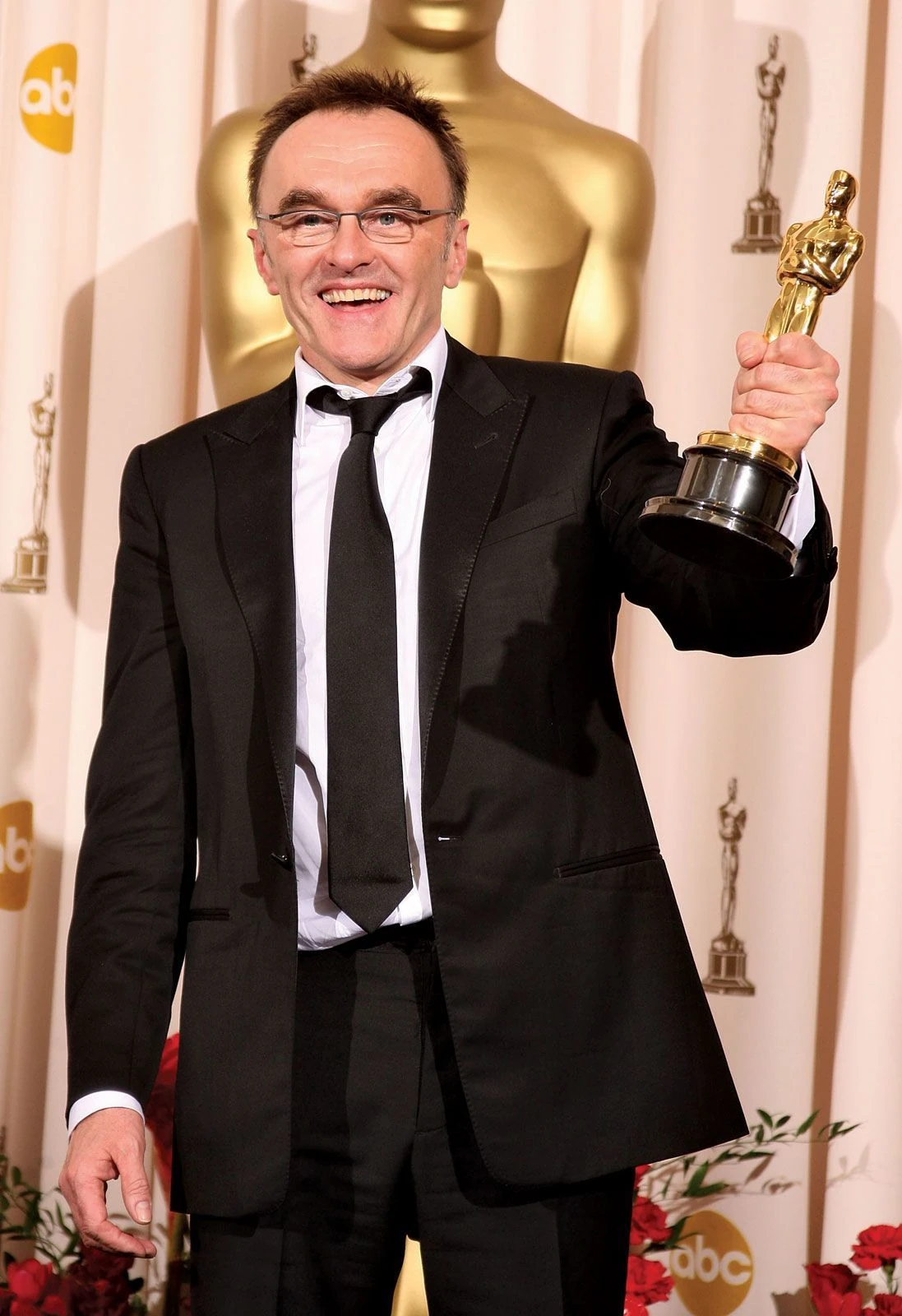
Recognition has come in several forms. Boyle has received an Academy Award, two BAFTA Awards, a Golden Globe and a Primetime Emmy, among other honours. He was selected by artist Peter Blake for a new version of the Sgt. Pepper’s Lonely Hearts Club Band cover in 2012. He declined a knighthood, explaining that he believed in being “an equal citizen rather than a preferred subject”. That stance sits alongside his role in directing a ceremony that celebrated Britain, a reminder that national culture and personal political views need not be identical.
Why Danny Boyle deserves a place in British Legacy
Danny Boyle’s place in British Legacy rests on specific work that has made British filmmaking visible at home and abroad. Shallow Grave and Trainspotting, made with writer John Hodge and producer Andrew Macdonald, helped bring new attention to British cinema in the 1990s. Trainspotting took a story set in Edinburgh to international audiences, while the BFI’s ranking of the film among the greatest British films of the twentieth century records its lasting place in the country’s screen culture. Boyle’s later projects show that this early success was not a narrow achievement: he worked across genres and collaborated with writers including Alex Garland, Frank Cottrell Boyce and Richard Curtis.
His British legacy is also public and practical. In Isles of Wonder, he shaped a globally watched Olympic ceremony around British industrial, artistic and popular culture. Theatre remained part of his career, from the Royal Court and Royal Shakespeare Company to the National Theatre and Manchester’s Factory. His association with Dramatic Need, Early Break, HOME and the Manchester School of Digital Arts adds a further dimension: creative work can reach people not only through celebrated films but through cultural organisations, performance and education. Together, these achievements connect an internationally recognised director to British stages, film institutions and communities, and explain why his story belongs in a record of the country’s cultural legacy.
Sources
Danny Boyle — Wikipedia revision 1379501805
Adapted in part from Danny Boyle by Wikipedia contributors, under CC BY-SA 4.0. Text has been edited and combined with the existing article; this adapted text is shared under the same licence. Contributor history.