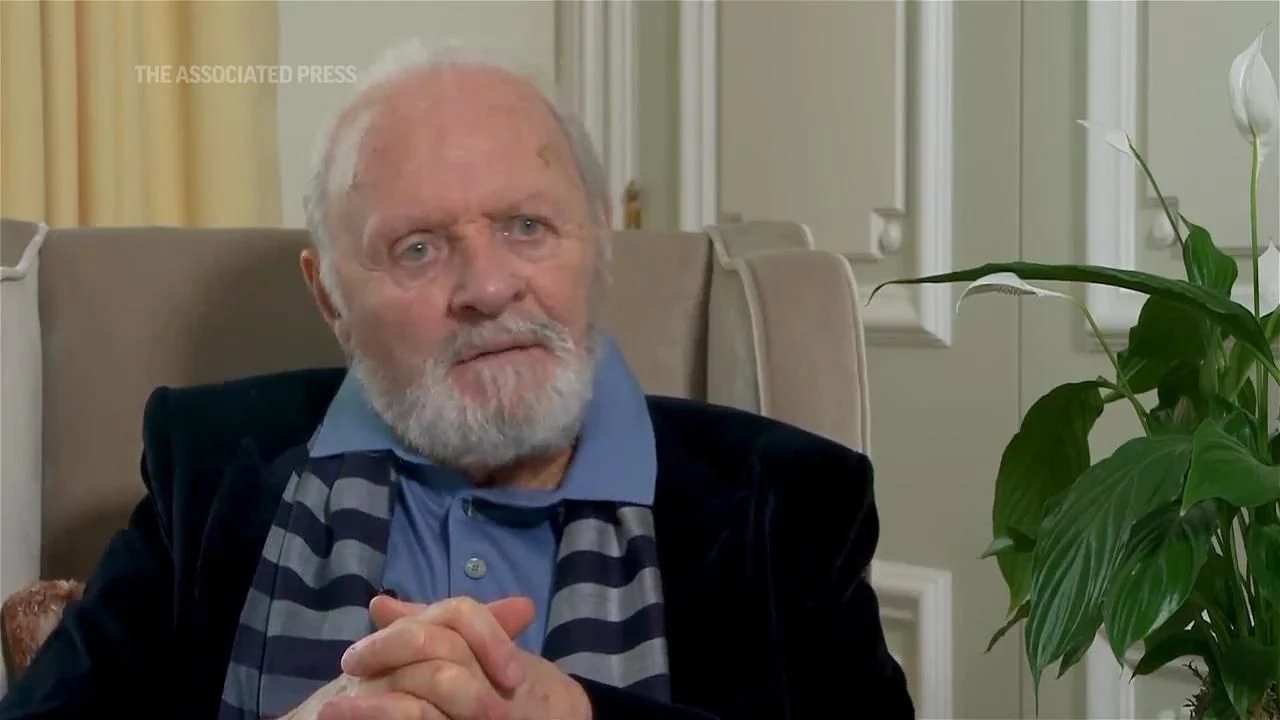
Anthony Hopkins built a career across theatre, television and film, moving from a Welsh drama college to the Royal National Theatre and, eventually, leading roles known to audiences around the world. His two Academy Awards came decades apart: first for playing Hannibal Lecter in The Silence of the Lambs, then for his portrayal of a man with dementia in The Father. Alongside that screen work, he has returned repeatedly to Welsh institutions and causes, supporting the college where he trained and fundraising for the protection of Snowdonia.
Training in Wales, then London
Born Philip Anthony Hopkins on 31 December 1937, he grew up in the Margam district of Port Talbot, Wales. He studied at the Royal Welsh College of Music & Drama in Cardiff, graduating in 1957. After two years of national service in the Royal Artillery, he moved to London to train at the Royal Academy of Dramatic Art, completing his studies in 1963.
Hopkins made his professional stage debut in Swansea in 1960, with Swansea Little Theatre’s production of Have a Cigarette. After working in repertory theatre, he joined the Royal National Theatre in 1965 at Laurence Olivier’s invitation. He became Olivier’s understudy and took over as Edgar in The Dance of Death when Olivier was taken ill in 1967. Hopkins later recalled that Olivier’s advice about nerves changed his approach to performing.
The National Theatre years brought major Shakespearean roles, including King Lear, Coriolanus, Macbeth and Antony and Cleopatra. In 1974–75, Hopkins played Dysart in the original Broadway production of Peter Shaffer’s Equus. A decade later, his performance as Lambert Le Roux in David Hare and Howard Brenton’s Pravda won him a Laurence Olivier Award. His last stage appearance was in the West End production of M. Butterfly in 1989.
Screen roles and international recognition
Hopkins’s early screen work included the television production War and Peace (1972), in which he played Pierre Bezukhov and won a British Academy Television Award for Best Actor. His film career gathered pace with roles in The Lion in Winter (1968), A Bridge Too Far (1977) and The Elephant Man (1980). He also played Adolf Hitler in the television film The Bunker (1981), earning one of his two Primetime Emmy Awards.
His performance as Hannibal Lecter in Jonathan Demme’s The Silence of the Lambs (1991) brought an Academy Award for Best Actor and a BAFTA in the same category. Hopkins returned to the character in Hannibal (2001) and Red Dragon (2002). The role became a defining part of his screen career, but it was one among a wide range of parts: he played the butler Stevens in The Remains of the Day, C. S. Lewis in Shadowlands, and presidents and historical figures in films including Nixon and Amistad.
For The Remains of the Day (1993), he received a BAFTA Award and an Academy Award nomination. His other Oscar-nominated performances include Nixon (1995), Amistad (1997) and The Two Popes (2019). He also appeared as Odin in three films in the Thor series and played Robert Ford in the television drama Westworld. His career has crossed genres and formats, from Shakespeare and literary adaptations to thrillers, television drama and large-scale film productions.
In The Father, directed by Florian Zeller, Hopkins played a man experiencing dementia. The performance won him his second Academy Award for Best Actor, following the film’s 2020 release; the award was presented in 2021. He also won a fourth BAFTA, including a third award for Best Actor. The recognition added a late-career landmark to a body of work that had already spanned six decades.
Welsh causes, music and work behind the camera
Hopkins’s connection to Wales has included practical support for cultural and environmental causes. He contributed towards the refurbishment of a wing at the Royal Welsh College of Music & Drama, his former college. The £2.3 million wing, named the Anthony Hopkins Centre, opened in 1999. The college connection is especially tangible: the institution that trained him later carried his name in a facility developed through his contribution.
He also served as president of the National Trust’s Snowdonia Appeal, which raised funds to help the Trust purchase parts of Snowdon for conservation. In 1998, he donated £1 million towards the £3 million campaign target. Before the appeal, he wrote Anthony Hopkins’ Snowdonia, published in 1995. These commitments link his public profile to the protection of a landscape in north Wales and to a Welsh institution focused on arts training.
Acting is not his only creative work. Hopkins has composed music since his youth. His orchestral works include The Masque of Time, premiered by the Dallas Symphony Orchestra in 2008, and Schizoid Salsa. In 2011, André Rieu recorded And the Waltz Goes On, a waltz Hopkins had written in 1964. The following year, the City of Birmingham Symphony Orchestra performed works from his album Composer; one piece, Margam, takes its title from his home town.
He has also directed films, including Dylan Thomas: Return Journey (1990), a film about the Welsh poet, and August (1995), an adaptation of Chekhov’s Uncle Vanya set in Wales. In 2007, he wrote, directed and scored the experimental drama Slipstream. These projects show a creative practice extending beyond acting into music, screenwriting and direction.
Honours and a life in performance
Hopkins was appointed a Commander of the Order of the British Empire in 1987 and knighted in 1993 for services to drama. His honours also include four BAFTA Awards, two Primetime Emmy Awards and a Laurence Olivier Award. In 2008, he received the BAFTA Fellowship for lifetime achievement. He was made a freeman of Port Talbot in 1996, an honour that reflected his connection to the town where he grew up.
Hopkins has spoken publicly about recovery from alcoholism and has said that he has remained sober since 1975. That personal experience is distinct from evidence of a public role in mental-health advocacy: the available account documents his own experience, but does not establish the broader charitable campaigns attributed to him in some descriptions. His documented charitable activity includes support for Snowdonia conservation and the Royal Welsh College of Music & Drama.
Why Sir Anthony Hopkins deserves a place in British Legacy
Hopkins’s place in British Legacy rests first on the scale and range of his contribution to performance. Trained in Cardiff and London, he developed from a stage actor at the National Theatre into an internationally recognised screen performer. His work has encompassed Shakespeare, television drama and major films, while two Academy Awards for roles separated by nearly three decades mark the durability of his achievement. His honours—from the Laurence Olivier Award and BAFTA recognition to his knighthood for services to drama—also connect his career to the institutions and traditions of British performance.
His Welsh ties give that cultural legacy a local and practical dimension. Hopkins supported the refurbishment of his former college, helping create the Anthony Hopkins Centre, and gave £1 million to the National Trust’s Snowdonia Appeal. Those actions benefited arts training and conservation in Wales, rather than serving only as symbols of celebrity. His work as a composer and director further shows a creative life extending beyond acting, with Welsh subjects and places appearing in projects such as Dylan Thomas: Return Journey and Margam. Taken together, his performances, professional recognition and documented support for Welsh cultural and environmental causes make his connection to British life specific and enduring.
Sources
Anthony Hopkins — Wikipedia revision
Adapted in part from Anthony Hopkins by Wikipedia contributors, under CC BY-SA 4.0. Text has been edited and combined with the existing article; this adapted text is shared under the same licence. Contributor history.