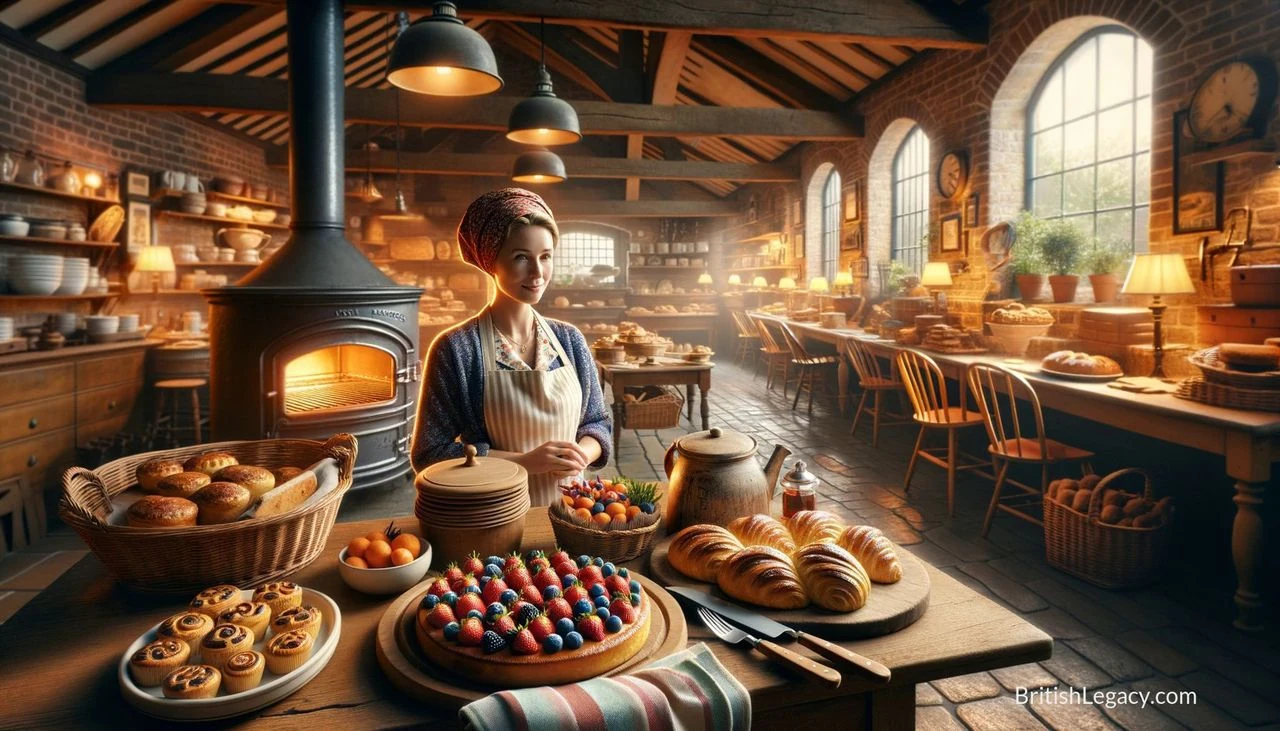
Mary Berry’s public career has connected the working details of cooking with the pleasures of eating. She began by demonstrating electric ovens to householders, went on to test and write recipes, and later became familiar to television audiences as a judge on The Great British Bake Off. Her cookery books and programmes have carried that practical approach across decades: explaining how to make a cake, what to look for as it bakes, and how to bring a dish to the table.
Learning to cook in Bath and Paris
Born Mary Rosa Alleyne Berry in Bath, Somerset, on 24 March 1935, she was the second of three children. Her mother, Margaret, was from Scotland; her father, Alleyne William Steward Berry, was a chartered surveyor and planner who served as Mayor of Bath in 1952. Berry attended Bath High School, where domestic science teacher Miss Date encouraged her interest in cooking. A treacle sponge pudding she made in class earned her father’s approval, and she went on to study catering at Bath College of Domestic Science.
At 13, Berry contracted polio and spent three months in hospital. The illness left her with a twisted spine, a weaker left hand and a thinner left arm. She later said that being separated from her family during her hospital stay toughened her and taught her to make the most of opportunities. Her education and early experience helped build a career around both cooking and explaining it.
Her first job was at the Bath Electricity Board showroom. She visited new customers to demonstrate their electric ovens, often baking a Victoria sponge as she worked. At 22, having moved towards a life beyond the family home, she applied to work at the Dutch Dairy Bureau and took City & Guilds courses in the evenings. She persuaded her manager to fund professional study at Le Cordon Bleu in Paris. The training complemented the practical work she had already begun: showing people how to use equipment, then making a recipe demonstrate what it could do.
Recipes, books and food journalism
Berry moved from the Dutch Dairy Bureau to recipe testing at the public-relations firm Benson’s, where she began writing her first book. She also cooked for food-related organisations including the Egg Council and the Flour Advisory Board. In 1966 she became food editor of Housewife magazine; from 1970 to 1973 she held the same role at Ideal Home. Those jobs placed recipe development and clear instruction at the centre of her working life.
Her first book, The Hamlyn All Colour Cookbook, appeared in 1970. She went on to publish more than 70 cookery books, selling over five million copies. Among them was the best-selling Baking Bible, published in 2009. Berry regularly worked on her books with Lucy Young, her assistant for more than 20 years. The scale of that publishing career is one measure of her reach, but its lasting appeal also rests on the usefulness of the recipes: readers could take a book into the kitchen and put its instructions to work.
Berry’s cooking draws on recognisable British baking, including Victoria sponge, scones, Christmas cake and Bakewell tart. Her lemon drizzle traybake and chocolate roulade are among the recipes associated with her work. The range moves from everyday cakes to more elaborate bakes, while keeping the emphasis on a result a home cook can attempt. In 1994 she launched a product range with her daughter Annabel. Its salad dressings and sauces were initially sold through Berry’s AGA cooking school and later reached retailers in Britain, Germany and Ireland.
From television judge to presenter
Berry’s television career included presenting cookery programmes as well as judging. She became one of the judges on The Great British Bake Off when it began in 2010, working alongside Paul Hollywood. The programme brought amateur bakers and their work into the centre of a popular television competition. Berry’s combination of expertise and accessible criticism made her an important part of its judging partnership.
She remained on the show until 2016. When its move from the BBC to Channel 4 was announced, Berry chose to leave; Hollywood stayed, and Prue Leith took Berry’s place. Her departure closed one chapter of a television role, not her work on screen. Berry had presented several programmes, including Mary Berry Cooks, which began in 2014, and Mary Berry’s Absolute Favourites in 2015. Later series included Mary Berry Everyday, Mary Berry’s Simple Comforts and Mary Berry Cook and Share.
Her programmes have also taken cooking into settings beyond the studio kitchen. In Mary Berry’s Country House Secrets, she visited four British stately homes, exploring their food and history. In 2022 she judged the competition to create a pudding for Queen Elizabeth II’s Platinum Jubilee, part of a nationwide search for a new celebratory recipe. These projects gave her role room to range from practical cookery to food as a part of place, history and public occasion.
Public service and recognition
Berry’s work has extended into charitable and educational roles. For more than 20 years she opened her garden for charity, and in 2016 she became President of the National Garden Scheme. She is also a patron of Child Bereavement UK. In 2012 she became the first president of the Bath Spa University Alumni Association, a role that connected her public profile with the city where she had studied domestic science.
Her honours include the Guild of Food Writers’ Lifetime Achievement Award in 2009 and appointment as a Commander of the Order of the British Empire in 2012 for services to the culinary arts. Bath Spa University awarded her an honorary degree in 2012. She received the Freedom of the City of Bath in 2014 and became a liveryman of the Worshipful Company of Bakers that year. In 2020 she was appointed Dame Commander of the Order of the British Empire for services to broadcasting, the culinary arts and charity; she received the honour at Windsor Castle in 2021.
Berry married Paul Hunnings in 1966. They had two sons and a daughter; one of their sons died in a car accident in 1989, aged 19. Berry’s mother died in 2011, aged 105. These are parts of her life beyond her professional achievements, but her public contribution is most clearly traced through the work she made: books, recipes and programmes that kept cooking in view as a learnable, shared activity.
Why Mary Berry deserves a place in British Legacy
Mary Berry’s place in British Legacy rests on a sustained contribution to British food culture through practical teaching. Her career began with demonstrations of electric ovens in Bath and developed through recipe testing, food journalism and cookery books. The thread between those stages is clear: she has repeatedly made cooking understandable to people who want to do it themselves. Her books, including the Baking Bible, brought a large body of recipes into domestic kitchens, while her television work let viewers see a cookery expert assess technique and explain results.
Her years as a judge on The Great British Bake Off gave that expertise a particularly visible platform. The programme celebrated amateur baking, and Berry’s role helped make close attention to a bake part of a shared television experience. Her work has also connected food with British places and public life, from visits to historic houses to judging a pudding for the Platinum Jubilee. Alongside her broadcasting, her charitable roles and support for food education have extended her public contribution beyond entertainment. Berry’s legacy is therefore not simply a list of popular recipes or television appearances. It is the example of a British cookery writer and presenter making skill, instruction and the pleasures of baking accessible to successive audiences.
Sources
Adapted in part from Mary Berry by Wikipedia contributors, under CC BY-SA 4.0. Text has been edited and combined with the existing article; this adapted text is shared under the same licence. Contributor history.