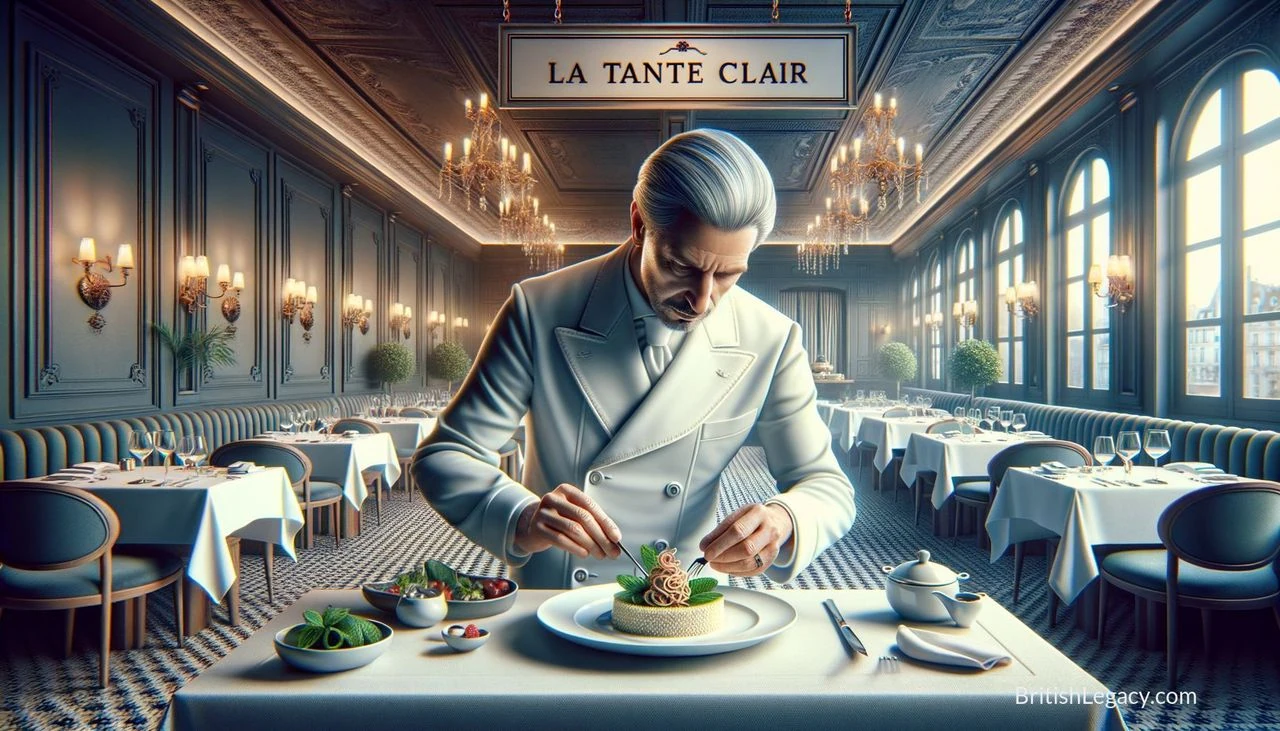
Pierre Koffmann’s London career began with a rugby match in mind. He moved from France to Britain in 1970 hoping to see England play France at Twickenham, then built a career that would make his Chelsea restaurant, La Tante Claire, one of the country’s most highly rated kitchens. Its pig’s trotter, filled with chicken mousseline, sweetbreads and morels, became a signature dish; its kitchen also helped launch several chefs who later became prominent in their own right.
Early lessons in Gascony
Koffmann was born in Tarbes, in south-western France, on 21 August 1948. His father was a mechanic for Citroën. During school holidays, Koffmann learned about cooking from his maternal grandparents, Camille and Marcel, in Saint-Puy. Their food came largely from the farm, and much of his grandmother’s cooking was done over an open fire. The meals and methods of that childhood later informed his recollections in Memories of Gascony, published in 1990, and the cooking associated with him in London.
He left school in 1963 and, after considering different kinds of work, attended cookery school in Tarbes for three years. He began his professional career in kitchens in Strasbourg and Toulon. In 1970, he moved to the United Kingdom to work for Michel and Albert Roux at Le Gavroche. Two years later he joined the Roux brothers’ Waterside Inn in Bray, Berkshire, becoming its first head chef. There he met Annie, the restaurant’s manager, whom he later married.
La Tante Claire and its signature dish
In 1977, Koffmann opened La Tante Claire in Royal Hospital Road, Chelsea. The restaurant earned its first Michelin star in 1979, a second in 1980 and a third in 1983, six years after opening. At the time, it was only the second restaurant in the United Kingdom to receive three stars. The sequence of awards marked the restaurant’s rise, but its reputation rested on the food as well as the ratings.
La Tante Claire’s best-known dish was a pig’s trotter filled with chicken mousseline, sweetbreads and morels. It demanded careful preparation while drawing on ingredients and flavours associated with the cooking Koffmann had known in France. Marco Pierre White later called it his favourite dish of all time. The restaurant also became known for dishes including rabbit and lobster, but the pig’s trotter remains the clearest emblem of Koffmann’s cooking: technically exacting, rooted in French tradition and served in a London dining room.
In 1998, La Tante Claire moved from Chelsea to the Berkeley hotel in Knightsbridge. The former Chelsea premises were sold and became the site of Restaurant Gordon Ramsay. The restaurant at the Berkeley continued under Koffmann’s name until 2003, when he closed it following the death of his wife, Annie. The move and closure were separate events, rather than a single transfer that ended the restaurant’s life at the hotel.
A kitchen that shaped other careers
Among the chefs who worked in Koffmann’s kitchens were Gordon Ramsay, Marco Pierre White, Marcus Wareing and Tom Kitchin. Their later careers gave La Tante Claire’s kitchen an influence beyond the diners who ate there: it was also a workplace where younger cooks encountered the demands of a prominent restaurant. Their subsequent success is part of Koffmann’s professional story, though it does not make every later chef’s account of him identical.
Wareing, in particular, has spoken about their relationship in differing terms. An earlier account quoted him describing a kitchen in which he had little guidance about menus or where to find things; later, he praised Koffmann as a “complete thoroughbred” who ran the kitchen from the stove. That contrast is a reminder that a chef’s influence is not necessarily a simple tale of mentorship. Koffmann’s kitchen trained cooks who went on to build their own reputations, while the recollections also convey the intensity and demands of restaurant work.
Return to the stove
After closing La Tante Claire, Koffmann took a break from restaurants and was briefly head chef at the Bleeding Heart pub in Clerkenwell. In 2009, he opened a ten-day pop-up at Selfridges as part of the London food festival. He had planned new dishes but chose instead to serve familiar La Tante Claire favourites, including the pig’s trotter, foie gras and pistachio soufflé. The engagement lasted two months. Koffmann later described its first month as difficult, but the experience renewed his interest in opening a restaurant.
Koffmann’s at the Berkeley opened on 30 June 2010, in premises previously occupied by Gordon Ramsay’s Boxwood Cafe. This was his first full restaurant venture since La Tante Claire closed in 2003. He said he was no longer chasing Michelin stars and wanted to cook the Gascon-style food he remembered from childhood. The restaurant closed on 31 December 2016, ending his tenure as its head chef.
Outside the restaurant, Koffmann was involved with The Food Heroes, a company established by him, Annie and her brother. It sold potatoes, chips, fruit and vegetables; its chips were first supplied to restaurants and later marketed to the public. This work extended his connection with food beyond menus and dining rooms, to the ingredients and products reaching cooks and customers.
Why Pierre Koffmann deserves a place in British Legacy
Koffmann’s place in British culinary history rests on a career built in British kitchens. He arrived in 1970, worked with the Roux brothers at Le Gavroche and the Waterside Inn, then opened La Tante Claire in Chelsea. The restaurant’s progress from its first Michelin star in 1979 to three stars in 1983 made it a landmark in British fine dining. Koffmann brought a distinctly French and Gascon inheritance to that work, but his achievement was not simply to reproduce the food of his childhood. He established a restaurant in London whose dishes, including the pig’s trotter with chicken mousseline, sweetbreads and morels, became closely identified with its own kitchen and were remembered by diners and fellow chefs.
His wider legacy includes the cooks who worked for him and went on to lead kitchens of their own, among them Ramsay, White, Wareing and Kitchin. Their careers do not erase the complexity of working in a demanding restaurant, but they show how a single kitchen can contribute to the development of a wider profession. Koffmann also returned to London restaurant life after a break, first through the Selfridges pop-up and then with Koffmann’s at the Berkeley, where he chose to cook in a style shaped by his Gascon roots rather than pursue further stars. His story links French culinary traditions with the people, restaurants and food culture of Britain: a contribution specific enough to merit remembrance, and substantial enough to extend beyond one celebrated dish.
Sources
Adapted in part from Pierre Koffmann by Wikipedia contributors, under CC BY-SA 4.0. Text has been edited and combined with the existing article; this adapted text is shared under the same licence. Contributor history.