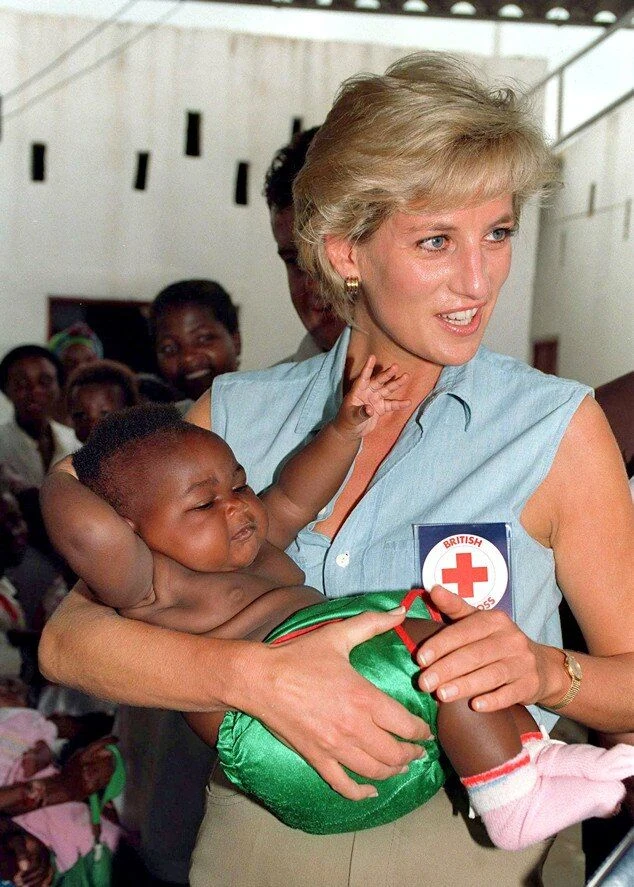
Diana, Princess of Wales, became one of the most recognisable members of the British royal family. Her public work ranged from visits to people affected by HIV/AIDS to support for homeless young people and campaigning against landmines. In each case, she brought attention to people and experiences that were often marginalised. Her influence was international, but her life and work were also part of the modern public history of the British monarchy.
From Diana Spencer to the Princess of Wales
Diana Frances Spencer was born on 1 July 1961 into British nobility. Her early life, as the existing account describes it, was comparatively private; it offers little further detail about her childhood or schooling. That changed dramatically when she married Charles, Prince of Wales, on 29 July 1981. The wedding was watched by millions around the world and brought her into the centre of public life.
Royal status gave Diana a prominent platform, but the way she used it became a defining feature of her public identity. Her charitable work involved direct contact with people and causes, rather than relying solely on formal statements. She became widely known as “the People’s Princess”, a popular description associated with her approachable public manner. The phrase captures how many people regarded her, while also reflecting the public attention that surrounded her.
Making HIV/AIDS visible
During the 1980s and early 1990s, people with HIV/AIDS faced misunderstanding and prejudice. Diana visited patients in hospital, helping bring their lives into public view. One widely remembered gesture was her shaking hands with an HIV-positive patient without wearing gloves. The existing account presents this as a visible rejection of fear and stigma: a simple act of contact that conveyed respect for people affected by the virus.
Her contribution was not a medical intervention; it was the use of a highly visible public role to challenge how people with HIV/AIDS were treated. By meeting patients in person, she helped make the subject harder to keep at a distance. Her work on the issue sits within a broader pattern in her charity work: she brought attention to people who could otherwise be seen primarily through stigma or hardship.
Homelessness and the landmine campaign
Diana supported Centrepoint, a charity providing accommodation and support to homeless young people. Her visits and practical engagement brought attention to the difficulties they faced. The account also records her support for other homelessness initiatives, though it does not name them. Her association with Centrepoint connected a prominent royal figure with a cause affecting young people in Britain and gave the charity an unusually visible advocate.
In 1997, Diana travelled to Angola and walked through a minefield, drawing attention to the danger landmines posed to civilians, including children. Her visit brought international focus to the campaign against anti-personnel mines. The existing account links her advocacy to the movement that led to the Ottawa Treaty, which sought to ban these weapons. It describes her part in that movement as instrumental; without further evidence, the precise extent of her influence is difficult to establish, but the visit became a prominent moment in the campaign.
Public expectations and a life cut short
Diana’s public manner was often described as a departure from the more distant style associated with royal duties. Through hospital visits, charity work and personal contact with people facing difficult circumstances, she helped foster a more immediate relationship between the monarchy and the public. That approach contributed to her popular image, though a sweeping claim that she alone changed royal protocol would overstate what the account establishes.
Her sons, Prince William and Prince Harry, have also undertaken public advocacy and engagement. The existing article presents this as a continuation of Diana’s example; her influence on their work is best understood as part of her public legacy rather than as a claim that their activities are identical to hers.
Diana died in a car accident in Paris on 31 August 1997. Her death prompted a worldwide outpouring of grief and tributes. The response reflected not only her royal position but also the connection many people felt with a public figure whose charitable work had brought her into contact with people across a range of circumstances.
Why Diana deserves a place in British Legacy
Diana’s place in British Legacy rests on the way she used a British royal platform to bring public attention to people facing stigma, hardship and physical danger. Her hospital visits helped challenge the social distance surrounding HIV/AIDS. Her support for Centrepoint brought visibility to homelessness among young people in Britain. In Angola, her presence at a minefield drew international attention to the risks landmines posed to civilians. These were distinct causes, but they shared a practical feature: she made attention itself part of her public work, meeting people and visiting places rather than keeping advocacy at the level of general statements.
Her legacy should not be reduced to a claim that she single-handedly changed royal practice or secured international policy. The more specific contribution is both more credible and more enduring: she helped make charitable engagement a visible part of her role and gave marginalised issues a place in public discussion. Her work connected the British monarchy with causes that reached beyond Britain, while her support for Centrepoint anchored that public activity in a domestic concern. Remembering Diana means recognising both the reach of her influence and the limits of what can be attributed to one person.