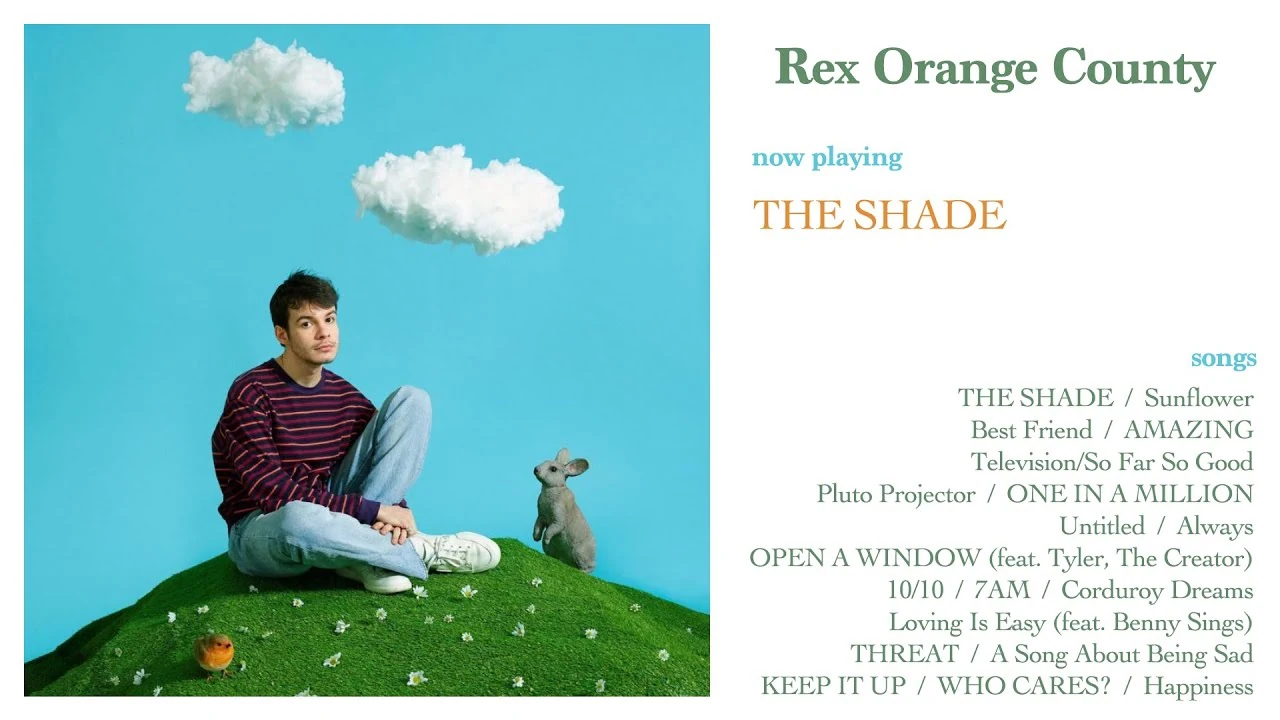
Rex Orange County is the performing name given in the supplied account for Alex O’Connor, whom it associates with Grayshott, Hampshire. The article presents his music as a meeting point for indie pop, alternative hip-hop and jazz, with upbeat melodies set against introspective lyrics. It also points to a do-it-yourself route to an audience and a place on BBC’s Sound of 2018 list. Together, these details offer a portrait of a contemporary British pop artist whose appeal, in the source’s telling, rests on musical variety and directness.
A sound between genres
The account describes a style that does not settle within one category. Indie pop, alternative hip-hop and jazz are all identified as influences, while the contrast between lively melodies and inward-looking words is presented as a recurring feature. Rather than treating the combination as a formal definition, it is more useful to see it as the article’s explanation of why his songs might reach listeners with different musical tastes.
Honesty is another theme in the source’s description. It characterises the lyrics as personal and emotionally open, and attributes to O’Connor the remark, “I'm just being honest about what I think and how I feel.” The article supplies no interview details for that quotation, so it cannot be placed in a wider context here. Its emphasis on candour nonetheless reflects the way the original account frames his creative identity.
Songs and the stories listeners find in them
Three tracks anchor the article’s discussion. “Loving Is Easy” is presented as bright and melodic, with piano among its musical features. “Best Friend” is linked to the uncertainties of young relationships; the article singles out the line, “I can be the one, if you want to.” These descriptions frame the songs not just as titles in a discography but as examples of the musical warmth and emotional accessibility attributed to his work.
The source associates “10/10” with the album Pony and quotes its line about feeling like a five and hoping to become a ten. It reads that lyric as a mixture of self-doubt and resolve, particularly familiar to people navigating adolescence or early adulthood. That interpretation belongs to the supplied article; the lyric’s inclusion here is not independent confirmation of its meaning. Taken together, the three examples show how the source connects the songs’ direct language with the broader themes it finds in the music.
Recognition and a do-it-yourself route
The account says O’Connor was included in BBC’s Sound of 2018, a listing it treats as recognition of his potential. It also describes YouTube and streaming services as part of a do-it-yourself approach to building a career. The article provides no chronology or further detail about that process, but its account draws a connection between online distribution and an artist reaching listeners without relying solely on traditional routes to fame.
Its wider claims—that he has a devoted following and has helped shape modern British music—are promotional assessments rather than documented measures of reach or influence. A more grounded point is that the source identifies specific songs, musical influences and a British industry listing. Those details give its portrait more substance than its sweeping descriptions of a timeless or transformative talent.
Why Rex Orange County deserves a place in British Legacy
The case for Rex Orange County in British Legacy rests, on the evidence supplied, on a distinctive combination of musical elements and a recognisable way of writing about personal feeling. The account connects indie pop, alternative hip-hop and jazz, then gives that description shape through “Loving Is Easy”, “Best Friend” and “10/10”. It presents a contrast between buoyant sound and introspection, and points to candid lyrics as a reason listeners may find the songs relatable. That is a specific artistic profile, not simply a claim that the music is important.
The source also places O’Connor within a British context through its Grayshott association and its reference to BBC’s Sound of 2018. Its account of YouTube and streaming services suggests a route to listeners that differs from relying only on conventional industry channels, though it does not provide enough detail to measure the effect. British Legacy can preserve that picture without overstating it: an artist associated with a British musical scene, described through particular songs and a genre-crossing approach, whose work the source frames around emotional candour.