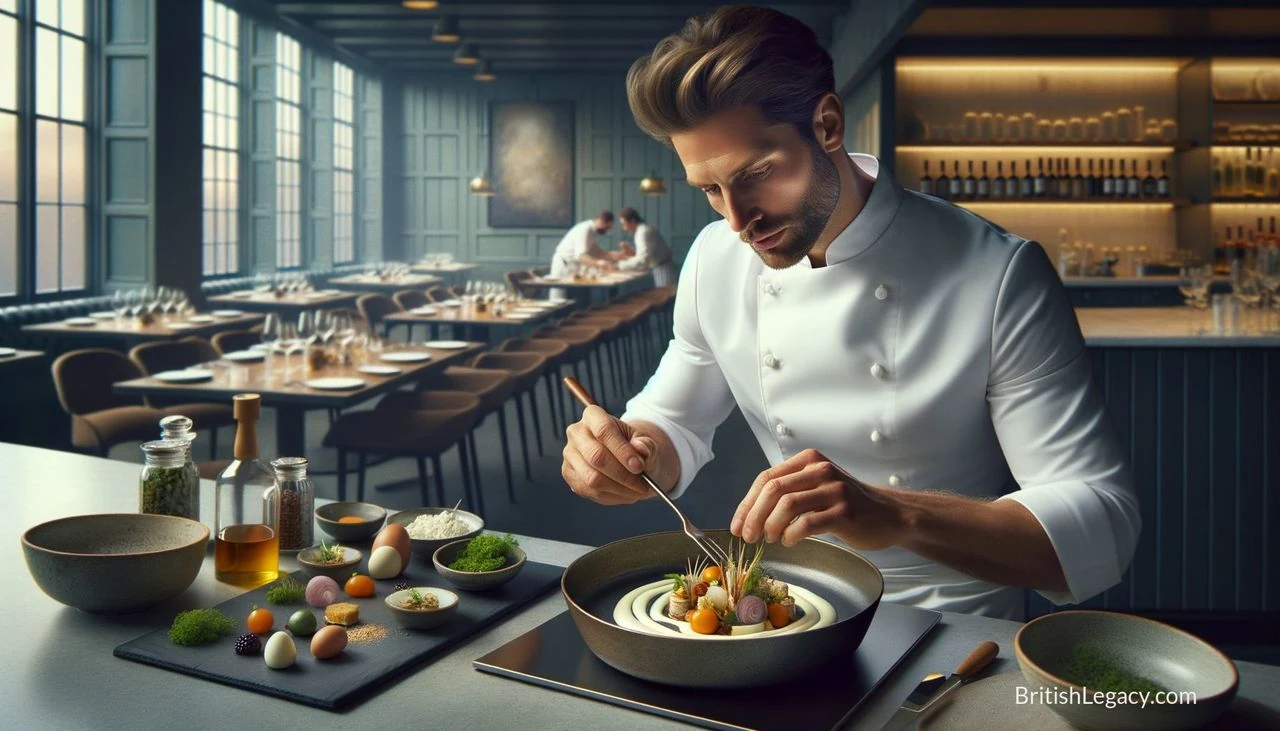
Sat Bains’s cooking brings a local address into conversation with a wide-ranging modern style. At Restaurant Sat Bains in Nottingham, a tasting menu provides the setting for dishes that draw on seasonal produce and unexpected combinations. Among those associated with his cooking are a slow-cooked egg with peas and ham, a liver parfait with raisin and apple, and a dish named for the restaurant’s postcode, NG7 2SA. Together, they point to a chef whose work connects ingredient, place and technique.
From Derby to Nottingham
Bains, whose full name is given as Satwant ‘Sat’ Singh Bains, comes from Derby, England. His route into professional cooking took him through kitchens at several establishments before he opened Restaurant Sat Bains in Nottingham. The account of his early career is brief: it describes an interest in cooking that developed young and a progression through professional kitchens, but does not identify those workplaces or set out a detailed chronology.
The restaurant opened in 2002. It gained its first Michelin star in 2003 and a second in 2011. Those milestones established the restaurant’s reputation, while its tasting-menu format gave Bains room to present a sequence of dishes rather than a single signature plate. The menu is described as drawing on seasonal ingredients and as combining flavours and textures with close attention to presentation.
That approach makes the restaurant more than a showcase for individual recipes. A tasting menu can place different ingredients and techniques alongside one another, and the examples associated with Bains suggest a balance between familiar produce and less expected pairings. The postcode dish makes the Nottingham setting explicit; the egg, peas and ham and the chicken liver parfait with raisin and apple offer other ways to combine recognisable ingredients.
Ingredients, dishes and technique
The slow-cooked egg with peas and ham brings together the soft richness of egg, the sweetness of peas and the savoury flavour of ham. Another listed dish pairs chicken liver parfait with raisin and apple, using fruit to sit alongside the richness of the liver. These are specific examples of the contrasts found in Bains’s cooking: sweet and savoury, rich and fresh, familiar components arranged to make a composed dish.
NG7 2SA takes its name from the restaurant’s postcode. It is described as using ingredients sourced from nearby areas, making the restaurant’s location part of the dish’s identity. That local reference sits alongside a broader emphasis on seasonal sourcing. The account describes Bains as working with regional farmers and suppliers, although it gives no further detail about particular producers or the restaurant’s purchasing arrangements.
Modernist methods, including sous-vide cooking and molecular gastronomy, are also associated with his work. These techniques form part of a contemporary culinary vocabulary, but the lasting character of the dishes described here rests equally on the ingredients and combinations. Bains’s profile is therefore not defined by technique alone: the named dishes and the postcode reference connect experimentation to recognisable flavours and a specific place.
Recognition and sharing ideas
Restaurant Sat Bains is credited with five AA Rosettes, in addition to its two Michelin stars. The account also notes that Bains has received industry awards, including a Chef of the Year accolade, but does not give the names or dates of those awards. These honours reflect the recognition attached to the restaurant and its cooking; they are best understood alongside the concrete record of its opening and Michelin milestones.
Beyond the restaurant, Bains is described as a mentor to aspiring chefs. His cookbook Too Many Chiefs Only One Indian offers another route into his culinary ideas, extending the story beyond the dining room. Mentoring and writing provide ways to pass on experience and communicate a cooking philosophy, although the available account does not specify individual mentees or describe the book’s contents in detail.
Why Sat Bains deserves a place in British Legacy
Sat Bains deserves a place in British Legacy for a body of work rooted in a British city and expressed through an individual approach to contemporary cooking. Restaurant Sat Bains opened in Nottingham in 2002, then earned Michelin stars in 2003 and 2011. Its tasting-menu format gives seasonal ingredients a central role, while dishes such as the egg with peas and ham and the liver parfait with raisin and apple show how familiar flavours can be recombined. The NG7 2SA dish makes the connection to Nottingham particularly clear: the restaurant’s postcode becomes part of the food’s identity.
His significance also lies in the ways his work reaches beyond a single menu. The restaurant’s recognition, the use of modernist techniques, the emphasis on local and seasonal produce, and the reported commitment to mentoring and cookbook writing together describe a chef working across cooking, teaching and communication. The available details do not warrant grand claims about his influence on the whole of British cuisine. They do show a sustained, specific contribution to the country’s restaurant culture: a Nottingham restaurant with a recognisable culinary identity, connected to its region and open to experimentation.