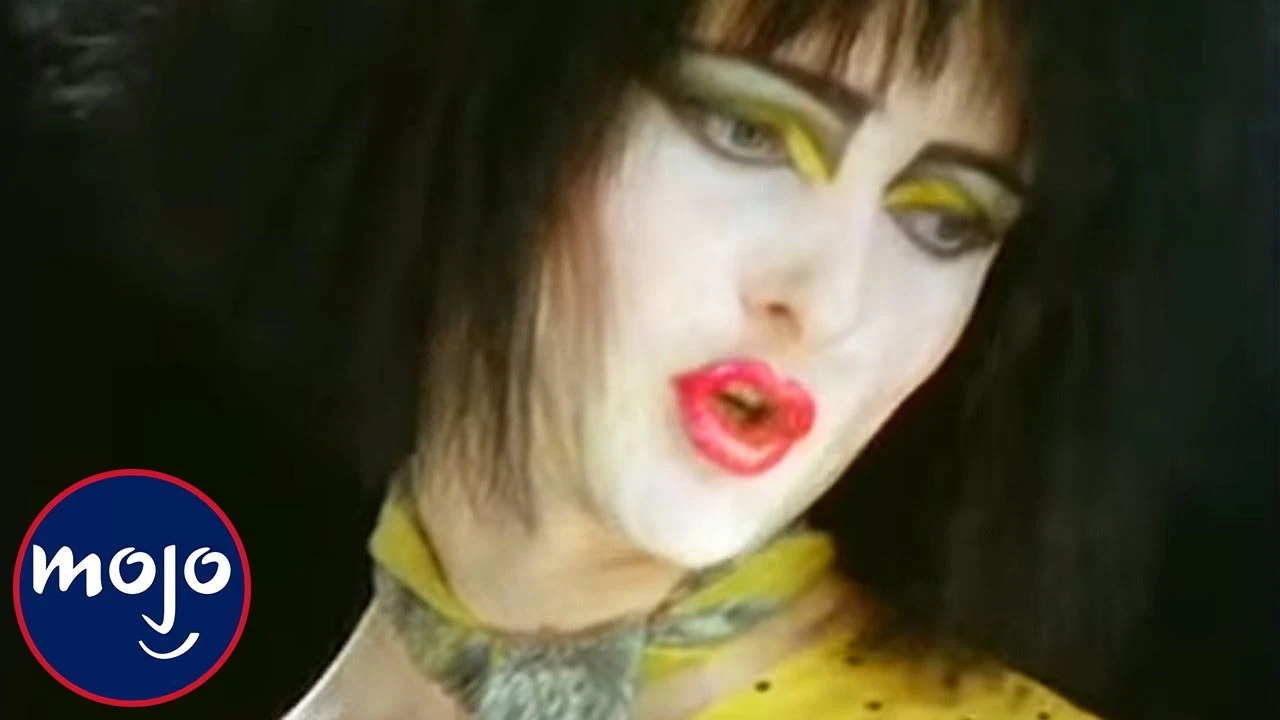
Siouxsie and the Banshees began with an audacious premise: two people with no band name and no additional musicians would take the stage at a London punk festival. Their improvised 20-minute performance of “The Lord’s Prayer” did not end the project, as they had expected. Instead, it set in motion a two-decade career in which vocalist Siouxsie Sioux and bassist Steven Severin remained its constants, while a succession of musicians helped reshape its sound. From the unsettled urgency of The Scream to the shifting colours of Peepshow, the band made experimentation a defining part of its British post-punk story.
A festival appearance becomes a band
Siouxsie Sioux and Steven Severin met at a Roxy Music concert in September 1975. The following year, they and friends began following the Sex Pistols, drawn to their uncompromising approach. When a band scheduled for Malcolm McLaren’s 100 Club Punk Festival pulled out, Siouxsie suggested that she and Severin fill the slot. On 20 September 1976, they appeared with guitarist Marco Pirroni and drummer Sid Vicious, performing a 20-minute improvisation based on “The Lord’s Prayer”.
The pair had intended to split up after the performance, but further invitations to play changed that plan. They recruited drummer Kenny Morris and guitarist Peter Fenton, replacing Fenton with John McKay in 1977. That November, the band made its first live television appearance on Granada Television’s So It Goes and recorded its first John Peel session for BBC radio. The session introduced “Metal Postcard”, with a spare drum pattern and jagged guitar sound that pointed towards a different musical language from straightforward punk.
The band’s first single, “Hong Kong Garden”, came out in 1978 and reached the UK top ten. Its xylophone motif was one early sign of the group’s willingness to make unusual sounds central to a pop song. The debut album, The Scream, followed in November. Reviewers responded to its distinctive treatment of the rock-group format; its impact would outlast the circumstances of the band’s formation.
Changing the shape of post-punk
The second album, Join Hands, appeared in 1979. During the tour that followed, Morris and McKay left after an argument, leaving the band in urgent need of replacements. Drummer Budgie joined, while Robert Smith of the Cure stepped in on guitar to help complete the dates. He returned to his own group afterwards. The episode captures the instability of the early years, but also the network of musicians through which the emerging post-punk scene took shape.
In 1980 the band recorded Kaleidoscope with guitarist John McGeoch, who had been playing with Magazine. Rather than build every song around the same guitar-led arrangement, the group used instruments including synthesisers, sitars and drum machines. The album reached number five on the UK Albums Chart, and its singles included “Happy House” and “Christine”. The Banshees had not abandoned their punk beginnings so much as opened them out: changing texture and arrangement became part of their identity.
For Juju (1981), the musicians worked the songs out in concert before recording them. The album’s darker atmosphere, heard in tracks such as “Spellbound” and “Arabian Knights”, helped connect the band with the developing gothic scene. Its influence was not confined to one genre: the group’s use of rhythm, space and tension gave later musicians a model for making music that could be both forceful and unsettling.
The band kept moving rather than settling on a formula. A Kiss in the Dreamhouse (1982) brought strings into several arrangements and was conceived in contrast to the preceding album. In 1983, Siouxsie and Budgie worked on the Creatures, while Severin and Smith recorded as the Glove. Smith rejoined the Banshees for a time, but left before Hyæna was released in 1984, citing health problems connected with an overloaded schedule. John Valentine Carruthers replaced him. The band then released Tinderbox (1986), followed by the covers album Through the Looking Glass (1987).
New instruments, new audiences
After a break, the group expanded its line-up with multi-instrumentalist Martin McCarrick and guitarist Jon Klein. The five-piece recorded Peepshow in 1988, using instruments including cello and accordion to broaden its palette. “Peek-a-Boo”, the first single, paired horns and dance elements with a distinctive vocal performance. It became the band’s first substantial breakthrough in the United States and reached number 52 on the Billboard Hot 100. The album’s success showed how far the Banshees could travel from their beginnings without losing their taste for surprise.
In 1991, “Kiss Them for Me” combined strings with a dance rhythm and featured tabla player Talvin Singh. The single reached number 23 on the US Billboard Hot 100, bringing the band to another audience. The album Superstition followed, and the group toured the United States as a second headliner on the first Lollapalooza tour. In 1992 they recorded “Face to Face” for Batman Returns at director Tim Burton’s request.
The band’s final studio album, The Rapture, was released in 1995. After Polydor dropped the group, the Banshees completed a final tour, with Knox Chandler replacing Klein. Siouxsie and Severin’s partnership had carried the group through repeated changes of personnel and direction; in April 1996, after 20 years, the band disbanded. Siouxsie and Budgie continued to record as the Creatures.
A continuing influence
The band’s working life did not end entirely with the split. Siouxsie, Severin, Budgie and Chandler reunited briefly for the Seven Year Itch tour in 2002, which produced a live album and DVD. Reissues and collections later brought their catalogue to new listeners, including remastered releases and the 2022 compilation All Souls. Their eleven studio albums trace a group that treated a stable line-up as optional but artistic reinvention as essential.
Musicians from several generations have cited the Banshees as an influence. Members of Joy Division spoke of the force and unusual playing on The Scream; Robert Smith said the group mattered to him, and Johnny Marr praised McGeoch’s guitar work on “Spellbound”. Artists including U2, Radiohead, Jeff Buckley, Tricky and LCD Soundsystem have also been associated with the band’s influence, whether through their own accounts, performances or recordings. Such testimony points to more than the reach of a few successful singles: the Banshees offered later musicians ways to combine abrasive sound, pop structure and a strong sense of atmosphere.
Why Siouxsie and the Banshees deserve a place in British Legacy
Siouxsie and the Banshees deserve a place in British Legacy because their history makes a particular British musical transformation tangible. The group emerged in London’s punk milieu, but did not treat punk as a fixed sound or a brief fashion. Its members turned the urgency and refusal of their beginnings into a sustained practice of experimentation: adding synthesisers, sitars, drum machines, strings, cello and accordion as the music demanded. Albums such as Kaleidoscope, Juju and Peepshow show that development in distinct stages, while the band’s changing line-ups underline how much of its identity depended on creative adaptation.
Their significance also lies in the routes they opened for other musicians. The Banshees helped shape post-punk and the emerging gothic scene, then reached wider audiences in Britain and the United States without abandoning their appetite for unusual arrangements. Their influence is documented in the responses of artists as different as Joy Division, the Cure, U2, Radiohead and Tricky. For a British cultural record, that combination matters: a London band born from a specific local moment made music that travelled, changed the expectations of alternative rock and continued to supply ideas to later generations. Their legacy is not simply that they were early, but that they kept finding new possibilities in the music that followed.
Sources
Adapted in part from Siouxsie and the Banshees by Wikipedia contributors, under CC BY-SA 4.0. Text has been edited and combined with the existing article; this adapted text is shared under the same licence. Contributor history.