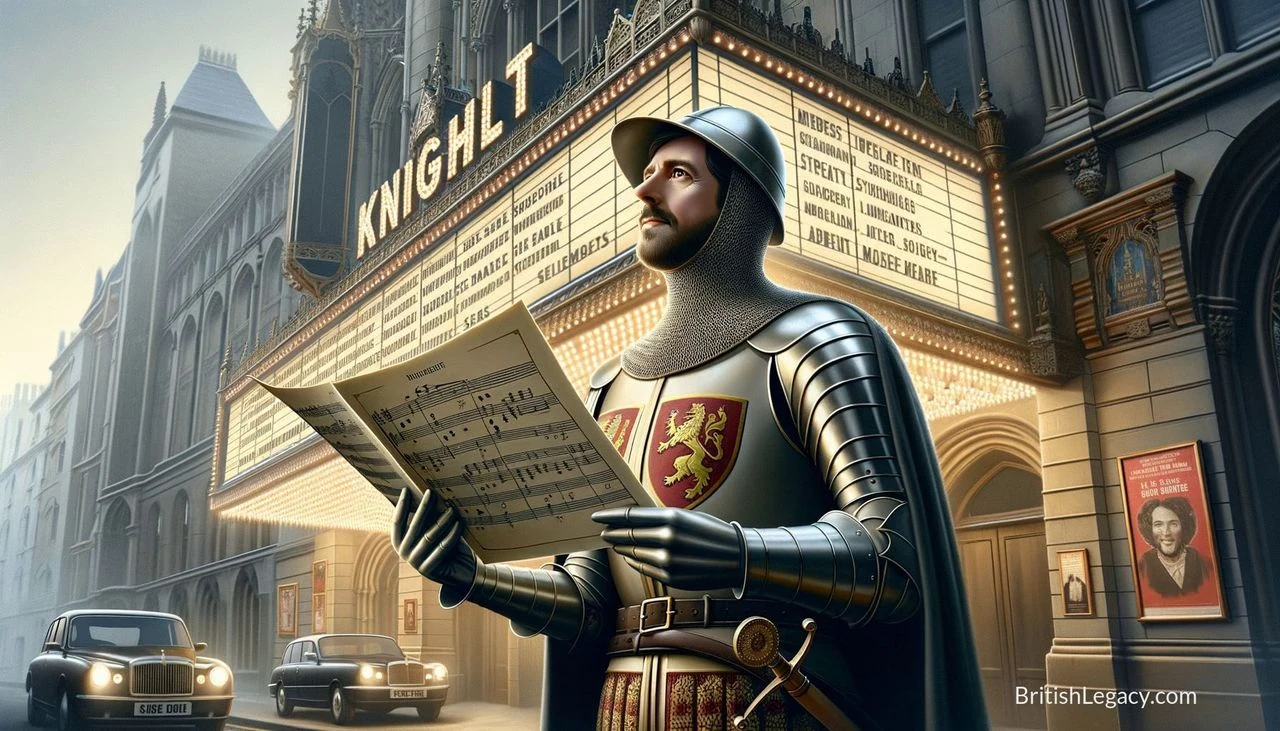
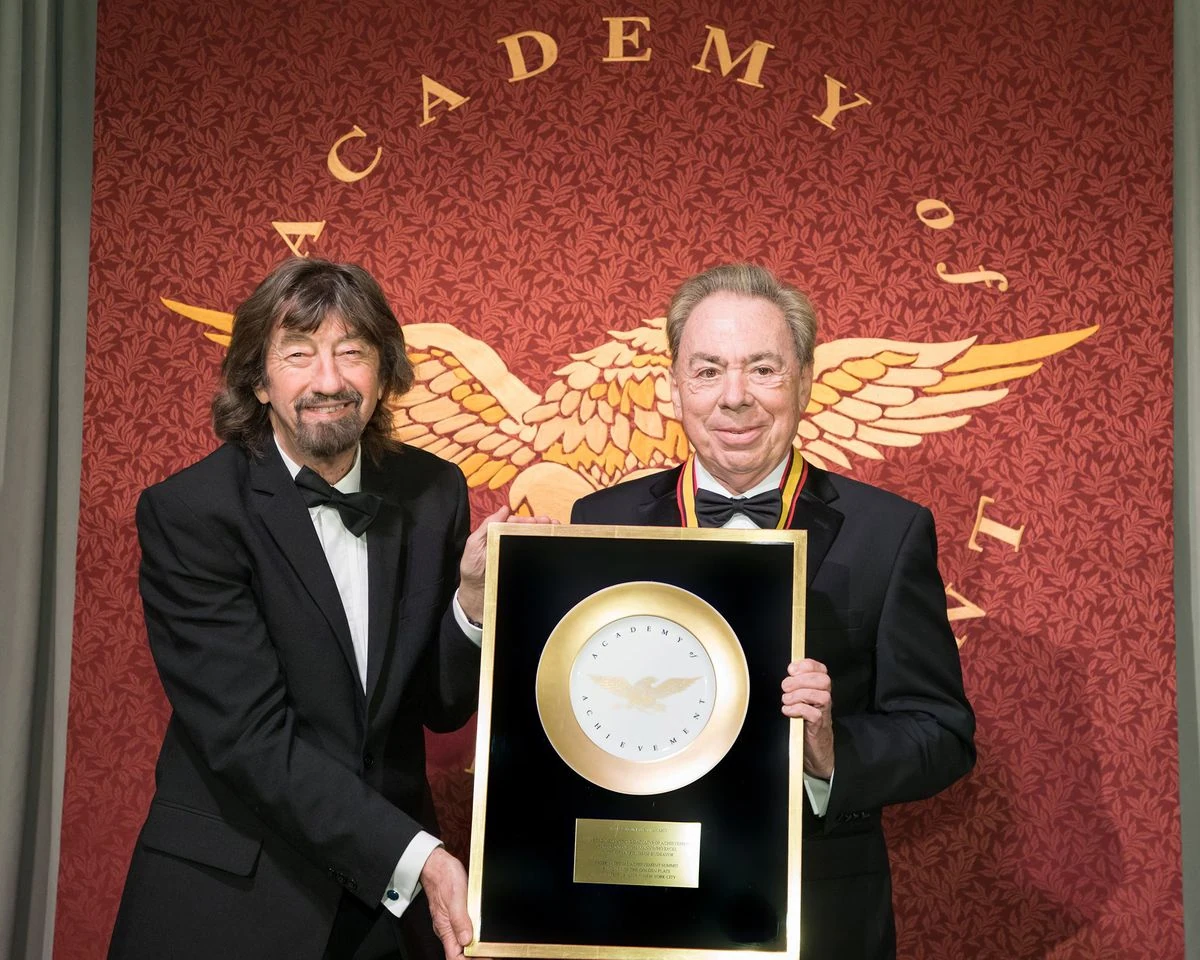
Andrew Lloyd Webber’s musicals have been heard in London, on Broadway and around the world, but their scale was matched by an instinct for the song that could outlive its show. “Memory”, “Don’t Cry for Me Argentina” and “The Music of the Night” each found audiences beyond the productions that introduced them. His career joined composition to the practical business of making theatre: writing for the stage, producing shows and building organisations that could present them.
A musical childhood and an early partnership
Born in London on 22 March 1948, Lloyd Webber was the elder son of composer and organist William Lloyd Webber and violinist and pianist Jean Hermione Johnstone. His younger brother, Julian, became a cellist. Andrew began playing piano and violin at three, took up the French horn and was composing by the age of six. As a boy, he made productions in a toy theatre with Julian and his aunt Viola, an actress who also introduced him to the stage.
He attended Westminster School as a Queen’s Scholar from 1960 to 1965. After beginning a history course at Magdalen College, Oxford, he left to study at the Royal College of Music and pursue composition. He had already met Tim Rice: in 1965, when Lloyd Webber was 17, the two began a partnership that would shape his early career.
Their first musical, The Likes of Us, did not find a backer and was not staged publicly until 2005. A commission for a school choir led them to write Joseph and the Amazing Technicolor Dreamcoat, first conceived as a short pop cantata and later expanded into a full musical. Their next major success, Jesus Christ Superstar, emerged in 1970. It began as a concept album before reaching the stage, and its blend of rock and musical theatre helped establish the pair’s distinctive approach.
From Evita to Cats
Lloyd Webber and Rice returned to the story of a public figure with Evita. The concept album appeared in 1976; the stage production opened in London in 1978, starring Elaine Paige, and later transferred to Broadway. “Don’t Cry for Me Argentina” became one of the composer’s best-known songs. The Broadway production won seven Tony Awards. Rice and Lloyd Webber later worked together intermittently, but their central partnership had come to an end.
After Evita, Lloyd Webber drew on sources beyond contemporary popular music. Cats (1981) set T. S. Eliot’s poems to music, with lyrics based on Old Possum’s Book of Practical Cats. Its London run lasted 21 years and 8,949 performances. “Memory”, sung in the show by Grizabella, also became a hit for Elaine Paige.
Starlight Express followed in 1984. Though its reviews were mixed, it ran for 7,409 performances in London and developed a lasting life in a custom-built theatre in Bochum, Germany. In 1985, Lloyd Webber’s Requiem, written in memory of his father, premiered in New York; he received a Grammy for the work the following year.
The Phantom of the Opera, inspired by Gaston Leroux’s novel, opened in the West End in 1986. Lloyd Webber wrote the role of Christine for Sarah Brightman, who appeared in the original London and Broadway productions. Its songs include “The Music of the Night” and “All I Ask of You”. The Broadway production closed in 2023 after 13,981 performances, the most in Broadway history. Aspects of Love followed in 1989, with lyrics by Don Black and Charles Hart.
New stages, new collaborators
Sunset Boulevard, adapted from Billy Wilder’s film, opened at London’s Adelphi Theatre in 1993. Its Broadway production won seven Tony Awards in 1994. Lloyd Webber continued to work across different forms and with new collaborators: later shows included Whistle Down the Wind, with lyrics by Jim Steinman, and The Beautiful Game, with book and lyrics by Ben Elton.
His work in the 2000s also included producing Bombay Dreams, with music by A. R. Rahman and lyrics by Don Black. In 2006, he produced a new staging of The Sound of Music and used the BBC programme How Do You Solve a Problem Like Maria? to find its leading actor, Connie Fisher. Further television searches found performers for productions of Joseph and the Amazing Technicolor Dreamcoat and Oliver!, bringing the process of casting a West End show to a national audience.
Later stage projects included The Wizard of Oz (2011), with additional music by Lloyd Webber, School of Rock (2015) and Cinderella (2021). He also continued to write for particular occasions: his song “Amigos Para Siempre”, with lyrics by Don Black, was written for the 1992 Barcelona Olympics. In 2023, he contributed the anthem “Make a Joyful Noise” to the coronation of Charles III and Camilla.
Producing, education and public recognition
Lloyd Webber’s influence has also come through production and theatre ownership. His company, originally known as the Really Useful Group and now LW Entertainment, is among London’s major theatre operators. Productions of his musicals have been staged by companies across the United Kingdom, including national tours under licence. This work has helped keep his shows in circulation beyond their original runs and London venues.
In 1992, he established the Andrew Lloyd Webber Foundation, which supports arts, culture and heritage in the UK. The foundation has also supported music education: a programme launched in 2013 worked with the Music in Secondary Schools Trust to help participating pupils study an instrument. Lloyd Webber has been president of Arts Educational Schools in London and has taken part in other charitable activities.
His honours include a knighthood in 1992 for services to the arts and a life peerage in 1997. As Baron Lloyd-Webber, he sat in the House of Lords until retiring in 2017. In 2024, he was appointed a Knight Companion of the Order of the Garter. His awards also include seven Tony Awards, seven Laurence Olivier Awards and three Grammys. In 2018, he, Tim Rice and John Legend won an Emmy for Jesus Christ Superstar Live in Concert, making all three winners of an Oscar, an Emmy, a Grammy and a Tony.
Why Andrew Lloyd Webber deserves a place in British Legacy
Andrew Lloyd Webber’s place in British cultural history rests on more than a run of hit songs. His work helped make the modern British musical a significant export, with shows that began in London finding audiences and long runs elsewhere. The scale and variety of those productions are part of the evidence: Cats ran for more than two decades in the West End; The Phantom of the Opera became the most-performed show in Broadway history; and Evita moved successfully from a concept album to stages in London and New York. These achievements connect British theatre-making to an international audience without reducing the story to fame alone.
His legacy also includes the organisations and routes through which theatre reaches people. As a composer and producer, he helped sustain productions and tours; through the Andrew Lloyd Webber Foundation, he supported arts, culture and heritage in the UK, including programmes that widen access to music education. His television casting projects brought the making of a musical into homes across the country, while his work for the 1992 Olympics and the 2023 coronation placed music in public events with a British connection. Taken together, his compositions, production work and support for arts education show how one career can shape both what audiences hear and the institutions that help artists and performances reach them.
Sources
Andrew Lloyd Webber — Wikipedia revision 1376864049
Adapted in part from Andrew Lloyd Webber by Wikipedia contributors, under CC BY-SA 4.0. Text has been edited and combined with the existing article; this adapted text is shared under the same licence. Contributor history.