Before Hannibal Lecter made Anthony Hopkins internationally famous, he had worked through repertory theatre, the Royal National Theatre and a succession of British stage and television roles. Born in Wales, he trained in Cardiff and London, then built a screen career that brought two Academy Awards, four BAFTAs and a knighthood for services to drama. His career has ranged across Shakespeare, television drama and cinema for more than six decades.
Welsh beginnings and London training
Philip Anthony Hopkins was born on 31 December 1937 in the Margam district of Port Talbot, Wales, the son of baker Richard Arthur Hopkins and Annie Muriel Hopkins. At school he preferred art and music to his studies. At 15, he met the Welsh actor Richard Burton, whom he later described as gracious but not a close friend. Burton made an impression, but Hopkins’s route into acting took shape through formal study.
Hopkins graduated from the Royal Welsh College of Music & Drama in Cardiff in 1957. After two years of national service in the Royal Artillery, he moved to London and studied at the Royal Academy of Dramatic Art, graduating in 1963. His first professional stage appearance came in 1960, with Swansea Little Theatre’s production of Have a Cigarette. Several years of repertory work followed.
In 1965, Laurence Olivier invited Hopkins to join the Royal National Theatre. Hopkins became Olivier’s understudy; when Olivier was taken ill during a 1967 production of August Strindberg’s The Dance of Death, Hopkins stepped in. Olivier later praised the young actor’s promise. The National’s productions gave Hopkins demanding classical parts, including roles in King Lear, Coriolanus, Macbeth and Antony and Cleopatra. His performance in David Hare’s Pravda brought him a Laurence Olivier Award in 1985. His last stage appearance was in the West End production of M. Butterfly in 1989.
Building a career on stage and screen
Hopkins’s early screen work included the BBC’s War and Peace (1972), in which he played Pierre Bezukhov and won a British Academy Television Award for Best Actor. His film roles included The Lion in Winter (1968), A Bridge Too Far (1977), Magic (1978) and The Elephant Man (1980). These parts established a screen career before the role that would define his international reputation.
In Jonathan Demme’s The Silence of the Lambs (1991), Hopkins played Hannibal Lecter opposite Jodie Foster as Clarice Starling. The performance won him the Academy Award for Best Actor and a BAFTA for Best Actor in a Leading Role. He returned to the character in Hannibal (2001) and Red Dragon (2002). Lecter became a prominent part of his public image, but it was one strand in a career that continued to encompass very different characters and styles.
In The Remains of the Day (1993), Hopkins played the butler Stevens, earning another Academy Award nomination and a BAFTA for Best Actor. The British Film Institute ranked the film among the greatest British films of the twentieth century. Hopkins was also nominated for his portrayal of C. S. Lewis in Shadowlands (1993), Richard Nixon in Nixon (1995), and for Amistad (1997) and The Two Popes (2019). Other notable screen work includes Howards End, Bram Stoker’s Dracula, the Thor films and the television series Westworld.
Later roles and recognition
Hopkins continued to take on major roles across film and television. He played King Lear in a 2018 television adaptation broadcast by BBC Two, and Pope Benedict XVI in The Two Popes, opposite Jonathan Pryce as Pope Francis. In The Father (2020), he portrayed a man experiencing dementia. The performance earned him a second Academy Award for Best Actor and another BAFTA for Best Actor in a Leading Role. At 83, he became the oldest person to win an acting Oscar.
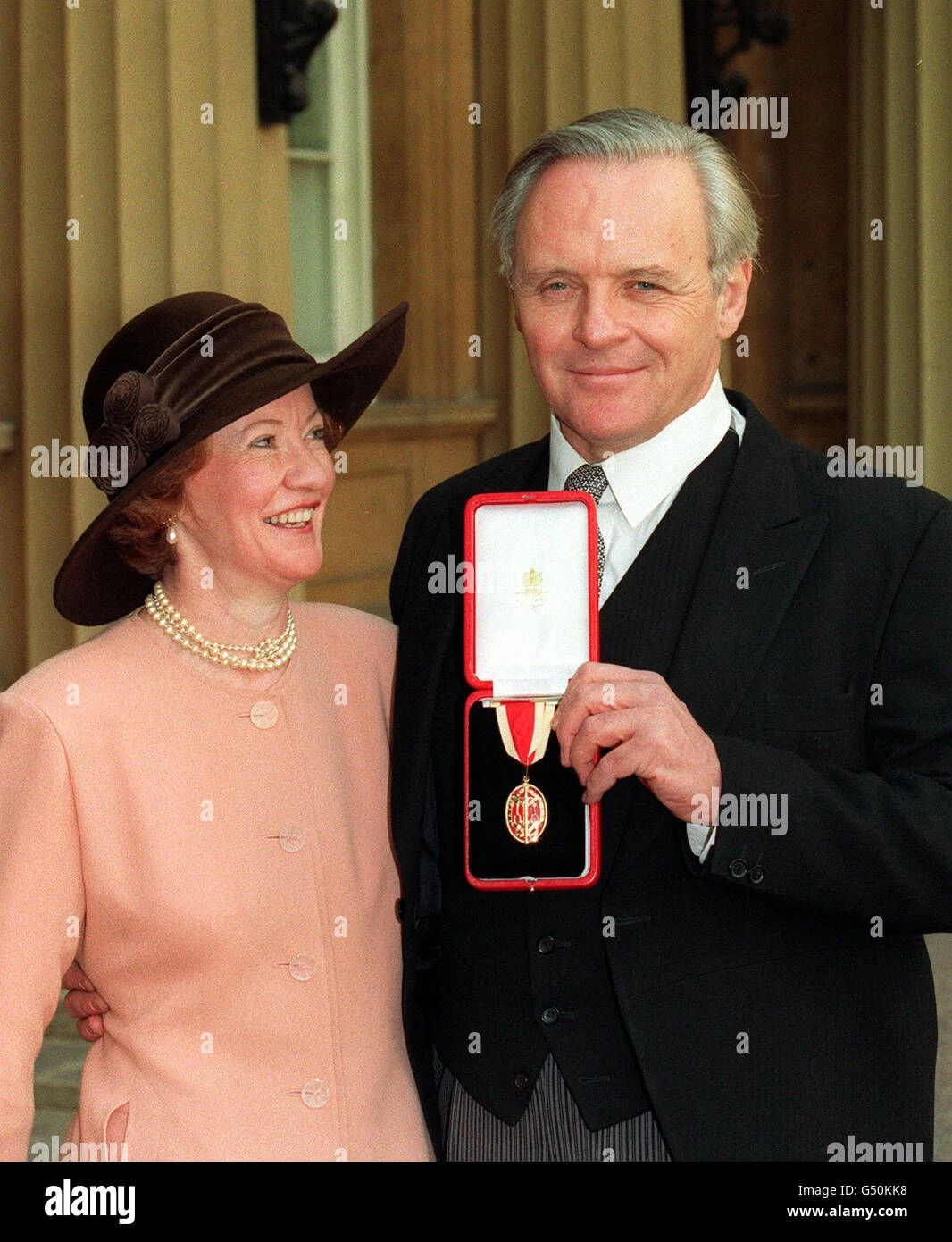
His honours include appointment as a Commander of the Order of the British Empire in 1987 and a knighthood by Queen Elizabeth II in 1993 for services to drama. He received a BAFTA Fellowship in 2008 for lifetime achievement. These honours sit alongside awards for individual performances, but his work has never been confined to one medium: theatre, television and cinema have each formed a substantial part of his career.
Beyond acting: Wales, music and public life
Hopkins’s connection to Wales extends beyond his birthplace and training. He supported the National Trust’s Snowdonia Appeal, which raised funds towards preserving Snowdonia National Park, and contributed £1 million towards the campaign to acquire parts of Snowdon. He also supported the YMCA in Port Talbot, his home town, and contributed to the refurbishment of the Royal Welsh College of Music & Drama. The college’s Anthony Hopkins Centre opened in 1999.
Music has been another lasting interest. Hopkins has composed for the concert hall as well as the screen. His orchestral works include The Masque of Time, premiered by the Dallas Symphony Orchestra in 2008, and Schizoid Salsa. A waltz he wrote in 1964, And the Waltz Goes On, was performed by André Rieu’s orchestra in 2011. The following year, the City of Birmingham Symphony Orchestra performed works from his album Composer, which included a piece titled Margam in tribute to his home town.
Hopkins has also directed, including the film Dylan Thomas: Return Journey (1990), and directed and scored Slipstream (2007). His professional life therefore reaches beyond acting, while repeatedly returning to Welsh people and places through his education, philanthropic support and music.
Why Sir Anthony Hopkins deserves a place in British Legacy
Hopkins’s place in British Legacy rests first on the breadth of a career formed in British and Welsh institutions. He trained at the Royal Welsh College of Music & Drama and RADA, began on a Swansea stage, and joined the Royal National Theatre under Laurence Olivier. His progress from repertory work to major classical roles at the National shows how stage practice shaped an actor who later became known to international cinema audiences. His achievements are measurable as well as influential: two Academy Awards, four BAFTAs, a Laurence Olivier Award and the BAFTA Fellowship are among the honours recorded for his work.
His legacy is not limited to the screen or to awards. His performances in The Silence of the Lambs and The Father brought major recognition for markedly different roles, while The Remains of the Day connected his career to a film ranked among the twentieth century’s greatest British works. His support for Snowdonia and the YMCA in Port Talbot, together with his contribution to the Royal Welsh College of Music & Drama, gives his Welsh connection practical form. These actions supported landscape conservation, a community institution and the training environment from which his own career emerged. Taken together, his acting, honours and documented support for Welsh cultural and civic institutions make his British legacy specific: an internationally recognised career rooted in the stages, training and communities of Wales and Britain.
Sources
Adapted in part from Anthony Hopkins by Wikipedia contributors, under CC BY-SA 4.0. Text has been edited and combined with the existing article; this adapted text is shared under the same licence. Contributor history.