Elton John’s career began with a boy at a piano and developed into one of the most enduring partnerships in British popular music. Born Reginald Kenneth Dwight in Pinner in 1947, he won a scholarship to the Royal Academy of Music aged 11. A few years later, he left school before his A-level examinations to pursue music. His songs with lyricist Bernie Taupin, his flamboyant performances and his work in musical theatre took him from London pubs to international stages. Alongside that public career, he used his profile to support HIV and AIDS charities.
A piano scholarship, then a working musician
John grew up in Pinner, Middlesex, in a family where records and music were part of home life. He began formal piano lessons at seven. At 11, his musical aptitude won him a junior scholarship to the Royal Academy of Music, where he attended Saturday classes for five years. He left the academy before taking the final examinations and, at 17, left school to pursue a career in music.
His first professional work was more practical than glamorous. At 15, with help from his mother and stepfather, he was hired as a pianist at the Northwood Hills Hotel, playing several nights a week. In 1962 he and friends formed the blues band Bluesology. He worked during the day for a music publisher, played solo engagements and performed with the band, which later backed touring American soul and R&B musicians.
A 1967 advertisement in the British music paper New Musical Express brought John together with Bernie Taupin. At their first meeting, John received an envelope of Taupin’s lyrics and began setting them to music. Their working method became a durable one: Taupin wrote lyrics independently and sent them to John, who composed the music. John took his stage name from Bluesology colleagues Elton Dean and Long John Baldry, and legally changed his name to Elton Hercules John in 1972.
The songs and the stage
After working as a staff songwriter, John released Empty Sky in 1969. His 1970 album Elton John included “Your Song”, his first major hit as a singer. The early 1970s brought a run of albums that established his place in popular music, including Honky Château, Don't Shoot Me I'm Only the Piano Player and Goodbye Yellow Brick Road. Songs such as “Rocket Man”, “Tiny Dancer” and “Candle in the Wind” became central to a catalogue written with Taupin.
The pair’s success rested on more than memorable titles. John’s piano-led music moved between pop, rock and ballads, while Taupin’s lyrics gave their songs a distinct voice. Their collaboration continued across decades and more than 30 albums. The partnership’s longevity is striking in part because they have generally worked apart: Taupin sends lyrics, and John writes music to them before they record.
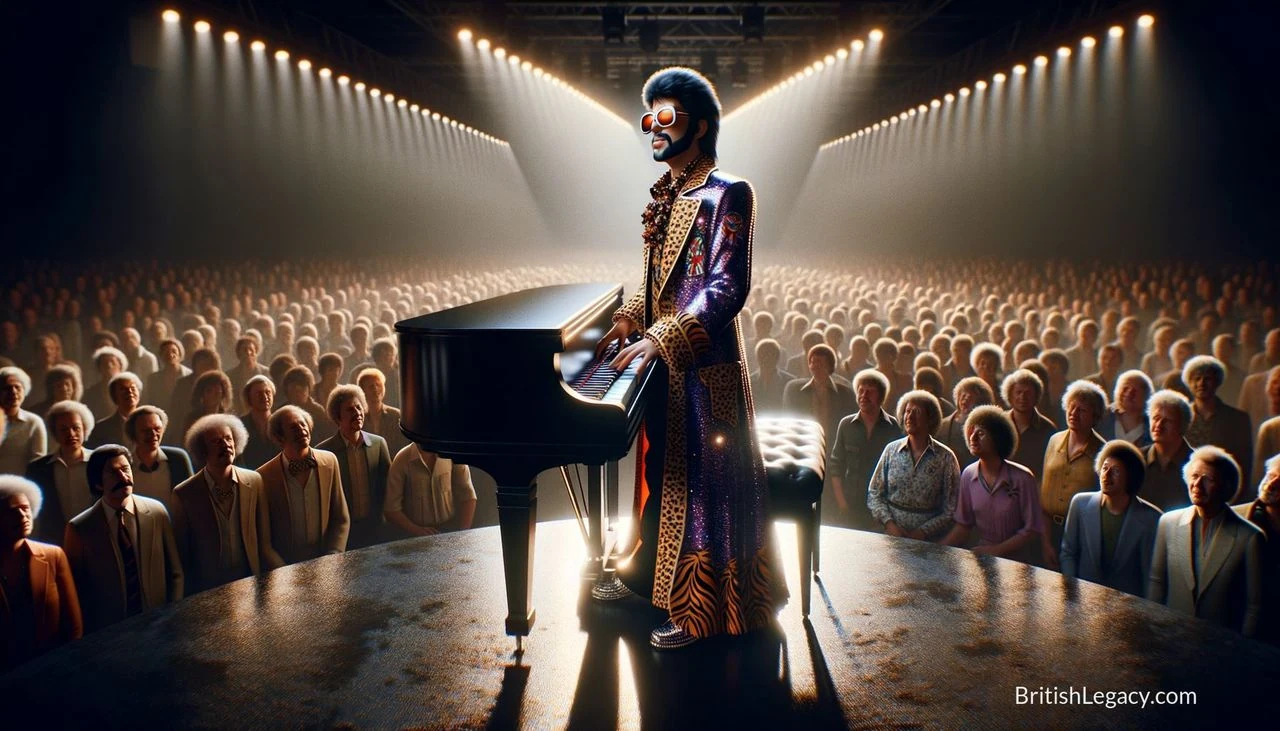
John’s performance style made the music visible as well as audible. He adopted elaborate costumes, including a sequined baseball uniform for two 1975 concerts at Dodger Stadium. The clothes and theatrical presentation became part of his public identity, but the career continued well beyond the glam-rock years. In 1985 he performed at Live Aid at Wembley Stadium. His work also moved into musical theatre: with Tim Rice, he wrote songs for Disney’s The Lion King, and with Lee Hall he composed the music for Billy Elliot the Musical, which opened in London in 2005.
Other honours recognised the breadth of that work. John and Taupin were inducted into the Songwriters Hall of Fame in 1992, and John entered the Rock and Roll Hall of Fame in 1994. He received Academy Awards for songs from The Lion King and the film Rocketman; the latter dramatised his early life and career. In 2013 he received the first Brits Icon Award for his impact on British culture.
Fundraising and a lasting commitment
John’s charitable work became particularly associated with HIV and AIDS. He had taken part in fundraising events from the 1980s; in 1985, he joined Dionne Warwick, Gladys Knight and Stevie Wonder to record “That’s What Friends Are For”, with proceeds going to AIDS research. In 1992 he established the Elton John AIDS Foundation, which supports HIV prevention, challenges prejudice and discrimination, and provides services for people living with or at risk of HIV.
The foundation gave his fundraising a continuing structure. John also began hosting an annual Academy Awards party in 1993, using a high-profile event to raise money for its work. His public role in the campaign has included more than fundraising: he has used his platform to speak about stigma and support for people affected by HIV. The foundation remains a major part of his legacy alongside the music.
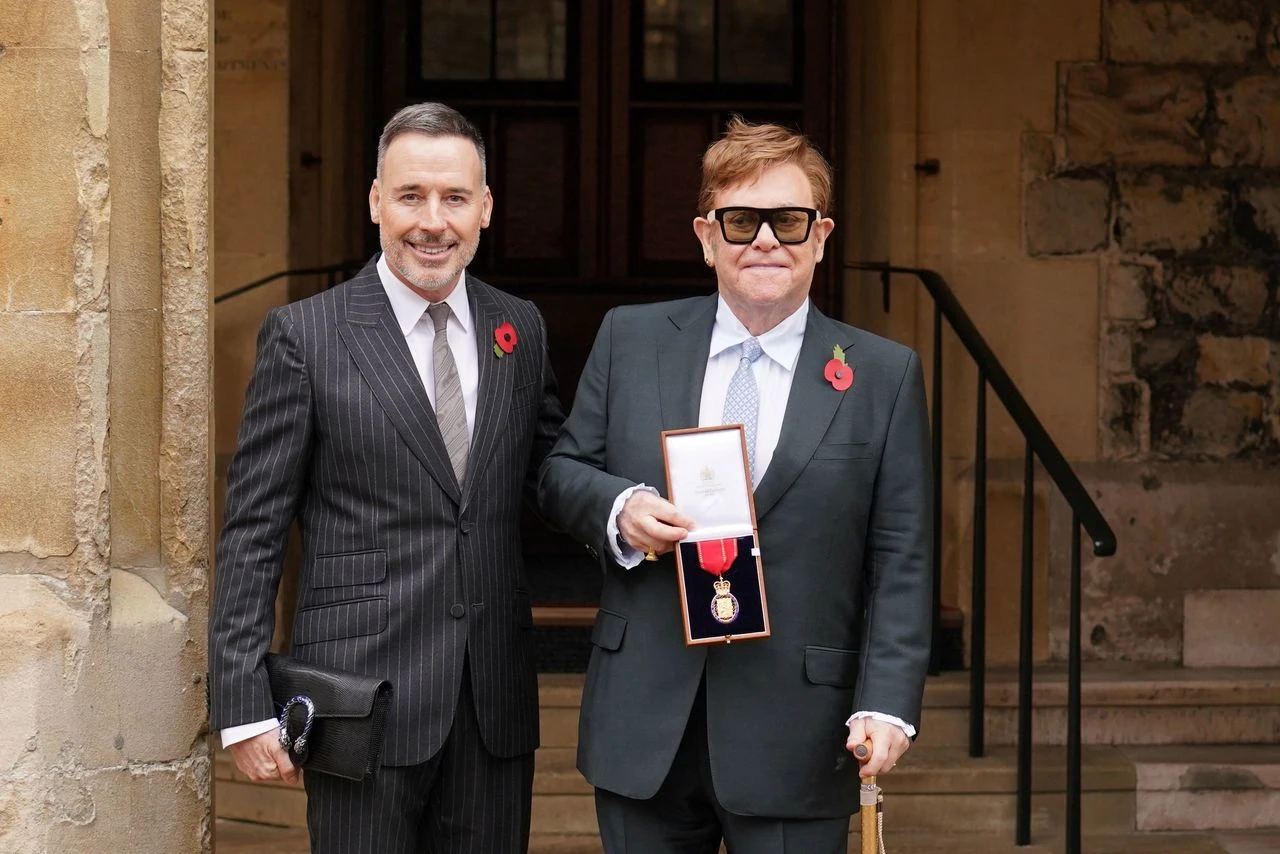
John’s honours in Britain reflect both strands of his work. He was appointed a Commander of the Order of the British Empire in 1995 and was knighted in 1998 for services to music and charity. In 2020 he became a member of the Order of the Companions of Honour for services to music and charity. The honours sit within a wider record of work that includes songs heard around the world, performances at British events and fundraising with a lasting institutional home.
Farewell to touring, not to music
In 2018 John announced that he would retire from touring and began the Farewell Yellow Brick Road tour. The series ran from 2018 to 2023, taking in more than 300 concerts around the world. It concluded in Stockholm in July 2023. Although he retired from touring, he said he intended to continue performing occasionally.
His story also reached new audiences through Rocketman, released in 2019. The film’s song “(I'm Gonna) Love Me Again”, written with Taupin, won John a second Academy Award for Best Original Song. A long career has not meant a retreat into the past: in 2021, he released The Lockdown Sessions, a collaboration with a range of artists that recalled his early work as a session musician.
Why Sir Elton John deserves a place in British Legacy
Elton John belongs in British Legacy because his achievements connect particular British institutions, places and creative partnerships with an international musical career. His route began in Pinner and passed through the Royal Academy of Music, London pub work and the British music press. The advertisement that brought him together with Bernie Taupin led to a partnership whose songs have remained in circulation across generations. Albums including Goodbye Yellow Brick Road, work for The Lion King and the West End success of Billy Elliot the Musical show the range of that contribution: songwriting, recorded music and theatre, rather than a legacy resting on a single hit.
His charitable work adds a distinct public benefit to that artistic record. By establishing the Elton John AIDS Foundation and sustaining high-profile fundraising, John helped direct attention and resources towards HIV prevention, care and the challenge of discrimination. His knighthood recognised services to both music and charity, a combination that accurately reflects the career described here. For British Legacy, his significance lies not in a general claim about national excellence but in these specific, continuing contributions: a long-running songwriting partnership, influential popular and theatrical music, and an organised fundraising effort supporting people affected by HIV.
Sources
Elton John — supplied Wikipedia revision
Adapted in part from Elton John by Wikipedia contributors, under CC BY-SA 4.0. Text has been edited and combined with the existing article; this adapted text is shared under the same licence. Contributor history.