
Ian McKellen’s career has travelled from Shakespeare on British stages to fantasy and science-fiction films watched around the world. The roles are strikingly different, but his work in theatre and cinema has made him one of Britain’s most recognisable actors. Alongside that career, he has used his public profile to campaign for LGBT equality, becoming a co-founder of Stonewall and a prominent opponent of Section 28.
From Bolton to the stage
Born Ian Murray McKellen in Burnley, Lancashire, on 25 May 1939, he moved with his family to Wigan when he was four months old. They relocated to Bolton in 1951. Theatre entered his life early: his parents took him to see Peter Pan when he was three, and his sister introduced him to Shakespeare. McKellen later attended Bolton School, where his interest in performance took shape.
In 1958, aged 18, he won a scholarship to the University of Cambridge to study English literature at St Catharine’s College. He joined the Marlowe Society and appeared in 23 plays over three years, working with directors including Peter Hall, John Barton and Dadie Rylands. His student performances included works by Shakespeare and Marlowe, giving him an early grounding in the classical repertory.
McKellen made his professional stage debut in 1961 with the Belgrade Theatre’s repertory company in Coventry. After working in regional theatre, he made his West End debut in 1965 and joined Laurence Olivier’s National Theatre Company at the Old Vic. His work with the Prospect Theatre Company brought a breakthrough in 1969, when he played the title roles in Shakespeare’s Richard II and Marlowe’s Edward II. The latter production drew protest over its depiction of the king’s death, placing a challenging play before a wider audience.
Shakespeare, modern drama and major stages
During the 1970s, McKellen became a regular leading performer with the Royal Shakespeare Company and the National Theatre. His roles ranged across Shakespeare, from Romeo and King Lear to Macbeth and Iago. Trevor Nunn directed him as Macbeth and Iago in productions that were also adapted for television. In 1979, McKellen played Antonio Salieri in the Broadway transfer of Peter Shaffer’s Amadeus; the role earned him the Tony Award for Best Actor in a Play.
Martin Sherman’s Bent, in which McKellen played a gay man persecuted in Nazi Germany, brought together his theatrical work and his later campaigning. The production earned him a Laurence Olivier Award. It was one of several acclaimed stage performances that established his range beyond Shakespeare, while presenting audiences with a drama about the persecution of gay people.
McKellen continued to move between classical and contemporary work. His 1990–92 world tour in Richard III brought him a Laurence Olivier Award for Best Actor. In 2007, he returned to the Royal Shakespeare Company to play King Lear and appear in The Seagull. He later played Lear at Chichester Festival Theatre and in London’s West End. In 2013, he and Patrick Stewart appeared together on Broadway in Waiting for Godot and No Man’s Land, bringing two experienced stage actors into a double bill of modern drama.
His stage work has also included one-man performances. For his 80th birthday in 2019, he toured Ian McKellen on Stage: With Tolkien, Shakespeare, Others and YOU, taking selections from his career to audiences around the UK and Ireland before a West End run and a Broadway performance. The tour raised money for charities connected with its venues.
From James Whale to Gandalf
McKellen had worked on screen for decades before international film success arrived. His early film roles included A Touch of Love and Priest of Love; wider recognition followed in the 1990s. In 1995, he adapted Shakespeare’s Richard III for the screen, placing the story in a setting based on 1930s Britain and playing the title character. The film brought him a European Film Award for Best Actor and nominations for a BAFTA and a Golden Globe.
In 1998, he played film director James Whale in Gods and Monsters, earning an Academy Award nomination for Best Actor. Two years later, he appeared as Magneto in X-Men, beginning a role he reprised in later films in the series. At the same time, he was cast as Gandalf in Peter Jackson’s adaptation of The Lord of the Rings. The trilogy, released from 2001 to 2003, introduced his performance to a vast international audience. He received an Academy Award nomination for the first film and a Screen Actors Guild Award for Best Supporting Actor.
McKellen returned as Gandalf in Jackson’s three-part The Hobbit adaptation, released between 2012 and 2014. His other screen work has included an elderly Sherlock Holmes in Mr Holmes, Cogsworth in the 2017 live-action Beauty and the Beast, and Falstaff in the West End production Player Kings in 2024. His screen career has not displaced the theatre: he has continued to perform in Shakespeare and modern drama while taking on film and television roles.
Coming out and campaigning for equality
McKellen came out publicly as gay in 1988, during a BBC Radio appearance, while Section 28 was under consideration in Parliament. The proposed law sought to prevent local authorities from promoting homosexuality. McKellen later described the public debate as the context that prompted him to speak openly. His decision connected his own visibility with a political argument over the rights and representation of gay people.
He became a co-founder of Stonewall, the UK LGBT rights lobby group named after the Stonewall riots. His campaigning has continued through public appearances and support for organisations including LGBT History Month and Pride events. In 1994, at the closing ceremony of the Gay Games, he addressed the crowd with the line: “I’m Sir Ian McKellen, but you can call me Serena.” In 2012, he took part in the London Paralympics opening ceremony, appearing as Prospero from Shakespeare’s The Tempest.
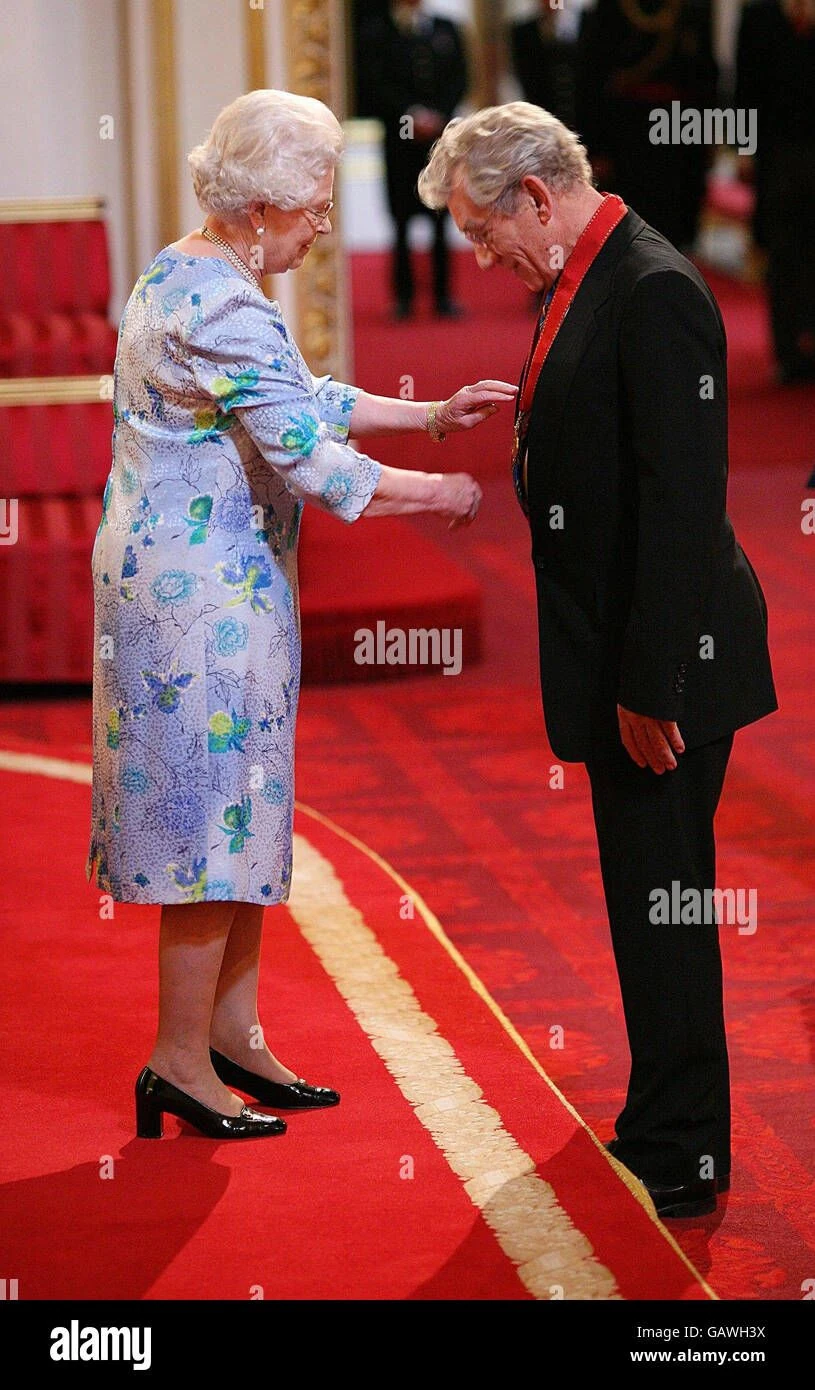
His honours include appointment as a Commander of the Order of the British Empire in 1979, a knighthood in 1991 for services to the performing arts, and membership of the Order of the Companions of Honour in 2008 for services to drama and equality. These recognitions sit alongside awards for his acting, while his public work has drawn attention to the role visibility can play in a campaign for legal and social equality.
Why Ian McKellen deserves a place in British Legacy
Ian McKellen’s place in British cultural life rests on more than a list of celebrated roles. He has sustained a major stage career across Shakespeare, modern drama and international productions, and brought that experience to film and television without leaving the theatre behind. His performances as Richard III, Salieri, James Whale, Magneto and Gandalf show the breadth of that work. The route from the Marlowe Society at Cambridge to the Royal Shakespeare Company, Broadway and globally recognised films also illustrates how British stage training and institutions can contribute to work that reaches far beyond the country.
His legacy is equally connected to his campaigning. Coming out publicly in 1988, while Section 28 was being debated, made his visibility part of a live argument about equality. As a co-founder of Stonewall and a supporter of LGBT organisations, he has brought a prominent voice to efforts for legal and social change. That contribution matters alongside his performances: it connects a career in the arts with practical advocacy, and shows how a public figure can use recognition to support others. For British Legacy, McKellen’s story brings together theatrical achievement, international reach and sustained work for equality, grounded in a career that began in Lancashire and developed through British stages.
Sources
Ian McKellen — Wikipedia revision 1379703797
Adapted in part from Ian McKellen by Wikipedia contributors, under CC BY-SA 4.0. Text has been edited and combined with the existing article; this adapted text is shared under the same licence. Contributor history.
_(cropped).jpg)