
Michael Caine’s screen presence was distinctive before he said a word: thick-rimmed glasses, a sharp suit and an alert, watchful manner. Then came the voice. At a time when British film leads were often expected to speak in received pronunciation, Caine kept his working-class Cockney accent. Roles in Zulu, The Ipcress File and Alfie made that choice part of a new kind of leading-man identity—and carried a London actor to international stardom.
From Southwark to the stage
Caine was born Maurice Joseph Micklewhite in London on 14 March 1933. His mother, Ellen, worked as a cook and charwoman; his father, also named Maurice, was a fish-market porter. He grew up in Southwark. During the Second World War he was evacuated to North Runcton in Norfolk, where he made his acting debut in a village-school performance. After the war, his family moved into a council-provided prefabricated home in Elephant and Castle.
He passed the eleven-plus and attended Hackney Downs School before moving to Wilson’s School in Camberwell. He left at 16, having gained School Certificates in six subjects, and briefly worked as a filing clerk and messenger. National service followed in 1951. After training, he served with the Royal Fusiliers, including in Korea, where he contracted malaria and was sent home in 1953.
Acting began in repertory theatre rather than with an overnight break. In 1953, working under the name Michael Scott, he joined a company in Horsham and played a small part in Wuthering Heights. He spent a year with a repertory company in Lowestoft, then returned to London in 1954. When his agent told him another actor already used Michael Scott, he looked around Leicester Square for a replacement. A cinema showing The Caine Mutiny supplied the surname.
His early career included stage work, television and small film parts. He appeared in the 1956 film A Hill in Korea, and won a more substantial stage opportunity in James Saunders’s Next Time I’ll Sing to You in 1963. The years of smaller roles and provincial theatre preceded, rather than followed, his sudden public recognition.
A new kind of British leading man
His breakthrough came with Zulu (1964), in which he played an upper-class officer, a casting that contrasted with his own background and the Cockney roles that followed. In The Ipcress File (1965), he became Harry Palmer, a tough, understated spy. Alfie (1966) brought a very different character: a charming, self-centred young man whose confidence conceals a more difficult moral life. The performance earned Caine his first Academy Award nomination.
His accent was not simply a character detail. Caine continued to speak in his own regional voice when the polished tones of received pronunciation were often treated as the standard for British screen actors. That made him a conspicuous presence in films seen by both British and American audiences. The glasses, laconic delivery and unshowy manner became as recognisable as the roles themselves.
In The Italian Job (1969), Caine led a Cockney gang in a gold heist that ends on a famous cliffhanger. He followed it with Get Carter (1971), a British crime film, and Sleuth (1972), opposite Laurence Olivier. In The Man Who Would Be King (1975), he shared the screen with Sean Connery. These films established a leading man who could move between comedy, crime and adventure without abandoning the wry, economical style audiences knew.
Range, reinvention and recognition
Caine’s career did not rest on the roles that first made him famous. He received a BAFTA and a Golden Globe for Educating Rita (1983), playing a university professor opposite Julie Walters. For his performance as Elliot in Woody Allen’s Hannah and Her Sisters (1986), he won the Academy Award for Best Supporting Actor. His second win in that category came for playing Dr Wilbur Larch in The Cider House Rules (1999). His other Academy Award-nominated performances included Sleuth and The Quiet American.
He also made room for comedy and family audiences. In The Muppet Christmas Carol (1992), he played Scrooge straight, treating the Muppets around him as if they were fellow performers in a serious drama. In later years, he took roles as Alfred Pennyworth in Christopher Nolan’s Batman trilogy, appearing in Batman Begins, The Dark Knight and The Dark Knight Rises. Their partnership continued in The Prestige, Inception, Interstellar, Dunkirk and Tenet.
Across a career of more than 130 films, he moved between British productions and international studio films, starring roles and supporting parts, drama and comedy. Among his later films were Children of Men, Harry Brown, King of Thieves and The Great Escaper. He confirmed his retirement from acting in October 2023, after The Great Escaper had given him a final leading role and received strong reviews.
Honours, books and public image
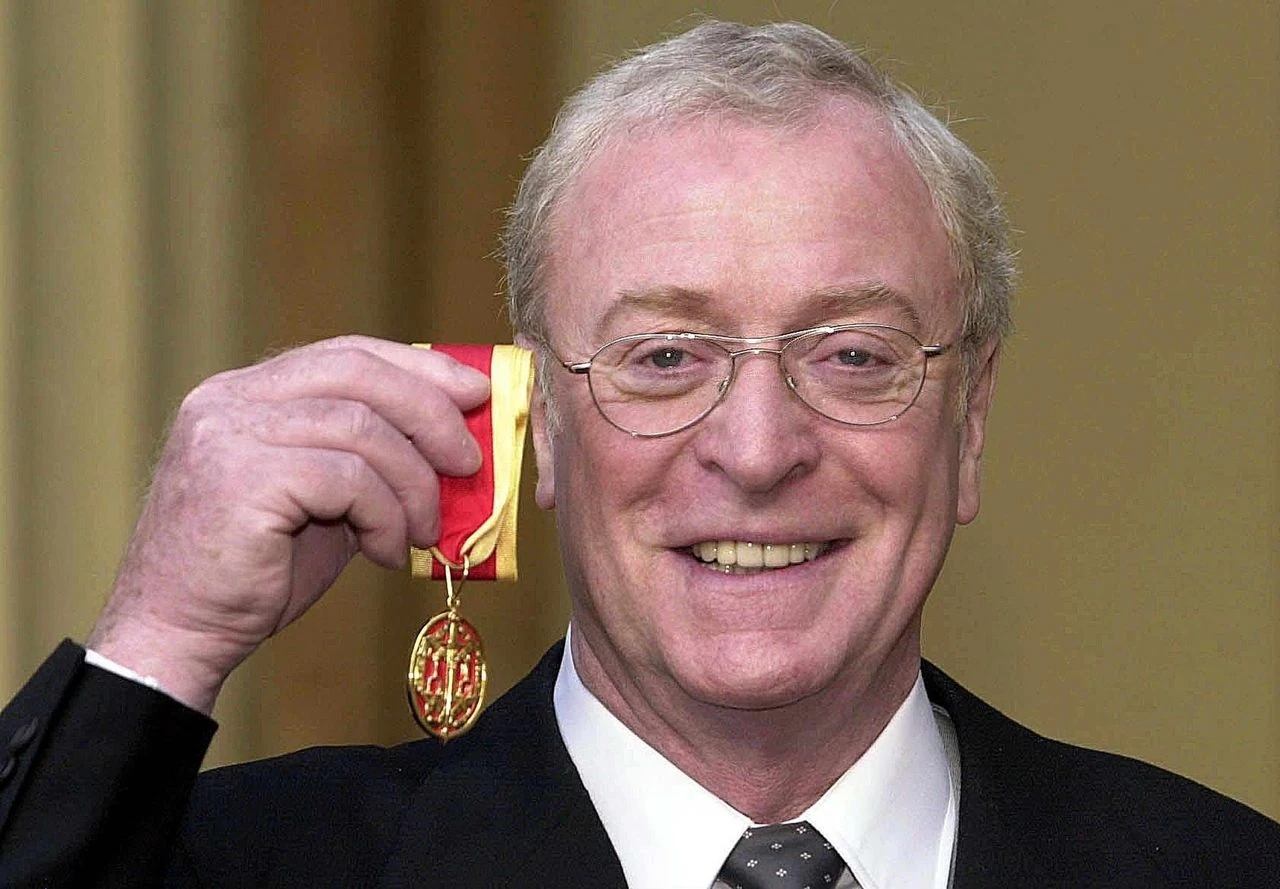
Caine was appointed a Commander of the Order of the British Empire in 1992. In 2000, Queen Elizabeth II knighted him for his contribution to cinema. That year he also received the BAFTA Academy Fellowship. In 2012, he was awarded the Honorary Freedom of the London Borough of Southwark, the area of London where he grew up.
His memoirs include What’s It All About? (1992), The Elephant to Hollywood (2010) and Blowing the Bloody Doors Off (2018); he also published a fourth memoir in 2024. His working-class background remained part of how he explained his public voice. In a 2007 interview, he said he had kept his Cockney accent so other working-class boys would know that they could succeed too. His influence reached popular culture through memorable performances, his recognisable speech and the impressions that comedians made of him.
Why Sir Michael Caine deserves a place in British Legacy
Caine’s place in British cultural history rests on more than the number of films he made or the awards he received. His career helped widen the range of voices that could lead a British film. In the 1960s, when received pronunciation was often treated as the expected screen voice, he made a Cockney accent compatible with intelligence, authority, wit and international appeal. The parts that carried him to fame—from Harry Palmer to Alfie and Charlie Croker—gave working-class London speech a conspicuous place in popular cinema. His own explanation of that choice was direct: he wanted other working-class boys to see that success was possible.
He also sustained a career across changing audiences and kinds of filmmaking. British films such as Zulu, The Italian Job and Get Carter sit alongside performances in American productions, award-winning dramas, comedies for families and Nolan’s global blockbusters. His two supporting-actor Academy Awards, BAFTA recognition and knighthood mark different forms of professional acknowledgement; the continuity of his work explains why those honours resonate. Caine’s story connects a Southwark upbringing and a long apprenticeship in repertory theatre to a screen career watched around the world. It is a specifically British legacy: not a vague claim about national character, but the visible effect of bringing a distinct regional voice and a working-class London perspective into mainstream cinema.
Sources
Michael Caine — Wikipedia revision 1379628968
Adapted in part from Michael Caine by Wikipedia contributors, under CC BY-SA 4.0. Text has been edited and combined with the existing article; this adapted text is shared under the same licence. Contributor history.
.jpg)