Patrick Stewart’s career moves between two worlds that are often treated as opposites: Shakespeare on stage and science fiction on screen. A member of the Royal Shakespeare Company from 1966, he became internationally known as Captain Jean-Luc Picard in Star Trek: The Next Generation, then brought the same authority to Professor Charles Xavier in the X-Men films. His work has carried a distinctly theatrical training into popular entertainment, while his continued return to the stage has kept classical roles at the centre of his career.
From Mirfield to the stage
Stewart was born in Mirfield, in the West Riding of Yorkshire, on 13 July 1940. He attended Crowlees Junior and Infant School before moving to Mirfield Secondary Modern School. His English teacher, Cecil Dormand, encouraged him to perform Shakespeare. Stewart left school at 15 and became more involved in local theatre, supporting himself first as a newspaper reporter and obituary writer. He later worked in a furniture shop, where he could fit rehearsals around his hours, and trained in boxing.
He and fellow actor Brian Blessed received grants to attend the Bristol Old Vic Theatre School. Stewart made his first professional stage appearance in 1959, playing Cutpurse in a Bristol Old Vic Company production of Cyrano de Bergerac. After a period with Manchester’s Library Theatre, he joined the Royal Shakespeare Company in 1966. He became an associate artist the following year and remained a company member until 1982, appearing in more than 60 RSC productions over the course of his career.
His early work was not limited to Shakespeare. Stewart made his television debut in Coronation Street in 1967 and appeared in historical and literary drama, including Fall of Eagles, I, Claudius and Tinker Tailor Soldier Spy. In the 1970s he also appeared in the BBC adaptation of Elizabeth Gaskell’s North and South. On film, his early credits included Excalibur and Dune. This varied work established a screen career before the role that would make him internationally recognisable.
Picard and a new kind of audience
In 1987, Stewart took the part of Captain Jean-Luc Picard in Star Trek: The Next Generation. He had been working mainly in classical theatre and initially knew little about the programme’s place in American popular culture. The series ran from 1987 to 1994, and Picard became the defining screen role of his career. Stewart also played the captain in the film series, beginning with Star Trek Generations in 1994, and appeared as Picard in the 1993 pilot of Star Trek: Deep Space Nine.
The part brought a much larger audience to an actor who had spent years working in theatre and television without becoming a household name. It also shaped the way casting directors saw him: Stewart later described how difficult it could be to escape the association with Picard. Yet the role’s reach was not simply a matter of celebrity. He has spoken of his pride in the series’ social messages and educational impact on young viewers, and of the preparation his earlier stage career had given him for the responsibility of playing the captain.
Stewart returned to Picard in the television series Star Trek: Picard, which ran from 2020 to 2023. The role’s longevity linked his classical training with a science-fiction franchise followed by audiences around the world. His screen work also included Captain Ahab in the television adaptation of Moby Dick, Ebenezer Scrooge in A Christmas Carol and King Henry II in The Lion in Winter. He received Emmy and Golden Globe nominations for several television performances, including Moby Dick and The Lion in Winter.
Shakespeare, solo performance and the X-Men
Screen success did not end Stewart’s stage career. He played Prospero in The Tempest, including a 1995 Broadway production and a later Royal Shakespeare Company production, and took the title role in a 1997 production of Othello. In 2007 he played Antony opposite Harriet Walter’s Cleopatra in London. The following year, he returned to the role of Claudius in Hamlet, opposite David Tennant. The performance earned Stewart a Laurence Olivier Award for Best Supporting Actor and a Tony Award nomination for the Broadway production.
One of his most distinctive theatre projects was a solo adaptation of Charles Dickens’s A Christmas Carol, in which he portrayed more than 40 characters. He performed it in several cities, including on Broadway and in London’s West End. The role won him the Drama Desk Award for Best Solo Performance in 1992 and the Laurence Olivier Award for Best Entertainment for Solo Performance in 1994. In 2009 he appeared with Ian McKellen in Waiting for Godot; the pair later brought that play and No Man’s Land to Broadway in 2014.
On film, Stewart found another major franchise in the X-Men series, playing Professor Charles Xavier from 2000. The part brought his measured, commanding screen presence to a very different character and audience. He appeared in several films in the series and returned as an alternate version of Xavier in Doctor Strange in the Multiverse of Madness in 2022. Beyond these leading roles, his screen work included comedy in Frasier and Extras, as well as voice work in animation and games.
Public service, advocacy and honours
Stewart has spoken publicly about the domestic violence he witnessed as a child, when his father physically attacked his mother. In 2006, he made a video for Amnesty International about its effects and supported a University of Huddersfield scholarship for postgraduate study into domestic violence. He became a patron of Refuge, the UK charity for women experiencing domestic abuse, and presented a BBC Lifeline appeal for the organisation in 2011. He has also supported Combat Stress, a charity for former service personnel, after learning more about his father’s wartime experiences.
His connection with Yorkshire continued beyond his early life. Stewart became chancellor of the University of Huddersfield in 2004 and a professor of performing arts in 2008. He regularly attended graduation ceremonies and taught masterclasses for drama students. He stepped down as chancellor in 2015 and was named chancellor emeritus; a university building was later named after him. He has also served as president of Huddersfield Town Academy, the football club’s project for developing young players.
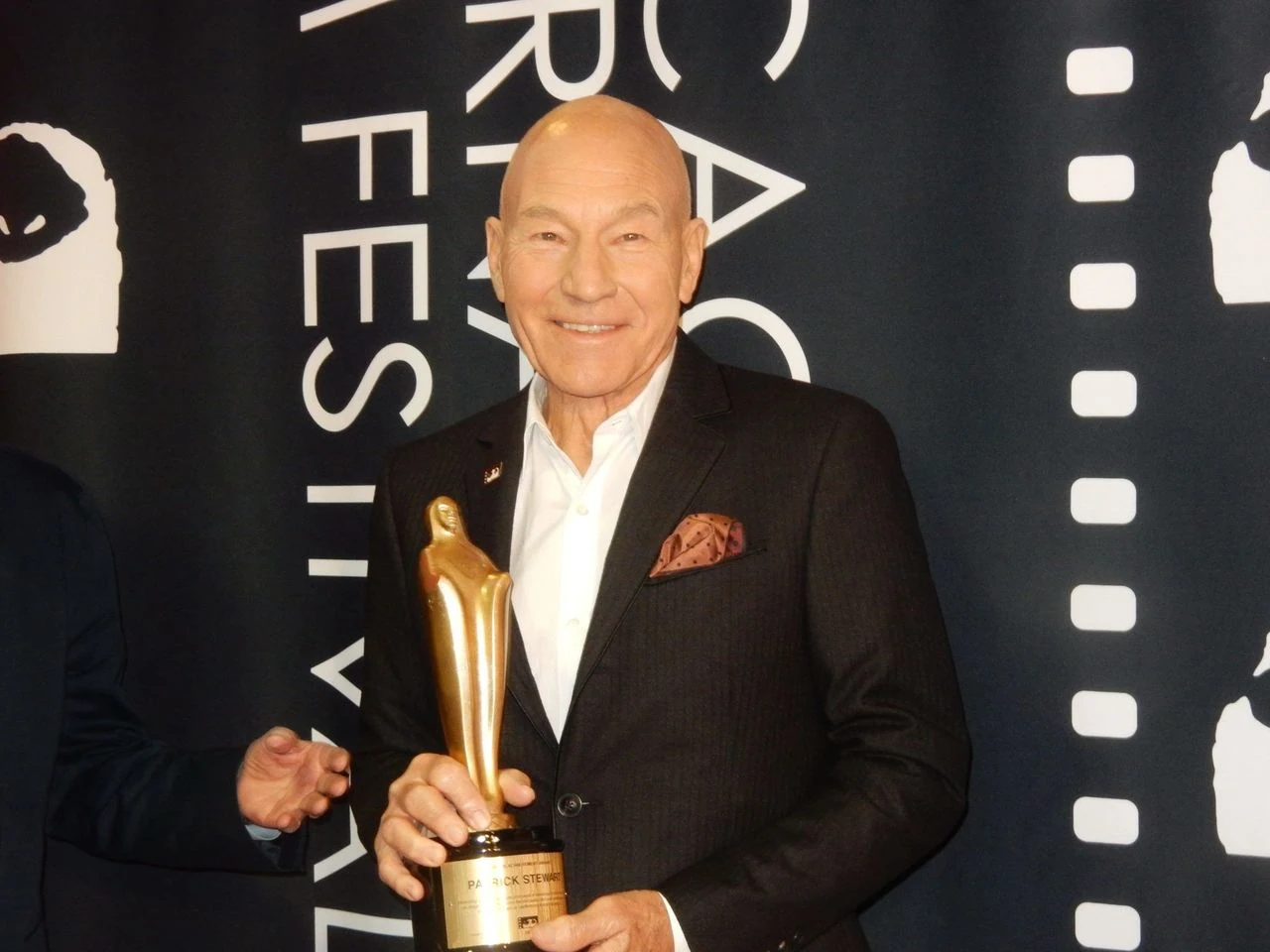
Stewart was appointed an Officer of the Order of the British Empire in 2001 for services to acting and the cinema. In 2010, he was made a Knight Bachelor for services to drama, with the knighthood conferred by Queen Elizabeth II. His other recognition includes two Olivier Awards, a Grammy Award for a spoken-word recording, and honorary degrees from UK universities. These honours reflect different parts of his career: performance, contribution to drama and his work with students.
Why Sir Patrick Stewart deserves a place in British Legacy
Stewart’s place in British Legacy rests on a career that connects the country’s theatrical traditions with popular culture on an international scale. His years with the Royal Shakespeare Company gave him a sustained grounding in stage performance, not just a brief association with classical drama. He returned to Shakespeare throughout his career, from Prospero and Othello to Claudius in Hamlet, while also taking on experimental and demanding stage work such as a one-man A Christmas Carol and Waiting for Godot. The Olivier Awards recognise that this was a substantial and continuing part of his achievement, rather than a footnote to his screen fame.
At the same time, Picard and Professor Xavier brought Stewart’s work to audiences far beyond the theatre. His performances helped make complex, authoritative characters central to long-running film and television franchises, and his own account of Star Trek points to the series’ educational and social messages as part of its significance. His contribution also has a direct British dimension beyond the stage: his work with the University of Huddersfield, drama students and domestic-abuse organisations connects his public profile to teaching and charitable advocacy. The result is a legacy shaped by craft, reach and service: a Yorkshire-born actor whose work has travelled widely without severing its ties to British theatre and institutions.
Sources
Patrick Stewart — Wikipedia revision 1379259563
Adapted in part from Patrick Stewart by Wikipedia contributors, under CC BY-SA 4.0. Text has been edited and combined with the existing article; this adapted text is shared under the same licence. Contributor history.