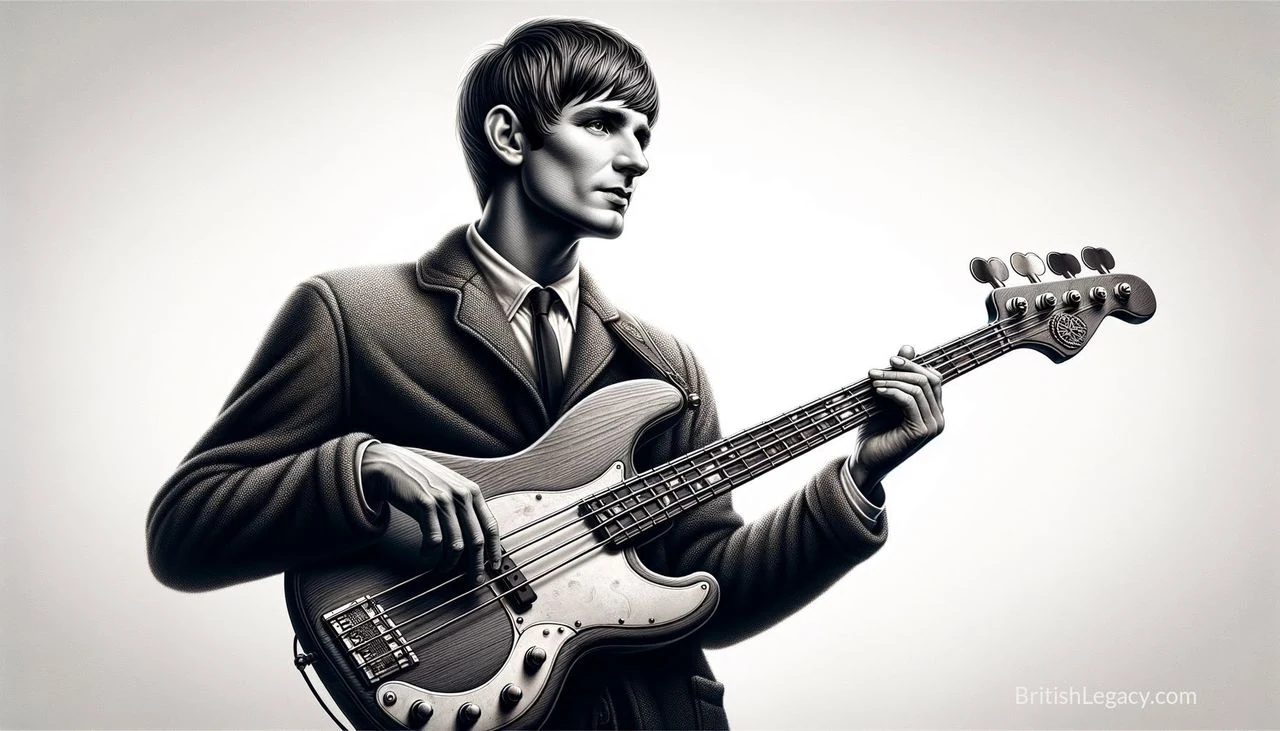
Paul McCartney’s career began in Liverpool in 1957, when he joined John Lennon’s skiffle group, the Quarrymen. The group became the Beatles, and McCartney’s writing, singing and musicianship helped shape one of the most influential catalogues in popular music. When the band ended, he did not retreat from the stage: he formed Wings, released solo and collaborative work across a range of styles, and continued performing and recording into the 2020s. His story is not simply one of lasting fame. It is a working account of how a songwriter from Liverpool moved between bandmate, musical experimenter, solo performer and collaborator while remaining closely associated with the city where his career began.
Liverpool beginnings and the Quarrymen
James Paul McCartney was born in Liverpool on 18 June 1942. His father, Jim, played piano and trumpet and led a jazz band; his mother, Mary, worked as a nurse and midwife. McCartney learnt piano, guitar and songwriting largely by ear. His father encouraged him to take piano lessons, but he preferred to work things out for himself. As a teenager, he was drawn to rock and roll as well as the jazz and popular music he heard at home.
On 6 July 1957, aged 15, McCartney met Lennon at a Quarrymen performance at a church fête in Woolton. He soon joined the group as a rhythm guitarist. George Harrison joined in 1958; the band took the name the Beatles in 1960, and Ringo Starr replaced Pete Best in 1962. McCartney became the group’s bassist in 1961. He and Lennon developed a songwriting partnership that produced many of the Beatles’ best-known songs, with McCartney contributing as a singer, instrumentalist and arranger as well as a writer.
The Beatles’ early success gathered pace after the release of “Love Me Do” in 1962. Their popularity in Britain in 1963 and the United States the following year became known as Beatlemania. McCartney co-wrote early hits including “I Saw Her Standing There”, “She Loves You” and “Can’t Buy Me Love”. His writing also extended beyond the group’s brisk early pop. “Yesterday”, recorded in 1965 with McCartney singing and playing alongside a string quartet, became one of the most widely covered songs in popular music.
Expanding the Beatles’ sound
From the mid-1960s, the Beatles’ studio work became a place for musical and technical experiment. McCartney played a growing role in those changes. He wrote “Eleanor Rigby”, whose string arrangement set it apart from conventional pop-song instrumentation, and helped push the band towards the more exploratory sound of Revolver. He also proposed the fictional group at the centre of Sgt. Pepper’s Lonely Hearts Club Band, released in 1967, as a way to give the Beatles room to experiment beyond the image of their early years.
McCartney’s work in this period was not limited to lyrics and melody. He took an active role in the band’s studio projects and, after the death of manager Brian Epstein in 1967, became its de facto leader. The result included bold and inventive recordings, but the creative drive did not dissolve the disagreements among the four musicians. Relations deteriorated during the later albums and the Let It Be sessions. Lennon had privately left the group in 1969; McCartney announced his own departure in April 1970. The Beatles’ break-up closed a defining chapter, but not his career as a recording artist.
Wings, solo records and musical range
McCartney released his first solo album, McCartney, in 1970. The following year, he formed Wings with his wife Linda McCartney, drummer Denny Seiwell and guitarist Denny Laine. The group’s first performances were deliberately modest: in 1972, they toured British universities in a van, playing unannounced shows and avoiding Beatles songs. Wings established its own audience through touring and a succession of records, rather than relying only on the success of McCartney’s former band.
Band on the Run, released in 1973, became a major commercial success in both the United Kingdom and the United States. Wings also recorded “Live and Let Die”, the title song for the James Bond film, and the British hit “Mull of Kintyre”, co-written with Laine. The band toured widely, including a 1975–76 world tour, before ending in 1981. McCartney’s post-Beatles work also included international chart-topping collaborations: “Ebony and Ivory” with Stevie Wonder and “Say Say Say” with Michael Jackson. Alongside rock and pop, he explored electronic music with Youth as the Fireman and wrote orchestral works, including Liverpool Oratorio, made with composer Carl Davis.
His later output has continued to move between projects rather than settle into a single style. Egypt Station reached number one on the US Billboard 200 in 2018. During the COVID-19 lockdowns in England, he recorded McCartney III, released in 2020, playing all the instruments himself. In 2021, he published The Lyrics: 1956 to the Present, a book based on conversations with the poet Paul Muldoon. In June 2022, a week after his 80th birthday, he headlined Glastonbury Festival, becoming the festival’s oldest solo headliner according to the supplied account.
A musician across instruments and forms
McCartney is best known as a bassist and songwriter, but his recorded work draws on a wider set of skills. With the Beatles, he played piano and keyboards as well as guitar, and contributed drums to several recordings. His approach to bass is notably melodic: rather than treating it only as a rhythmic foundation, he often made the part a distinct musical line. He has also moved among pop, rock, ballads, classical composition and electronic music, sometimes within the same broad period of his career.
His work beyond albums includes film, animation, photography, painting and books. He wrote and produced the animated short Rupert and the Frog Song, and later collaborated on other animated projects. In 2023, a collection of photographs he had taken during Beatlemania was published as 1964: Eyes of the Storm, alongside an exhibition organised by the National Portrait Gallery. These activities do not displace the central place of songwriting in his career; they show how he has continued to work through different creative forms.
Honours, public causes and Liverpool
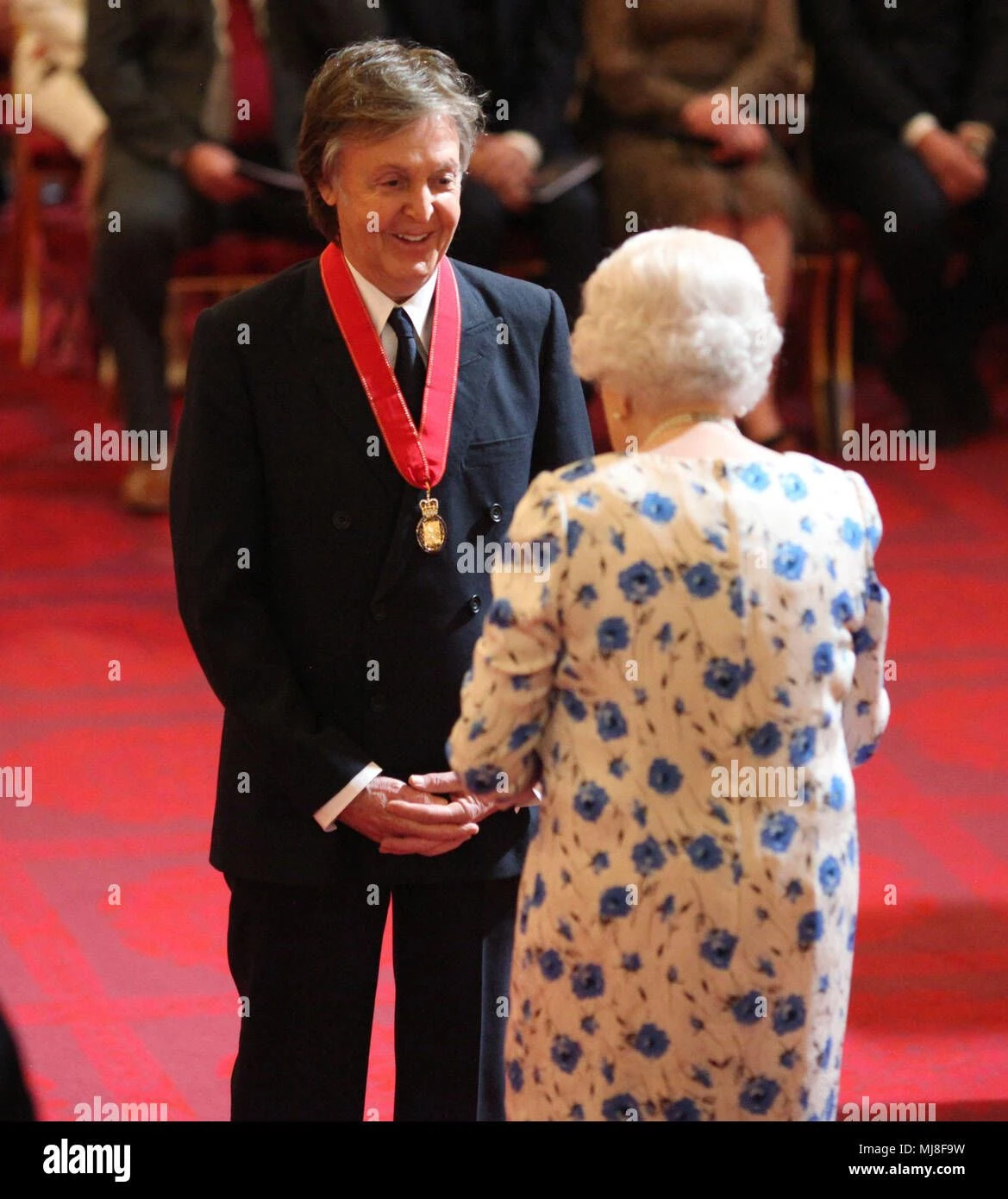
McCartney was appointed a Member of the Order of the British Empire in 1965 and knighted in 1997 for services to music. In 2017, he was appointed a Member of the Order of the Companions of Honour. His awards also include Grammy Awards, an Academy Award and two inductions into the Rock and Roll Hall of Fame: as a Beatle and as a solo artist. Those distinctions recognise several phases of a career, rather than a single celebrated record.
His public work has extended to animal rights, poverty, landmine campaigns and music education. He has supported People for the Ethical Treatment of Animals and has taken part in benefit recordings and performances, including Live Aid, Live 8 and the 1989 recording of “Ferry Cross the Mersey” for the Hillsborough disaster appeal. He is also lead patron of the Liverpool Institute for Performing Arts, based in the former Liverpool Institute for Boys. The connection is more than biographical: his career has helped make Liverpool’s popular music history visible to audiences around the world, while his support for a local performing-arts institution connects that history with opportunities for new artists.
Why Paul McCartney deserves a place in British Legacy
McCartney merits a place in British Legacy because his achievements are both distinctly rooted in Liverpool and internationally consequential. The partnership he formed with Lennon began in a local group, the Quarrymen, and grew into the Beatles’ catalogue. McCartney helped the band move from early hit singles towards more ambitious studio work, while songs such as “Yesterday” and “Eleanor Rigby” demonstrate the range of his writing. His contribution did not end with the Beatles: Wings became a successful band in its own right, and his solo career has encompassed popular songwriting, collaborations, electronic projects and orchestral composition. The honours awarded to him, including his knighthood for services to music, recognise a body of work that spans generations and forms.
His legacy also has a practical and civic dimension. McCartney has continued to perform and record, bringing music made across different stages of his life to new audiences. His benefit performances and support for causes including animal rights, landmine campaigns and music education show how he has used his public standing beyond the recording studio. In Liverpool, his role as lead patron of the Liverpool Institute for Performing Arts gives that connection a lasting institutional expression. Taken together, these achievements make his place in British cultural history more specific than celebrity alone: they link songwriting and musical invention with a city, a sustained working life and support for future performers.
Sources
Adapted in part from Paul McCartney by Wikipedia contributors, under CC BY-SA 4.0. Text has been edited and combined with the existing article; this adapted text is shared under the same licence. Contributor history.