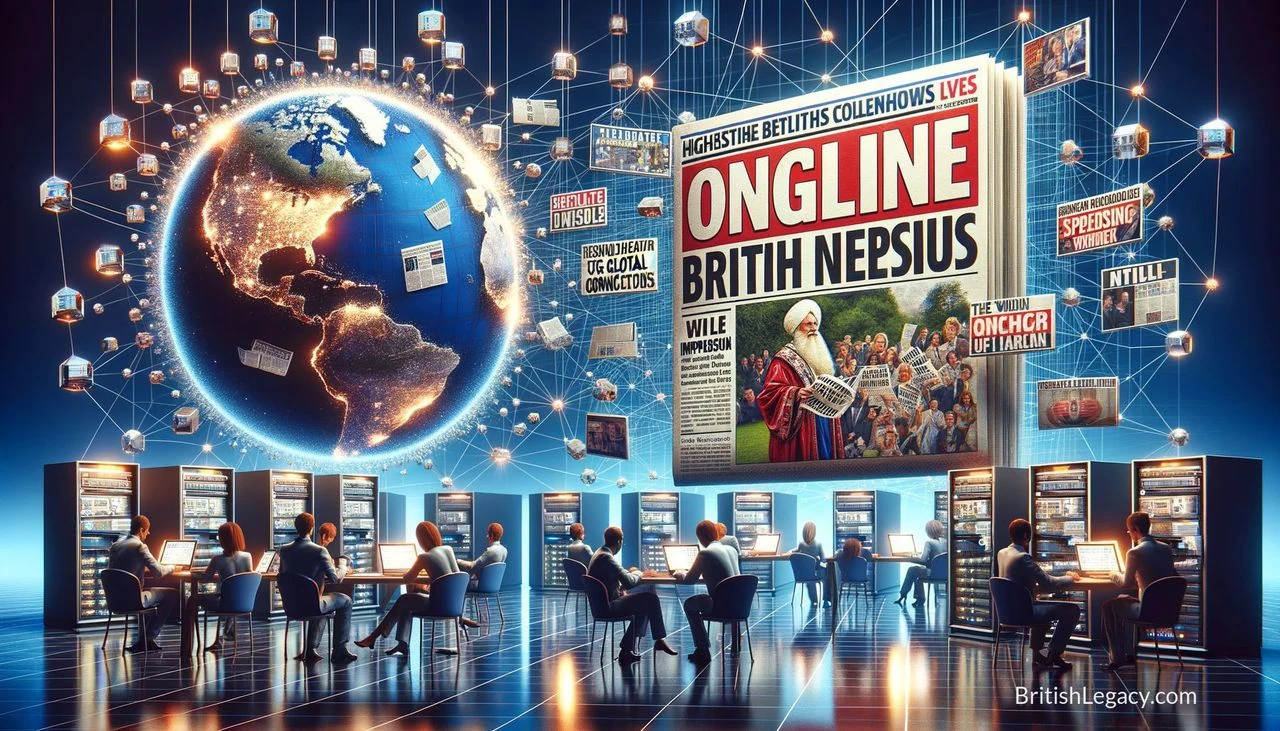
Mail Online took the Daily Mail into digital publishing. Launched in 2003 as the newspaper’s online arm, it developed a presentation combining news and current affairs with celebrity coverage, human-interest stories, photographs and video. The supplied account describes its style as sensationalist and tabloid-oriented, and records criticism of its editorial standards as well as claims of substantial international reach. Together, those themes make its story one of both adaptation and debate: a British newspaper brand building an online presence for a wider audience, while attracting scrutiny over how it pursued readers.
A newspaper brand goes online
The supplied article dates Mail Online’s launch to 2 December 2003. It describes the site as the online counterpart of the Daily Mail, a newspaper founded in 1896 by Alfred Harmsworth, later Viscount Northcliffe, and his brother Harold Harmsworth. Mail Online thus began with an established newspaper name, but in a different publishing environment: the account places its creation amid the growth of digital media in the early 2000s.
Its stated purpose was to extend the Daily Mail’s reach to a global audience. The available material does not give a detailed account of the launch operation, name the people responsible for building the site or describe its early staffing. It does, however, identify the central change: an established British newspaper brand was establishing an online counterpart, with an international readership in view.
News, popular culture and presentation
The article characterises Mail Online’s journalism as tabloid-style, drawing on eye-catching headlines, celebrity gossip, human-interest stories and current events. It says this mix distinguished the website from more traditional news outlets and appealed to a broad audience. That characterisation is not broken down by period or by individual sections, so it is best read as a general description of the site rather than a claim about every article it published.
Its online presentation was not limited to text. The supplied account lists photographs, videos, interactive features and comment sections alongside articles, and says these elements helped engage readers and encouraged social sharing. It does not date the arrival of particular features or provide examples of their use. The detail nevertheless points to a publishing model that combined editorial content with visual material and opportunities for reader response.
“Seriously Popular” is given as a central Mail Online tagline. The source links the phrase to a blend of serious news and popular culture, but does not state when the tagline was adopted or how long it remained in use. It can therefore be noted as reported branding, not treated as proof of the site’s balance or of how readers responded to it.
Reach and criticism
The original account calls Mail Online one of the most visited English-language news websites in the world and refers to millions of daily visitors. It supplies no date, measurement method or figures to substantiate those claims. They should not be mistaken for verified current audience statistics. The material also mentions awards and recognition, but names none, limiting what can responsibly be said about that aspect of the site’s reputation.
The same account reports criticism of Mail Online’s sensationalist style and says questions have been raised about accuracy, editorial standards and ethics. It also records the accusation that traffic and engagement may be prioritised over journalistic rigour. As no particular reports, examples, critics or responses are supplied, these points remain a description of the criticism noted in the source, rather than established findings about specific coverage.
That combination of claimed reach and scrutiny is part of the record presented here. The site’s popular, visually rich approach is described as a means of engaging readers, while the criticism raises questions about the standards and priorities accompanying that approach. The evidence available does not establish the scale of its audience or resolve those criticisms, and the article avoids treating either as more precisely documented than it is.
Why Mail Online deserves a place in British Legacy
Mail Online belongs in a record of British media because it represents a newspaper brand’s move into online publishing. The supplied account identifies its relationship to the Daily Mail, dates its launch to 2003 and describes an ambition to reach readers globally. Its mix of text, photographs, video, interactive features and comment sections also captures how that online counterpart was presented: not simply as a printed newspaper reproduced on a screen, but as a digital outlet combining several forms of content and reader engagement.
That history should include the reservations in the source as well as the claim of reach. Mail Online is described as popular and influential, but supporting audience data and named awards are absent; criticism of sensationalism and editorial standards is reported without examples or responses. A careful account preserves both sides without turning either into a proven verdict. The site’s significance for British Legacy lies in documenting this transition and its tensions: a British newspaper extending its identity into a global digital setting, where attracting attention and maintaining journalistic rigour are presented as connected challenges.