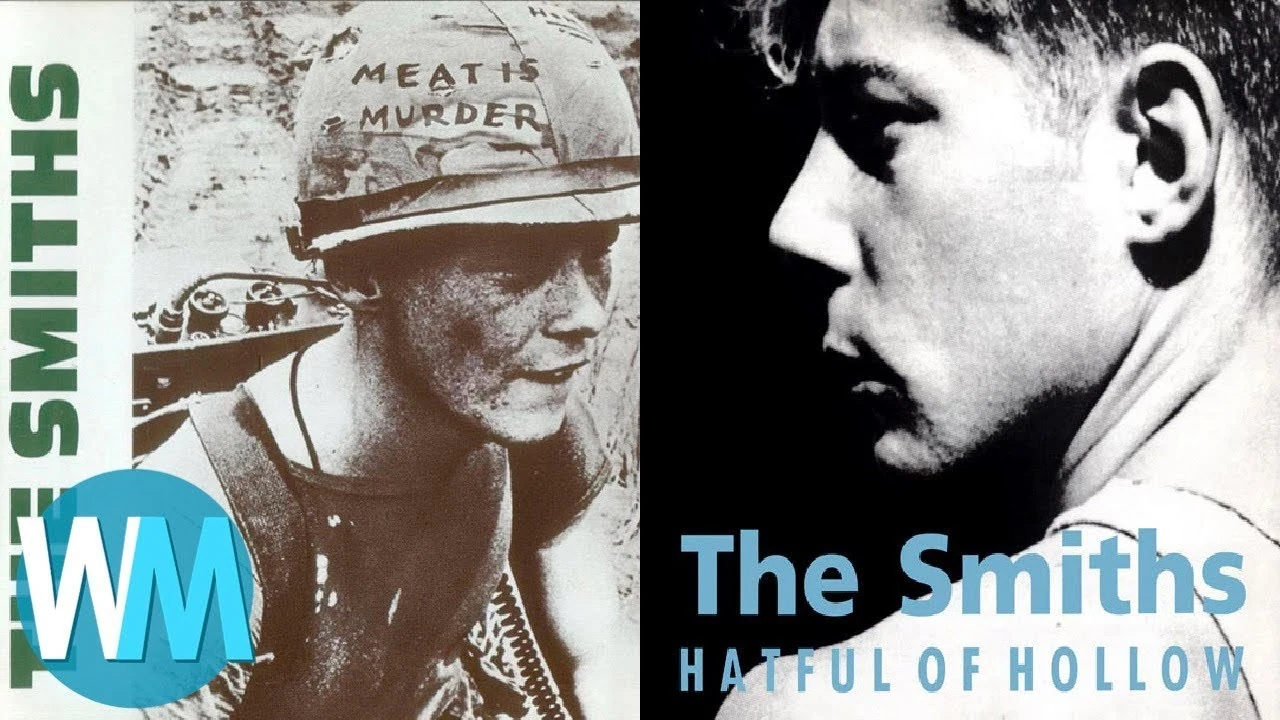
In the 1980s, The Smiths made a deliberately spare combination of guitar, bass and drums sound unmistakably their own. Johnny Marr’s bright, melodic playing met Morrissey’s literate, sardonic songs about alienation, rejection and ordinary lives. Formed in Manchester in 1982, the band released four studio albums before breaking up in 1987. Their influence reached well beyond those years: later British guitar groups, from the Stone Roses and Oasis to Radiohead and Arctic Monkeys, have acknowledged a debt to their music.
A partnership formed in Manchester
The Smiths began with Morrissey, born Steven Patrick Morrissey, and guitarist Johnny Marr. They formed the band in 1982, with Andy Rourke on bass and Mike Joyce on drums. Morrissey and Marr became its principal songwriting partnership: Morrissey supplied lyrics and vocal melodies, while Marr shaped the music around guitar parts that favoured ringing chords, open strings and unusual progressions.
Their sound drew on jangle pop and post-punk, among other influences, but resisted the synthesised dance pop and high-fashion presentation associated with parts of the period’s music scene. The arrangements could be economical without being plain. Marr’s guitar gave the songs lift and movement; Morrissey’s baritone, literary references and dry humour supplied an equally recognisable counterweight. Their lyrics often addressed loneliness, unrequited love, social exclusion and death, yet the bleakness could be undercut by wit.
Their words are central to the band’s identity. The supplied imported text singles out lines from three songs: “And if a ten-tonne truck / Kills the both of us / To die by your side / Is such a heavenly way to die” from “There Is a Light That Never Goes Out”; “I am the son and the heir / Of a shyness that is criminally vulgar” from “How Soon Is Now?”; and “Last night I dreamt that somebody loved me / No hope, no harm / Just another false alarm” from “Last Night I Dreamt That Somebody Loved Me”. These examples bring together the songs’ romance, self-consciousness and loneliness without reducing Morrissey’s writing to a single mood.
The group’s appearance reinforced its difference from more extravagantly styled contemporaries. The members generally wore ordinary clothes, while cover artwork, designed by Morrissey and Rough Trade art coordinator Jo Slee, often used images of film stars and figures from popular culture. The band itself rarely appeared on the covers of its UK releases. Together, the music, words and artwork gave The Smiths an identity that was not dependent on conventional rock spectacle.
From Rough Trade to four studio albums
After forming, The Smiths signed to the independent label Rough Trade Records in 1983. Their debut single, “Hand in Glove”, appeared that May. BBC Radio 1 sessions and attention from music publications helped the group build an audience. In February 1984, their self-titled debut album reached number two on the UK Albums Chart. Later that year, the compilation Hatful of Hollow brought together singles, B-sides and radio-session recordings.
The second album, Meat Is Murder, appeared in 1985 and became the band’s only studio album to reach number one in the UK. Its title track expressed a pro-vegetarian position; other songs took on subjects including corporal punishment. The record was more overtly political than the debut, while still giving Marr room to broaden the group’s musical palette. The single “How Soon Is Now?”, first issued as a B-side, became one of the band’s best-known songs.
The Queen Is Dead, released in 1986, reached number two in the UK and won widespread critical acclaim. Its best-known songs include “There Is a Light That Never Goes Out” and “Bigmouth Strikes Again”. The album’s place in later lists of the greatest records reflects how its reputation grew beyond its original release. Compilation releases, including The World Won’t Listen and Louder Than Bombs, also gathered material from the group’s singles and B-sides.
The final studio album, Strangeways, Here We Come, was released in 1987 as the band was breaking apart. It broadened the group’s sound, with Marr using keyboards as well as guitar. The album reached number two in the UK and became the Smiths’ most successful album in the United States. Its release did not mark the end of the band’s recorded presence: the live album Rank, recorded in 1986, followed in 1988.
Break-up, disputes and separate careers
The Smiths’ short life was not free of tension. In 1986, guitarist Craig Gannon briefly joined the group, making it a five-piece before it returned to its original line-up. Marr left in 1987 after a period of exhaustion and disagreement about the band’s direction. The group split that year. Tensions between Marr and Morrissey were a major part of the breakdown, although the members later gave differing accounts of what had led to it.
The split was followed by a lengthy dispute about royalties. Mike Joyce and Andy Rourke argued that they should receive a larger share of the band’s profits. Rourke settled his claim; Joyce continued his case, which reached the High Court in 1996. The judge ruled in Joyce’s favour, awarding him back-royalties and a higher share going forward. Morrissey and Marr appealed, but the appeal was dismissed in 1998. The dispute exposed an important practical reality behind the band’s creative partnership: the group’s arrangements over money had not been put into a written agreement.
All four principal members pursued work after the break-up. Morrissey began a solo career, releasing Viva Hate in 1988. Marr worked with Bernard Sumner and Neil Tennant in Electronic, joined other bands and collaborated with a range of artists. Rourke and Joyce also continued to play and record with other musicians. Rourke later co-founded the Manchester v Cancer concert series, which raised money for cancer research. He died in 2023.
Talk of a reunion has recurred over the years, but the band did not reform. Repeated speculation, and the former members’ public comments about it, became part of the group’s later story without changing the basic fact: The Smiths’ work together belongs to a concentrated period between 1982 and 1987.
Influence without a long catalogue
The Smiths’ importance is not measured only by their four studio albums. Their music offered a distinct model for British guitar bands: melodic rather than grandiose, attentive to language, and willing to treat social awkwardness as a serious subject. The group’s influence can be heard in musicians who adopted its ringing guitar textures, its combination of emotional directness and irony, or its focus on outsiders.
That influence is particularly visible in Manchester. The Stone Roses’ guitarist John Squire cited Marr as an influence, and Oasis songwriter and guitarist Noel Gallagher has spoken of his enthusiasm for The Smiths. Radiohead drew on the band, while Arctic Monkeys’ Alex Turner has described the effect its music had on him as a listener and musician. Such examples show how a group rooted in one city’s music scene became part of a wider British musical conversation.
Their reception has also remained complicated. Their records have appeared in retrospective lists of notable albums, and the band was nominated for the Rock and Roll Hall of Fame in 2014 and 2015. At the same time, the later careers and public controversies of individual members have shaped how audiences discuss the group. The songs, however, remain the clearest evidence of what the partnership achieved: four albums and a body of singles that joined sharp writing to a guitar sound instantly associated with the band.
Why The Smiths deserves a place in British Legacy
The Smiths deserve a place in British Legacy because their achievement was both specific and far-reaching. They made Manchester the starting point for a body of work that altered expectations of what a guitar band could sound and say. Marr’s melodic, finely detailed playing did not rely on volume or virtuoso display; it gave the songs their movement and colour. Morrissey’s lyrics brought social outsiders, disappointment and loneliness into the centre of popular music, combining melancholy with an often cutting humour. The two approaches depended on each other, creating a sound and identity that listeners could recognise within moments.
Their influence is visible in the musicians who followed. The Stone Roses, Oasis, Radiohead and Arctic Monkeys are among the British acts whose members have acknowledged the band’s importance. That line of influence is more meaningful than a general claim to greatness: it connects The Smiths’ work to later generations of British songwriting and performance. Their story also includes the realities behind cultural success. A brief career produced records that continued to shape musicians, while the unresolved financial arrangements among members led to a long legal dispute. Remembering both the music and its circumstances gives a fuller account of the band’s legacy: an independent, Manchester-born group whose precise musical partnership left a durable mark on British popular culture.
Sources
Adapted in part from The Smiths by Wikipedia contributors, under CC BY-SA 4.0. Text has been edited and combined with the existing article; this adapted text is shared under the same licence. Contributor history.