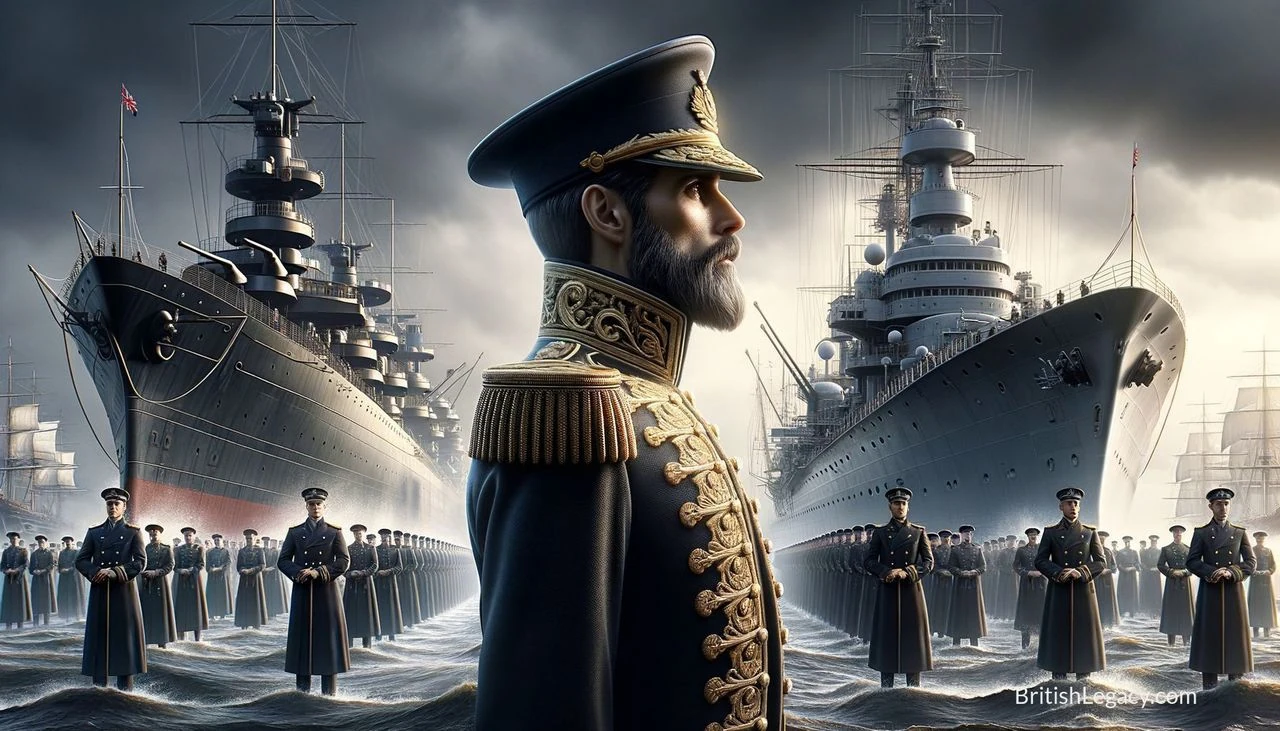
Admiral Sir John Fisher’s reputation rests on a forceful programme of change at the Royal Navy. As First Sea Lord from 1904, he championed the all-big-gun battleship, supported investment in submarines and torpedoes, and pressed for older ships to be removed from service. His reforms challenged established practice and helped shape the navy at a time of rapid technological change. The account of his career is also a story of competing priorities: modernisation promised a more capable fleet, but Fisher’s methods and choices met resistance.
From Ceylon to the senior ranks
John Arbuthnot Fisher was born in Ceylon, now Sri Lanka, on 25 January 1841. He entered the Royal Navy as a cadet at the age of 13 and served aboard a succession of vessels. His early career led to promotion, and by 1877 he had reached the rank of captain. Those years took him through the service before he rose to the position from which he could press for institution-wide change.
Fisher became First Sea Lord in 1904. The post placed him at the centre of naval decision-making, as emerging technologies and international tensions presented new demands. He set about reforming the fleet, combining advocacy for new designs with a willingness to retire ships he considered less effective. That approach was practical in aim but disruptive in effect: it required the navy to reconsider which vessels and technologies should command resources.
A fleet built for a changing age
Fisher backed the development of HMS Dreadnought, launched in 1906. The battleship brought together high speed, heavy-calibre guns and advanced armour. Its all-big-gun design marked a break with older arrangements of naval armament and became a new point of reference for battleship construction. The claim that it made every earlier design obsolete overnight overstates what can be established from this account; what is clear is that the ship gave its name to a new class and embodied Fisher’s preference for concentrated firepower.
Modernisation, for Fisher, was not simply a matter of adding new ships. He also initiated the scrapping of older vessels, seeking a fleet that was leaner and more effective. His policy favoured all-big-gun ships over inherited designs and required the navy to accept that some existing vessels no longer fitted his priorities. Removing ships from service was therefore part of the reform programme, not an incidental consequence of building new ones.
Nor was his interest confined to battleships. Fisher supported investment in submarines and torpedoes, technologies that could change how naval forces operated. The account of his career describes him as anticipating their strategic importance and encouraging their development within the Royal Navy. Together, these priorities show the breadth of his programme: it concerned the composition of the surface fleet as well as weapons and vessels that offered different ways of engaging at sea.
Resistance, influence and limits
Fisher’s programme met opposition from conservative elements within the navy. Fleet reductions and new priorities challenged existing assumptions, while his determination to press ahead made reform a contentious process. The account links his changes to the Royal Navy’s role in the First World War, describing the modernised fleet as important to British maritime strength. That broad assessment should not be mistaken for evidence that every reform was vindicated, or that Fisher alone determined the navy’s wartime effectiveness.
His influence is also associated with the wider naval arms race, as other countries sought to modernise their fleets in response to changing capabilities. The scale of that international effect is not established in detail here, but the connection points to a consequence of naval innovation: a design intended to strengthen one country’s fleet can also encourage competitors to reconsider their own. Fisher’s work thus belongs to a period in which technological change and strategic rivalry were closely linked.
Why John Fisher deserves a place in British Legacy
Fisher’s place in British naval history is grounded in specific decisions, rather than in a general reputation for foresight. As First Sea Lord, he backed HMS Dreadnought and the all-big-gun principle, promoted investment in submarines and torpedoes, and pursued the removal of older ships. These were connected parts of a programme to alter what the Royal Navy built, kept in service and prepared to use. The changes made him a consequential reformer, while the opposition they provoked shows that modernisation was neither automatic nor free of cost.
The wider significance lies in the questions his programme brought into focus: how a navy should respond to new technology, which capabilities deserve investment, and when inherited equipment becomes a constraint rather than an asset. The account also places Fisher’s reforms within the international competition to build modern fleets, while leaving the exact scale of his influence open to qualification. Remembering him in British Legacy means recognising both the concrete naval changes associated with his leadership and the difficult choices behind them. His career offers a grounded example of how institutional reform can reshape a national service and influence the terms on which other powers plan their own.