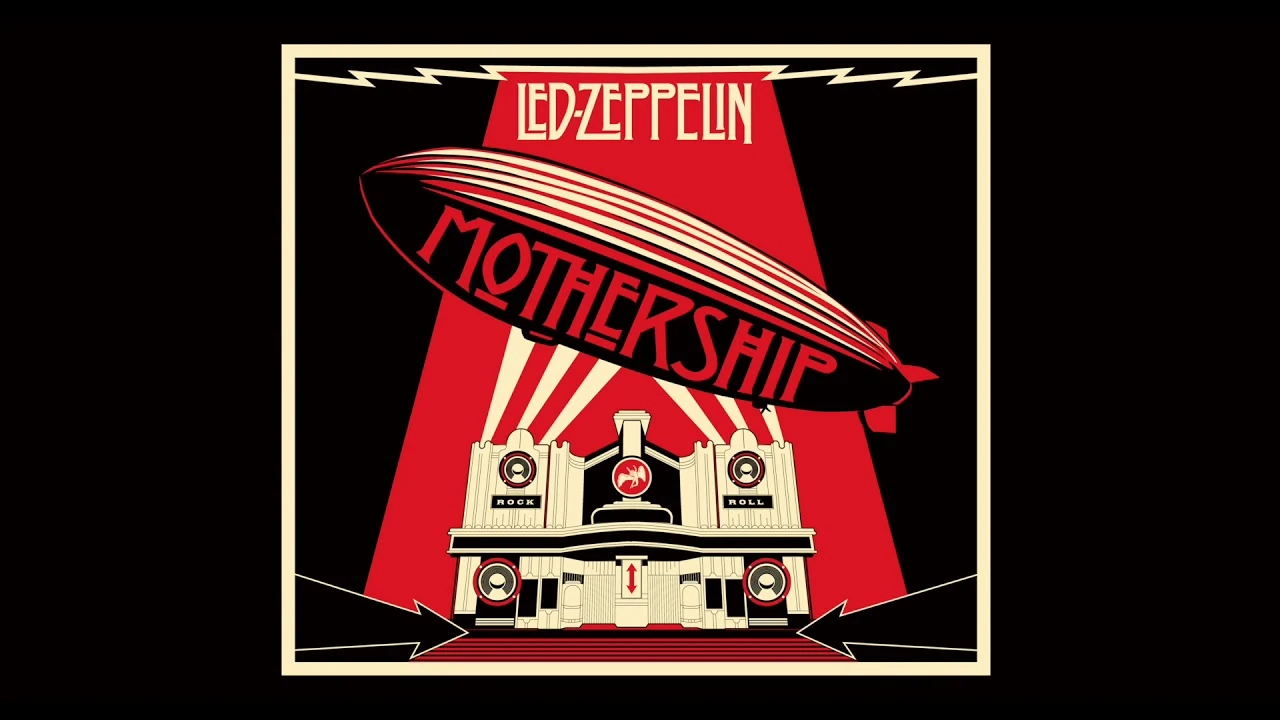
Led Zeppelin changed the scale of rock. Formed in London in 1968, Jimmy Page, Robert Plant, John Paul Jones and John Bonham brought a heavy electric sound together with blues, folk and a gift for dramatic contrast. Their records could move from acoustic restraint to thunderous release; on stage, familiar songs became extended frameworks for improvisation. In little more than a decade, they helped establish the album as a major artistic statement and the arena concert as a defining form of rock performance.
A new band takes shape
The group began with unfinished commitments. The Yardbirds had played their final concert in July 1968, but Page and bassist Chris Dreja were still authorised to use the name for dates in Scandinavia. Page wanted to continue the heavier blues-based direction he had pursued with the Yardbirds. His first choice of singer, Terry Reid, declined and recommended Plant, then a singer with the Band of Joy and Hobbstweedle. Plant accepted and suggested his former Band of Joy colleague Bonham for the drums. When Dreja withdrew from the project, John Paul Jones, whom Page knew from their work as session musicians, joined on bass and keyboards.
The four first played together in August 1968 in a room beneath a record shop on Gerrard Street in London. They soon toured Scandinavia as the New Yardbirds, fulfilling the outstanding dates. Their first concert under the name Led Zeppelin followed at the University of Surrey in Guildford on 25 October. The name itself grew from the image of a “lead balloon”, a phrase for failure associated with a proposed supergroup involving Page, Jeff Beck, Keith Moon and John Entwistle. The spelling was altered to avoid a misleading pronunciation.
Led Zeppelin recorded their debut in September 1968, completing and mixing it in nine days, with Page paying the costs. Atlantic Records signed them in November. The contract gave the band unusual control over when to release albums and tour, as well as over album contents, design and promotion. They also formed their own company to handle publishing rights. This control would underpin a career in which records were conceived as complete listening experiences rather than collections assembled chiefly to supply singles.
Power with room for detail
The debut album established the band’s hard, blues-based attack. Page’s guitar supplied riffs with shape and momentum; Bonham’s powerful, sharply controlled drumming gave them physical force. Jones’s bass and keyboards added melodic movement and harmonic depth, while Plant’s voice could shift from a high-reaching cry to a more reflective delivery. Their impact depended not on heaviness alone, but on how the four players used contrast, rhythmic tension and changes in colour.
The band’s roots included American blues, particularly in their early work, but their sound drew on more than one tradition. They took in British and American folk, early rock and roll, and a range of other influences. Page’s playing also drew on open tunings and forceful picking associated with Scottish folk guitarist Bert Jansch. These strands became especially audible when the group moved between amplified blues-rock and acoustic arrangements, a combination that widened the emotional range of hard rock.
Led Zeppelin II, recorded largely while the band were touring North America, extended the attack of the debut and became their first number-one album in both the United Kingdom and the United States. Its “Whole Lotta Love” placed one of Page’s best-known riffs at the centre of a track that joined force to studio experimentation. The band’s live performances developed in parallel: songs were stretched, reshaped and improvised, and some early concerts lasted more than four hours.
In 1970, Page and Plant worked on new material at Bron-Yr-Aur, a remote cottage in Wales. The resulting Led Zeppelin III made much greater use of acoustic instruments and drew on folk and Celtic music. Its opening track, “Immigrant Song”, announced that the band had not abandoned their electric power, while the rest of the album made a conspicuous case for quieter textures. The shift surprised some listeners and critics, but it established a recurring feature of their work: the refusal to let one successful sound become a limit.
Their untitled fourth album, released in 1971 and commonly known as Led Zeppelin IV, made that approach especially clear. “Black Dog” turns on a tense, shifting riff; “Rock and Roll” compresses the energy of early rock into an exuberant performance; and “Stairway to Heaven” begins with acoustic guitar and recorder before building towards a full-band climax. The album’s four symbols stood for the members, and the band chose not to print its name or a title on the sleeve. Its commercial success showed that mystery and ambition need not prevent a record from reaching a mass audience.
The group continued to expand its palette. Houses of the Holy incorporated more synthesiser and mellotron, while the double album Physical Graffiti brought together new recordings and material from earlier sessions. It included “Kashmir”, whose repeating patterns and broad, layered sound gave the band’s rhythmic drive an unusually expansive setting. Across these records, musical weight sat alongside arrangement, humour and subtler changes in pace; their work was not reducible to volume or a single genre.
Albums built to be heard whole
Led Zeppelin were committed to the album as a complete experience. They resisted the editing of tracks into isolated radio units and preferred records with deliberate sequence, internal contrast and a sense of flow. The practice was not absolute: some songs were released as singles without the band’s consent. But their wider strategy, supported by the freedom they had negotiated with Atlantic, helped popularise album-oriented rock. Listeners were encouraged to attend to the movement of a whole record rather than treating it simply as a supply of individual hits.
Their British chart record reflects the public response. Led Zeppelin achieved eight consecutive number-one albums in the UK, sustaining that success across a run of studio releases rather than relying on one passing fashion. Led Zeppelin IV became one of the best-selling albums in history. Its achievement rests on more than sales: it brought together blues, folk echoes, electric force and long-form development without smoothing away their differences.
That ambition grew alongside the band’s live scale. As audiences increased, concerts moved from clubs and ballrooms into larger auditoriums and stadiums. Performances gave the songs room to change, with extended versions and improvisation making the stage a place of discovery rather than simple reproduction. The group also made their own decisions about television, generally preferring audiences to encounter them in concert.
In May 1975, Led Zeppelin played five sold-out nights at Earls Court Arena in London, then the largest arena in Britain. The concerts became a prominent example of the large-scale rock show: a sustained performance by a band whose music, presentation and following all demanded an expansive setting. The shows followed the release of Physical Graffiti, when Led Zeppelin were among the most successful rock acts of the era.
Change, interruption and an ending
The group’s rise was not an uninterrupted march. In August 1975, Plant and his wife were involved in a serious car crash while on holiday in Rhodes. Plant suffered a broken ankle and his wife was badly injured. Unable to tour, the band worked on material that became Presence, released in 1976. The album moved towards more direct, guitar-led performances. It was commercially successful, although its reception was mixed, and the group’s touring was curtailed while Plant recovered.
They returned to North America in 1977, but the tour was disrupted by incidents at several venues. After Plant learned that his young son had died during the Oakland run, the remaining dates were cancelled. The band later recorded In Through the Out Door, which reached number one in both the UK and the US. Their final studio album to appear during Bonham’s lifetime showed a different balance of sounds, with Jones’s keyboards prominent.
John Bonham died in September 1980. The other members decided not to carry on as Led Zeppelin without him, announcing that the loss of their friend and the sense of harmony they shared meant they could not continue as they had. The decision recognised how central Bonham’s playing was to the band’s identity. Coda, a collection of outtakes and unused recordings, followed in 1982, but the group did not resume as a working band.
The members did reunite on selected occasions. At Live Aid in 1985, Page, Plant and Jones performed with drummers Tony Thompson and Phil Collins and bassist Paul Martinez. Jason Bonham, John’s son, played drums when the three surviving members reunited at the Atlantic Records anniversary concert in 1988, and again at their 1995 Rock and Roll Hall of Fame induction. These appearances were distinct from a full return to the band’s regular work.
On 10 December 2007, Page, Plant and Jones performed together at London’s O2 Arena, with Jason Bonham on drums, for a tribute concert to Atlantic co-founder Ahmet Ertegun. The performance was released as Celebration Day, a film and live album; the album received the 2014 Grammy Award for Best Rock Album. The concert’s success showed that the music could still command an arena, decades after the group had ended.
Recognition and influence
Led Zeppelin’s honours include induction into the Rock and Roll Hall of Fame in 1995 and the Grammy Lifetime Achievement Award in 2005. In Britain, they received an Ivor Novello Award for Outstanding Contribution to British Music in 1977. The individual members were among the artists honoured at the Kennedy Center in 2012. Such recognition accompanies, rather than explains, the band’s lasting influence.
Their example helped shape hard rock, heavy metal, stadium rock and the album-oriented approach to popular music. Later musicians have drawn on their sound, but the group’s significance also lies in the way they combined elements that could have remained separate: blues-based riffs, folk and acoustic passages, layered studio work, forceful rhythm and long-form live performance. Their music could be direct and intricate in the same moment, giving audiences both immediate impact and details to return to.
Why Led Zeppelin deserve a place in British Legacy
Led Zeppelin deserve a place in British Legacy because they made a lasting contribution to the sound and ambitions of British popular music. Formed in London by musicians with roots in the British band and session scenes, they took American blues seriously while bringing it into conversation with folk, acoustic music and a distinctly British appetite for contrast. Their success was not simply a matter of making rock louder. They built music in which a heavy riff could coexist with carefully arranged keyboards, acoustic restraint and extended musical development. That approach helped make the rock album a form capable of commercial reach and artistic breadth at once.
Their achievements were audible in the records and in the way audiences experienced them. Eight consecutive UK number-one albums marked sustained public engagement; Led Zeppelin IV demonstrated that an album could be both enigmatic and enormously successful; and the five Earls Court concerts in 1975 showed how a British band could command a large-scale home performance. The 2007 O2 reunion, later released as Celebration Day, offered further evidence that the music retained its structure and force. Led Zeppelin’s legacy is therefore not just a catalogue of famous songs or awards. It is a model of musical range, album-making and live ambition that helped alter what rock records and concerts could be.
Sources
Led Zeppelin — Wikipedia revision 1373741615 · Led Zeppelin — Wikipedia
Adapted in part from Led Zeppelin by Wikipedia contributors, under CC BY-SA 4.0. Text has been edited and combined with the existing article; this adapted text is shared under the same licence. Contributor history.