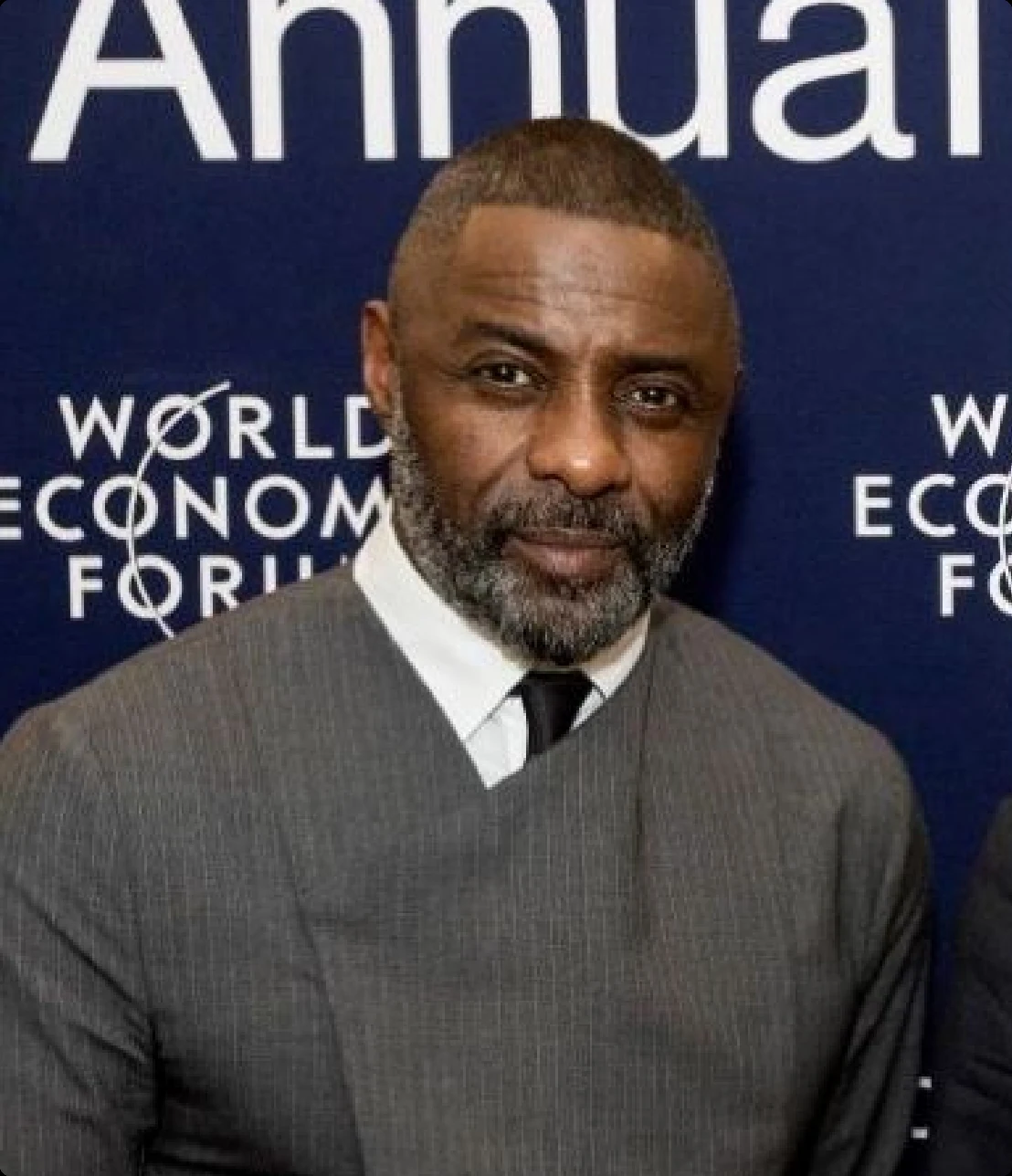
Idris Elba’s career crosses British television, international film, music and public campaigning. He first became widely known in the United States as Stringer Bell in The Wire; in Britain, his role as John Luther made him the lead of a BBC crime drama. Alongside acting, he has worked as a DJ and producer, spoken about diversity in the creative industries and campaigned against knife crime. The range matters: Elba’s story is not simply one of a British actor succeeding abroad, but of a performer moving between different kinds of work while returning his attention to issues affecting people in the UK.
From Hackney to the National Youth Music Theatre
Idrissa Akuna Elba was born in Hackney, London, on 6 September 1972. His father, Winston, was from Sierra Leone and worked at the Ford Dagenham plant; his mother, Eve, was Ghanaian. Elba was raised in Hackney and East Ham. At school in Canning Town, he shortened his first name to Idris and became involved in acting.
His route into performance included both training and work. He briefly attended Barking and Dagenham College, then won a place at the National Youth Music Theatre after receiving a £1,500 grant from the Prince’s Trust. Before acting provided a reliable income, he supported himself through jobs including tyre-fitting, cold-calling and night shifts at Ford Dagenham. He had also begun DJing as a teenager: in 1986, he helped an uncle with a wedding-DJ business, and the following year started a DJ company with friends.
Elba later credited The Stage with giving him an early break. After responding to an advertisement for a play, he auditioned and met his first agent while performing. His first screen work included murder reconstructions for Crimewatch and an appearance in the BBC children’s drama The Boot Street Band in 1994. British television roles followed in programmes including Bramwell, Absolutely Fabulous, The Bill and Family Affairs.
Stringer Bell, John Luther and a widening screen career
Elba’s international breakthrough came with The Wire, the HBO drama set in Baltimore. From 2002 to 2004, he played Stringer Bell, a calculating figure in the city’s drug trade. The role made him familiar to American audiences, but his career continued to move between countries and formats. He appeared in the British television drama Ultraviolet, and took roles in American productions including Sometimes in April and The Office.
In 2010, he began playing detective John Luther in the BBC series Luther. The role brought him a Golden Globe Award for best actor in a miniseries or television film in 2012 and four Primetime Emmy nominations. He also created and starred in the comedy series In the Long Run, and made his feature directorial debut with Yardie in 2018.
His film work has ranged from dramas to large-scale franchises. He played Nelson Mandela in Mandela: Long Walk to Freedom (2013), earning a Golden Globe nomination, and appeared in films including American Gangster, Prometheus, Pacific Rim and Beasts of No Nation. He joined the Marvel Cinematic Universe as Heimdall in Thor (2011), returning to the role in later films. His screen work also includes voice performances: he voiced characters in Zootopia, The Jungle Book and the Sonic the Hedgehog films, among others. These projects show the breadth of his work, rather than a career confined to a single defining part.
Music and work behind the camera
Music has run alongside Elba’s acting career since his teenage years. As DJ Big Driis, he has played clubs and festivals and released music under his own name. His work includes the 2014 album Idris Elba Presents Mi Mandela and the collaborative EP Cordi Elba, released with Australian duo Lime Cordiale in 2022. He launched the record label 7Wallace Music in 2018 and has also appeared as a rapper, singer and producer.
Elba’s creative work extends to production. Through his company Green Door Pictures, he has worked on original content, and he later launched the production company 22Summers. In 2019, his album Mi Mandela helped inspire Tree, a play staged at the Manchester International Festival. Its authorship was disputed: writers Tori Allen-Martin and Sarah Henley said they had contributed to the project and were removed; Elba and co-creator Kwame Kwei-Armah published rebuttals. The dispute is part of the public record of a project that moved between music and theatre, and should not be reduced to a simple account of individual authorship.
Using a public profile
The Prince’s Trust has a specific place in Elba’s early story: its grant helped him attend the National Youth Music Theatre. In 2009, the charity appointed him its anti-crime ambassador. He has also used public appearances to address representation in entertainment. In 2016, he spoke to the UK Parliament about the lack of diversity on screen, including across race, gender and sexuality. He served on the British Film Institute’s Board of Governors from 2018 to 2022.
His public campaigning has also focused on knife crime. Elba has spoken in favour of action on the issue and attended the UK government’s knife-crime summit in 2024. He released “Knives Down” with UK rapper DB Maz in 2024 as part of his campaign. At the summit, he argued for listening to a range of perspectives, including those of parents, youth workers and law enforcement. The Elba Hope Foundation was part of the coalition discussed there. His role is that of a campaigner and public advocate; these actions do not, by themselves, establish the impact of particular policies.
Elba has also worked with Global Citizen. With his wife, Sabrina Dhowre Elba, he has appeared at events addressing issues including climate change, hunger and responses to COVID-19. This international campaigning sits alongside his UK-focused work, rather than replacing it. His career has given him a platform that spans audiences and causes, while his support for young people and campaigning on crime have a direct connection to Britain.
Why Idris Elba deserves a place in British Legacy
Idris Elba’s place in British Legacy rests first on a distinctive career in performance. He began in British television, developed into an internationally recognised actor through The Wire and Luther, and continued into film, voice work, directing and production. His work does not fit neatly into one national or artistic category: a London-born performer became a familiar presence in an American drama, returned as the central figure in a BBC series and took on roles across major film franchises. That range is a concrete contribution to the history of contemporary British entertainment, and his work behind the camera shows an interest in shaping projects as well as appearing in them.
His legacy also includes a documented connection between opportunity and public service. A Prince’s Trust grant helped him reach the National Youth Music Theatre; later, he became the charity’s anti-crime ambassador. He has spoken to Parliament about on-screen diversity, served on the British Film Institute’s Board of Governors and used his profile to campaign against knife crime. These actions do not make him responsible for solving structural problems, but they show how a successful performer can draw attention to them. His story connects creative achievement with practical efforts to widen opportunity and encourage public discussion in Britain.
Sources
Idris Elba — Wikipedia revision
Adapted in part from Idris Elba by Wikipedia contributors, under CC BY-SA 4.0. Text has been edited and combined with the existing article; this adapted text is shared under the same licence. Contributor history.