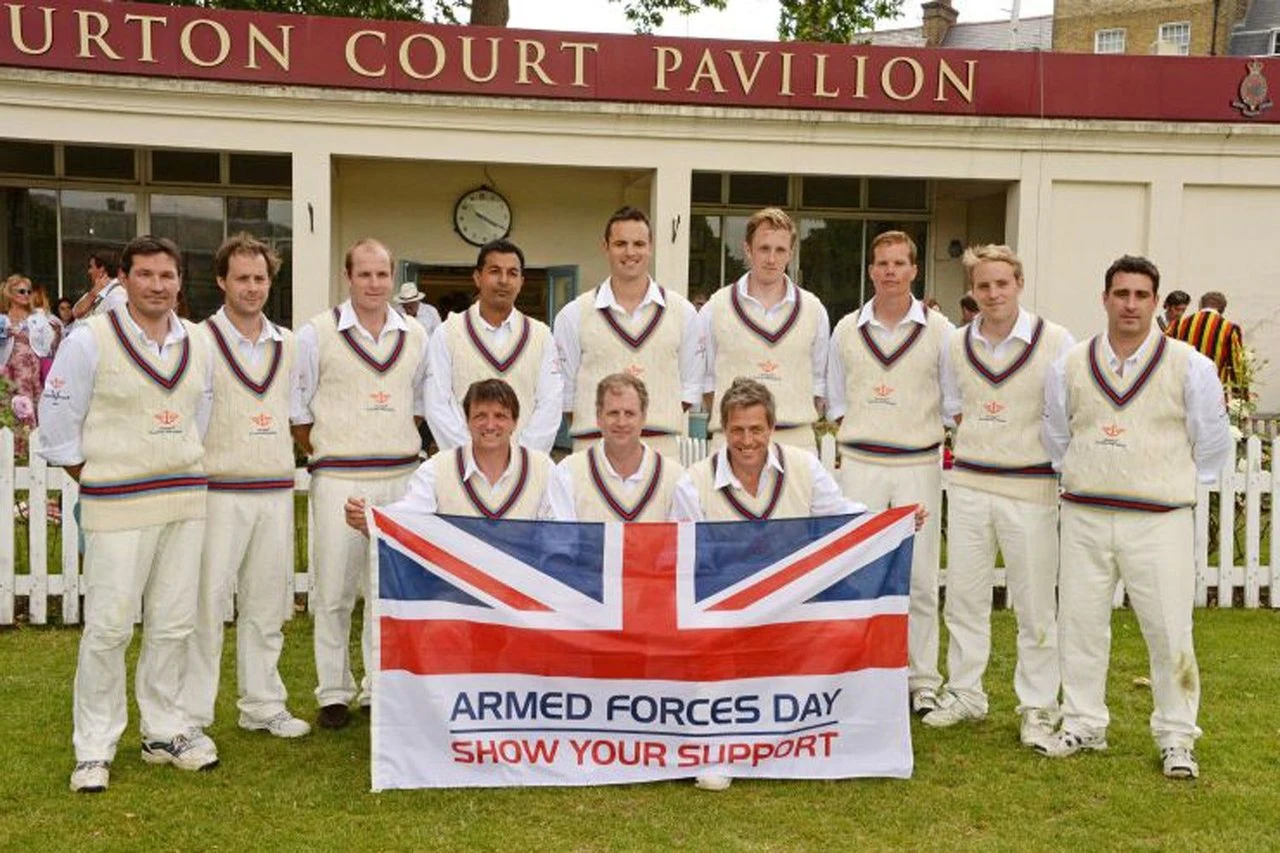
Hugh Grant’s screen career has travelled well beyond the awkward, self-deprecating romantic lead who made him an international star in Four Weddings and a Funeral. He went on to play a wider range of parts, from a charming but calculating publisher in Bridget Jones’s Diary to the villain in Paddington 2 and Jeremy Thorpe in the BBC drama A Very English Scandal. Away from acting, his public profile has also been shaped by his campaign against press intrusion and his support for charities.
Oxford, early roles and a sudden breakthrough
Born in Hammersmith, London, on 9 September 1960, Grant studied English literature at New College, Oxford, graduating with an upper second-class degree. At university he joined the Oxford University Dramatic Society, initially treating acting as a creative outlet rather than a settled profession. His first film was Privileged (1982), produced by the Oxford University Film Foundation.
Before establishing himself on screen, Grant took several jobs and spent a year with Nottingham Playhouse, where acting in regional theatre enabled him to obtain an Equity card. He performed in productions including Lady Windermere’s Fan, Hamlet and Coriolanus. He also formed the sketch-comedy group the Jockeys of Norfolk with friends. The group performed around London and appeared at the Edinburgh Festival Fringe in 1985.
Grant’s early film work included Maurice (1987), in which he and co-star James Wilby shared the Volpi Cup for Best Actor at the Venice Film Festival, and supporting roles in period dramas such as The Remains of the Day (1993). His breakthrough came with Richard Curtis’s Four Weddings and a Funeral (1994). Grant’s performance as Charles won him the BAFTA Award for Best Actor in a Leading Role and the Golden Globe for Best Actor in a Motion Picture Musical or Comedy. The film’s success made him an international star and closely associated him with the affable English romantic lead.
Romantic comedy, then a change of direction
Grant returned to the romantic-comedy genre in several of his most widely recognised films. He starred opposite Julia Roberts in Notting Hill (1999), played Daniel Cleaver in Bridget Jones’s Diary (2001), and appeared as the Prime Minister in Love Actually (2003). He also took roles in About a Boy (2002), Two Weeks Notice (2002) and Music and Lyrics (2007). These parts established a durable screen persona, but he began to move away from romantic leads and towards more sharply defined character roles.
That shift is clear in his later work. In Cloud Atlas (2012), he played six characters; in Florence Foster Jenkins (2016), he was St Clair Bayfield, a role that brought him award nominations. As the egotistical performer Phoenix Buchanan in Paddington 2 (2017), he made comic vanity part of the film’s appeal. He then played politician Jeremy Thorpe in the BBC miniseries A Very English Scandal (2018), earning nominations including one for a Primetime Emmy Award.
Further parts have continued to resist his earlier typecasting. He played a private investigator in The Gentlemen (2019), appeared in the television drama The Undoing (2020), and took roles in Dungeons & Dragons: Honor Among Thieves and Wonka (both 2023). In 2024, he starred in the horror film Heretic, another departure from the romantic-comedy roles with which he first became famous. He returned as Daniel Cleaver in Bridget Jones: Mad About the Boy in 2025.
Speaking out on press conduct
Grant became a prominent critic of the conduct of Rupert Murdoch’s News Corporation during the phone-hacking scandal. In 2011, he published an account in the New Statesman of a conversation with former News of the World journalist Paul McMullan, which Grant had secretly recorded. The exchange drew attention to allegations about phone tapping and the relationships between politicians and media executives. Grant later appeared on BBC television’s Question Time during the public debate over the scandal.
He also gave evidence to the Leveson Inquiry in 2011, speaking about his own experience of media intrusion. His campaigning became closely associated with Hacked Off, the press-reform campaign group. In 2018, after Mirror Group Newspapers apologised for its actions towards Grant and other public figures, he accepted a settlement in a High Court action and donated the payout to Hacked Off. In 2024, he announced that he had settled a case against the publisher of The Sun. Grant said he had not wanted to accept the settlement, but that the cost of proceeding to trial was a consideration; News Group Newspapers denied the claims he had made against it.
His stance has also intersected with his acting. Grant said that he based his unscrupulous reporter in The Gentlemen on tabloid journalists who had once been his adversaries. The role turned his familiarity with that world into material for a performance, while his public campaigning has kept questions about press conduct in view beyond the screen.
Charitable work and recognition
Grant’s charitable work includes support for The Felix Project, which rescues surplus food and redistributes it to charities and schools. His involvement has been described as helping raise awareness and funds for work addressing food waste and hunger in the UK. He has also supported causes connected with health and disability: he is a patron of DIPEx Charity, which operates Healthtalkonline, and of the Fynvola Foundation, named for his mother and supporting the Lady Dane Farmhouse, a home in Faversham for adults with learning disabilities. Following his mother’s death in 2001, he worked as a fundraiser and ambassador for Marie Curie Cancer Care and has also been a patron of Pancreatic Cancer Action.
His support has included local activity as well as patronage and fundraising. In December 2023, he worked with Hammersmith and Fulham Council on its annual Big H&F Christmas Day Lunch, serving Christmas dinner to elderly residents who might otherwise spend the day alone. The example offers a specific counterpart to his national profile: public attention used in support of a community event.
Grant’s acting honours include a BAFTA Award, a Golden Globe Award and the Volpi Cup for Best Actor, as well as nominations for two Primetime Emmy Awards. His career has not been confined to one genre or a single screen identity. From his early theatre work to romantic-comedy stardom and later dramatic roles, he has continued to revisit what audiences expect of him.
Why Hugh Grant deserves a place in British Legacy
Grant’s place in British Legacy rests first on a sustained contribution to British screen culture. His breakthrough in Four Weddings and a Funeral helped establish him as an internationally recognised English actor, and films including Notting Hill, Bridget Jones’s Diary and Love Actually became prominent examples of British romantic comedy reaching audiences around the world. His career, however, is not simply a record of repeating a successful formula. Roles in A Very English Scandal, Paddington 2 and Heretic show a performer willing to work against the image that first made him famous.
His public campaigning gives that legacy another dimension. Grant used his visibility to challenge press conduct, gave evidence to the Leveson Inquiry and supported Hacked Off, including by donating a legal settlement to the campaign. His support for The Felix Project and other charities extends his public work into food redistribution, health and disability support, and efforts to address social isolation among older people. These activities are distinct in purpose, but each connects a recognisable public figure with an issue or organisation working beyond the film industry. That combination—an evolving acting career and specific engagement with British public life—makes Grant a subject whose legacy can be considered through both his performances and his campaigning.
Sources
Adapted in part from Hugh Grant by Wikipedia contributors, under CC BY-SA 4.0. Text has been edited and combined with the existing article; this adapted text is shared under the same licence. Contributor history.