
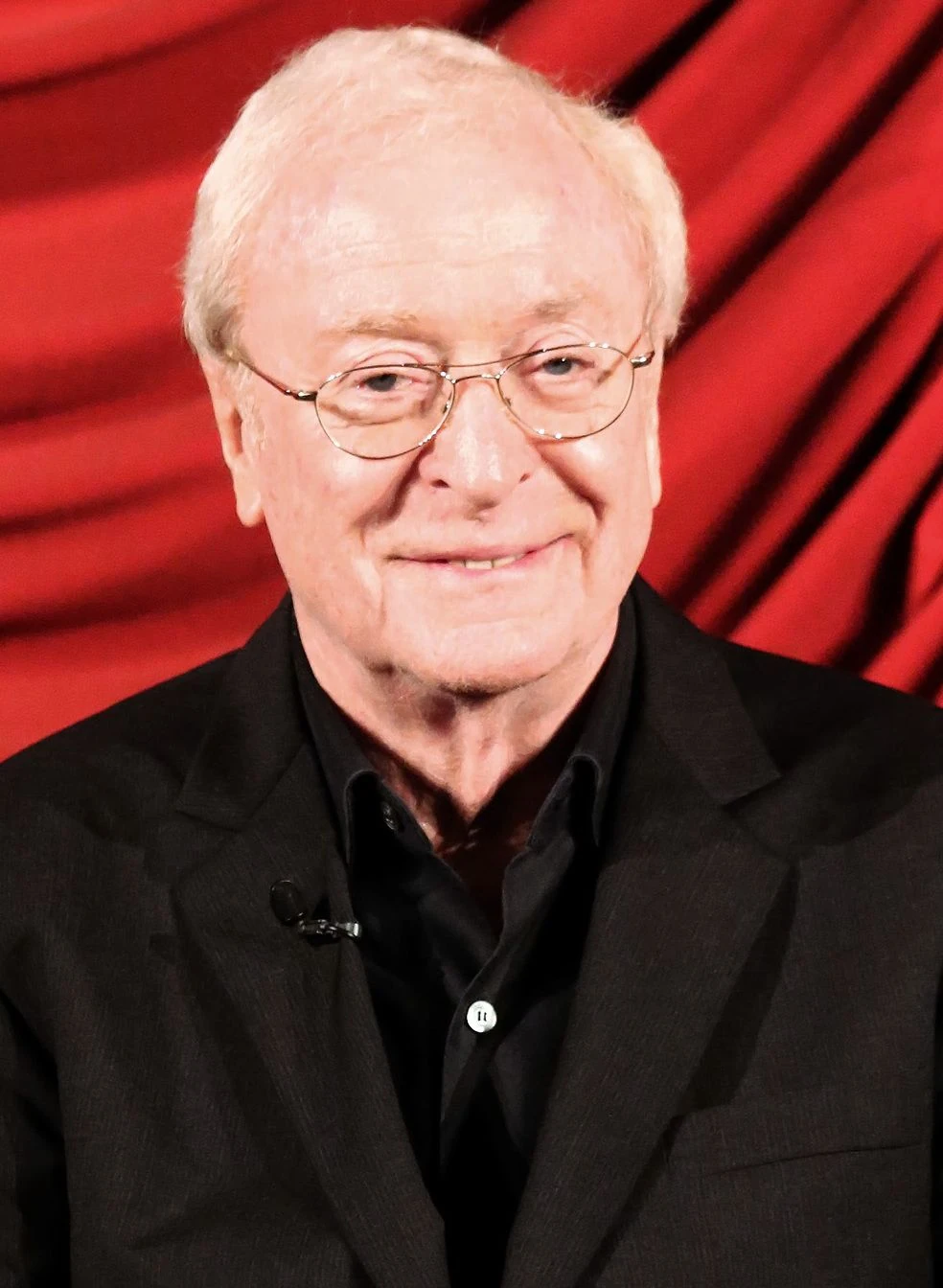
Michael Caine’s screen presence was built on contrasts: a Cockney voice in roles that ranged from working-class outsiders to polished professionals, and a career that moved between British films and international productions. His breakthrough in the 1960s made him a defining face of British cinema, while later performances carried his work to new generations. After more than 130 films, he announced his retirement from acting in 2023.
From south London to the stage
Caine was born Maurice Joseph Micklewhite in London on 14 March 1933. His mother, Ellen, was a cook and charwoman; his father, also Maurice Joseph Micklewhite, worked as a fish-market porter. He grew up in Southwark with his younger brother, Stanley, and an older maternal half-brother. During the Second World War he was evacuated to North Runcton, Norfolk, where he made his stage debut at the village school. After the war, his family lived in a council-rehoused prefabricated home in Elephant and Castle.
At ten, he acted in a school production of Cinderella. The audience laughed when his trousers’ zip was undone, an incident he later described as helping to inspire his interest in acting. He won a scholarship to Hackney Downs School, moved to Wilson’s School in Camberwell, and left at 16 after gaining School Certificates in six subjects. He then worked briefly as a filing clerk and messenger, including for a film company and a producer in London.
National service brought a different kind of experience. Called up in 1951, Caine served first with the Queen’s Royal Regiment and then with the Royal Fusiliers. He saw active service in the Korean War and was sent home in 1953 after contracting malaria. His acting career began in provincial repertory theatre. In 1953, performing under the name Michael Scott, he took a part in Wuthering Heights with the Westminster Repertory Company. After moving to London, he was told that another actor already used that name. He chose Michael Caine after noticing a cinema showing The Caine Mutiny.
The making of a British film star
Caine’s early years in acting were hard. He appeared in small film and television parts, worked in repertory, and took over a role in the touring production of The Long and the Short and the Tall when Peter O’Toole left to make Lawrence of Arabia. His first film role was an uncredited appearance in Morning Departure (1950); his first film credit came with A Hill in Korea (1956). A more substantial stage opportunity arrived in 1963, when he was cast in James Saunders’s Cockney comedy Next Time I’ll Sing to You.
That production helped bring him to the attention of producer and actor Stanley Baker, who introduced him to director Cy Endfield. Caine won the part of an upper-class officer in Zulu (1964), despite initially being considered for a Cockney soldier. The film established him as a screen presence and demonstrated the range available in his voice and appearance. He followed it with two roles that became central to his early reputation: the intelligence agent Harry Palmer in The Ipcress File (1965), and the title character in Alfie (1966). The latter brought his first Academy Award nomination.
In The Italian Job (1969), Caine played Charlie Croker, the leader of a gang planning a gold bullion heist in Italy. The film’s cliff-hanger ending and Croker’s famous line about the doors helped secure its place in British popular culture. That year he also appeared in Battle of Britain. In the following decade he took leading roles in Get Carter (1971), Sleuth (1972) and The Man Who Would Be King (1975), among others. These films showed an actor capable of moving between crime drama, comedy and adventure without losing the directness that had marked his early screen work.
Range, recognition and renewed success
Caine’s career continued through a mix of acclaimed performances and films that drew less favourable attention. In 1983, he starred opposite Julie Walters in Educating Rita, earning a BAFTA and a Golden Globe for his performance. He won his first Academy Award for Best Supporting Actor for Hannah and Her Sisters (1986), followed by a second for The Cider House Rules (1999). Other notable films from these years included Dirty Rotten Scoundrels (1988), The Muppet Christmas Carol (1992), in which he played Ebenezer Scrooge, and Little Voice (1998), which brought him a Golden Globe.
In the 2000s, Caine’s work reached audiences through a further range of genres. He appeared in Miss Congeniality (2000), The Quiet American (2002) and Children of Men (2006). He played Alfred Pennyworth in Christopher Nolan’s Batman films, beginning with Batman Begins (2005), and also appeared in Nolan’s The Prestige, Inception, Interstellar, Dunkirk and Tenet. His later credits included King of Thieves (2018) and The Great Escaper (2023).
Caine’s distinctive voice and manner became familiar beyond his films. The line “Not a lot of people know that” became associated with him through impersonations and jokes, though the Wikipedia account traces the catchphrase to comedian Peter Sellers. Caine also played along with the public image: in Educating Rita, he used the phrase as a joke, and in Austin Powers in Goldmember (2002) he played Nigel Powers, a character that drew on the familiar style of Harry Palmer.
His honours included a CBE in 1992, a BAFTA Academy Fellowship in 2000 and a knighthood in the 2000 Birthday Honours for his contribution to cinema. In 2012, Southwark awarded him its Honorary Freedom. Caine announced his retirement from acting in October 2023, following the release of The Great Escaper, in which he played the lead role.
Why Sir Michael Caine deserves a place in British Legacy
Caine’s place in British Legacy rests first on the distinctive contribution he made to British screen acting. In films such as Zulu, The Ipcress File, Alfie and The Italian Job, he brought a working-class London voice and presence into leading roles at a time when Received Pronunciation was often treated as the default for British film actors. His success helped make a regional accent an asset rather than an obstacle, while his range prevented that achievement from becoming a single typecast persona. The shift from Harry Palmer to the womanising Alfie, from Charlie Croker to the restrained Scrooge, shows how widely he could work within and beyond British stories.
His long career also links several eras of cinema. Caine moved from the British films that established him in the 1960s to major international productions, then to roles in films seen by audiences who may first have known him as Alfred in Nolan’s Batman trilogy. His two Academy Awards, BAFTA and Golden Globe recognition, BAFTA Fellowship and knighthood record both professional achievement and lasting public regard. That legacy is not a claim that every film succeeded; his career included uneven choices as well as celebrated work. Its significance lies in the breadth of roles, the longevity of his screen presence and the way his particular voice and style became part of Britain’s cinematic identity.
Sources
Michael Caine — Wikipedia, revision 1379807572
Adapted in part from Michael Caine by Wikipedia contributors, under CC BY-SA 4.0. Text has been edited and combined with the existing article; this adapted text is shared under the same licence. Contributor history.
.jpg)