
John Lennon’s career began in Liverpool skiffle and ended in New York, but its defining voice was formed in the years between: as a songwriter who helped change British popular music, an artist drawn to experiment and a public figure who turned songs into instruments of protest. His work ranged from the Beatles’ early hit-making to intimate solo records and the anti-war anthem “Give Peace a Chance”. The divisions and disagreements of his life complicate any simple portrait of a peace campaigner; the music, however, remains central to his British legacy.
Liverpool beginnings and the Quarrymen
Born in Liverpool on 9 October 1940, John Winston Lennon was raised for much of his childhood by his aunt Mimi and her husband, George Smith, at Mendips in Woolton. He attended Quarry Bank High School and later Liverpool College of Art. Music took hold early. In 1956, aged 15, he formed the skiffle group the Quarrymen, named after his school.
Lennon met Paul McCartney at a Quarrymen performance at a church fête in Woolton in July 1957. McCartney joined the group and recommended his friend George Harrison as guitarist. Stuart Sutcliffe, a friend from art school, later became its bassist; drummer Pete Best joined before the group’s first Hamburg engagement in 1960. The band took the name the Beatles that year. After Sutcliffe remained in Hamburg and Best was replaced by Ringo Starr, Lennon, McCartney, Harrison and Starr became the line-up that made the group famous.
The Beatles’ first single, “Love Me Do”, appeared in 1962 and reached number 17 on the British charts. Their breakthrough in Britain came the following year, followed by an American television debut on The Ed Sullivan Show in February 1964. Touring, recording and public attention intensified quickly. The Beatles were appointed Members of the Order of the British Empire in 1965, an unusual recognition of a pop group by the British establishment.
Writing for the studio
Lennon and McCartney’s songwriting partnership was a defining force in the group. Lennon’s early Beatles songs included “Help!”, which he later said expressed his own distress, and “Strawberry Fields Forever”, a composition whose studio treatment helped demonstrate how far the band had moved from its beginnings in straightforward pop. “Lucy in the Sky with Diamonds” was another of his best-known Beatles songs. These tracks show different sides of his writing: direct personal feeling, playful imagery and a willingness to treat recording as part of composition.
The Beatles’ development was not simply a matter of increasingly elaborate records. Their change in sound and public role took place alongside changing ideas about what popular music could say. In 1967, Lennon’s “All You Need Is Love” was performed as Britain’s contribution to the international satellite broadcast Our World. Its uncomplicated call for love became associated with the counterculture. A year later, “Revolution” brought political argument into the group’s catalogue, while its lyrics also questioned the means by which change should be pursued.
Lennon was a writer beyond songwriting, too. His books In His Own Write (1964) and A Spaniard in the Works (1965) brought together nonsense writing, wordplay and drawings. He had developed these interests at school, where he filled an exercise book with stories, cartoons and poems. In the mid-1960s, he also wrote the books while the Beatles’ public profile was growing. His creative life included visual art and collaborations with Yoko Ono, extending beyond the conventional boundaries of a pop career.
Leaving the Beatles and making a solo voice
Lennon’s relationship with the Beatles became increasingly strained as his music and priorities changed. He and Ono began collaborating on experimental recordings and founded the Plastic Ono Band in 1969. That year they staged public anti-war events, including a bed-in in Amsterdam and a second in Montreal, where “Give Peace a Chance” was recorded. The song became a protest anthem, carried beyond the circumstances in which it was written by demonstrations and collective singing.
Lennon left the Beatles in September 1969, although the split was not immediately announced. The group formally disbanded in 1970. His first solo album, John Lennon/Plastic Ono Band, released that year, was stark and personal, a marked contrast to the group’s early pop records. The following year’s Imagine contained the title song, which became his most enduring appeal for a world without divisions. His solo singles also included “Instant Karma!” and “Happy Xmas (War Is Over)”.
Political engagement brought consequences as well as a platform. After Lennon and Ono moved to New York in 1971, his opposition to the Vietnam War drew the attention of the Nixon administration. US immigration authorities began deportation proceedings, which continued for several years; an appeals court barred the attempt in 1975, and Lennon received permanent residency the following year. He also returned his MBE medal in 1969, protesting Britain’s role in the Nigeria–Biafra conflict and its support for the United States in Vietnam, as well as the chart performance of “Cold Turkey”. The gesture did not cancel the award.
Withdrawal, return and death
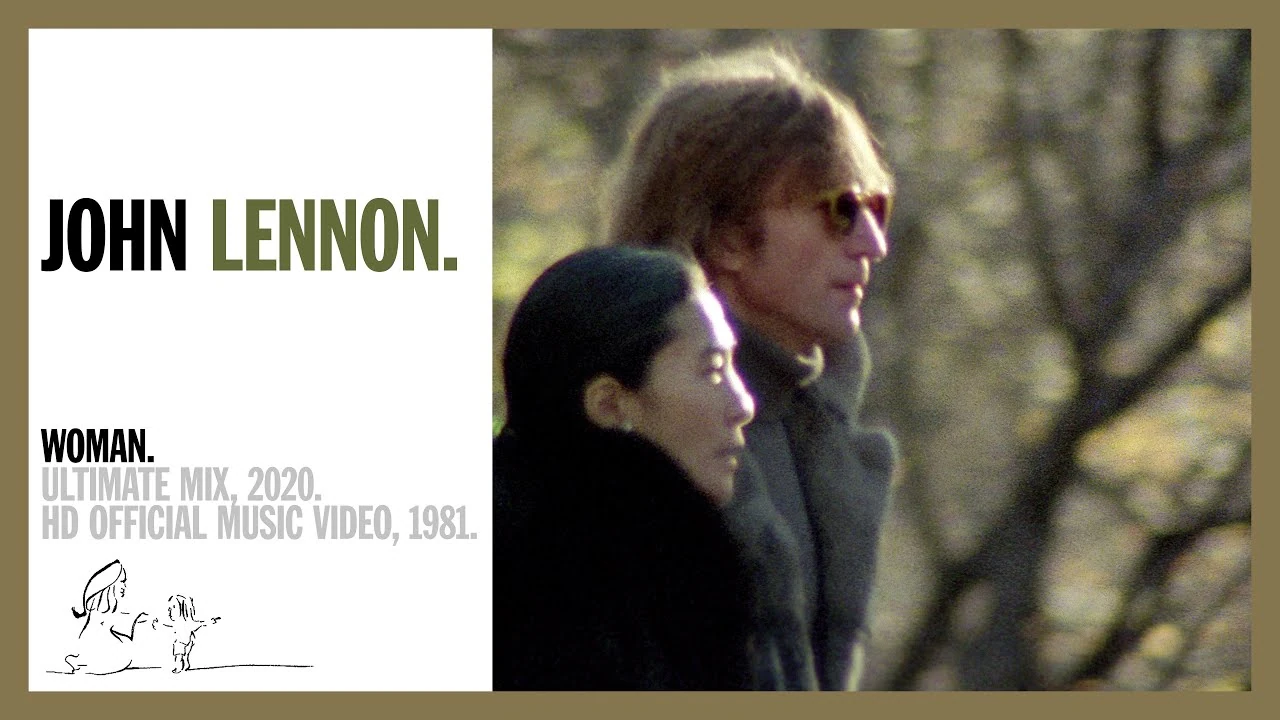
From 1975, Lennon largely stepped away from the music industry and devoted himself to family life with Ono and their son, Sean. He continued writing and making recordings at home, but his return to professional work came in 1980 with Double Fantasy, a collaboration with Ono. The album reflected a different phase of his life from the confrontational political work of the early 1970s. Lennon was shot and killed in New York on 8 December 1980, three weeks after the album’s release. He was 40.
Double Fantasy received a Grammy Award for Album of the Year in 1981 and a Brit Award for Outstanding Contribution to Music. Lennon was inducted into the Rock and Roll Hall of Fame as a member of the Beatles in 1988 and as a solo artist in 1994; he was also posthumously inducted into the Songwriters Hall of Fame. In Liverpool, the airport was renamed Liverpool John Lennon Airport in 2002. In 2010, Cynthia and Julian Lennon unveiled the John Lennon Peace Monument in Chavasse Park, a public memorial in the city where his musical life began.
Why John Lennon deserves a place in British Legacy
Lennon’s place in British cultural history rests first on the work he made with the Beatles. The group began in Liverpool, became a defining presence in British popular music and carried its songs to an international audience. Lennon’s writing helped shape that change: “Help!” made room for personal vulnerability in a pop song, while “Strawberry Fields Forever” showed how songwriting and studio experimentation could work together. His partnership with McCartney became one of the most influential in popular music. That achievement is not just a matter of fame; it lies in how their work widened the sound, ambition and expressive range of the British pop song.
His legacy also includes work beyond the Beatles: solo albums, books, visual art and public campaigns. “Give Peace a Chance” gave anti-war protest a song people could sing together, while “Imagine” continues to express an ideal of a less divided world. Lennon’s politics were contested, and his life does not fit a frictionless story of moral consistency. His MBE protest and his fight against deportation nevertheless show how his public identity became entangled with political action. The Liverpool memorials and the airport named after him make that connection visible at home. Remembering Lennon in British Legacy means recognising both his influence on music made in Britain and the international reach of the ideas and creative experiments he carried beyond it.
Sources
John Lennon — Wikipedia revision 1379079374
Adapted in part from John Lennon by Wikipedia contributors, under CC BY-SA 4.0. Text has been edited and combined with the existing article; this adapted text is shared under the same licence. Contributor history.
.jpg)