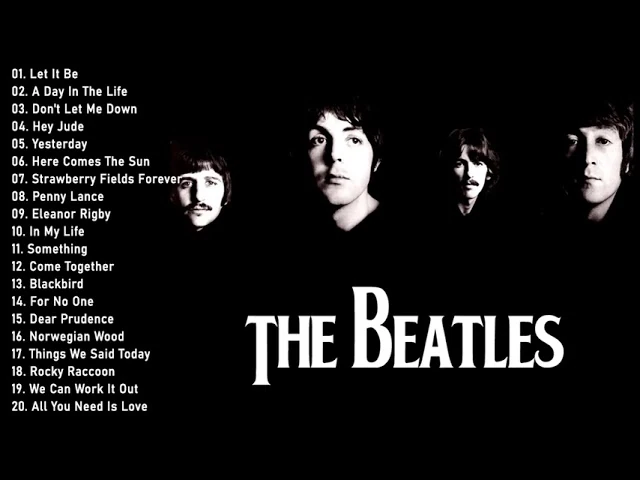
The Beatles began as a Liverpool band learning its trade in clubs and ended their working life having changed what listeners expected from popular music. Their story spans the noise of Beatlemania and the intricacies of the recording studio, direct pop songs and experiments with tape, Indian instruments and orchestral arrangements. They also carried their humour and musical ideas into film, while their decisions as performers sometimes gave their celebrity practical force. The familiar quartet—John Lennon, Paul McCartney, George Harrison and Ringo Starr—was not formed at once. Years of changing line-ups and hard-won stage experience preceded their international success.
Manager Brian Epstein helped turn that experience into a professional career; producer George Martin helped the group realise ideas that extended well beyond a conventional band performance. From Liverpool and Hamburg to Abbey Road, The Beatles made a local beginning the starting point for a transformation in British and international popular culture.
Learning the trade in Liverpool and Hamburg
The group grew out of the Quarrymen, a skiffle band formed by Lennon in Liverpool in 1956. McCartney met Lennon in 1957 and joined soon afterwards; Harrison joined in 1958. The band’s name changed several times before they became the Beatles in 1960. Stuart Sutcliffe joined on bass that year, and drummer Pete Best was recruited before the group left Liverpool for Hamburg in August.
Their first Hamburg residency put the young musicians through long nights of performance. They played in the clubs around the Reeperbahn, sometimes for hours at a stretch. The work helped develop their stamina and stagecraft, but the early history also included disruption: Harrison was deported for being underage, McCartney and Best were deported after an incident involving a fire, and Lennon returned to Liverpool. Sutcliffe stayed in Hamburg for a time, then left the band in 1961 to resume his art studies. McCartney took over bass.
Hamburg was not their only apprenticeship. Back in Liverpool, the Beatles played regularly at the Cavern Club as the Merseybeat movement grew. Brian Epstein, a local record-shop owner, saw them there in November 1961 and became their manager in January 1962. He encouraged a more professional presentation without removing the group’s quick-witted character. George Martin, a producer at EMI’s Parlophone label, signed them later that year. The band also changed drummer: Ringo Starr, then playing with Rory Storm and the Hurricanes, joined in August 1962.
“Love Me Do” became their first single in October 1962. “Please Please Me” followed in early 1963, and the band’s first album, also titled Please Please Me, was recorded in a single long session at Abbey Road. Its energy reflected the speed and concentration of a group accustomed to playing live. “From Me to You” and “She Loves You” extended their success. The latter’s rapid sales helped fuel the rising public excitement that newspapers called Beatlemania.
Beatlemania and the British Invasion
In 1963, the Beatles toured Britain repeatedly and became a major attraction on television and radio. Their irreverence in interviews and public appearances set them apart from the more formal image often expected of pop performers. Their records combined memorable hooks, close harmonies and songs written largely by Lennon and McCartney. Harrison’s guitar and Starr’s direct, economical drumming gave the music a distinctive shape.
The band’s popularity crossed the Atlantic in 1964. After US record companies had been slow to release their music, “I Want to Hold Your Hand” broke through, and the Beatles arrived in the United States in February to intense crowds. Their appearance on The Ed Sullivan Show was watched by an enormous television audience. The success helped open the American market to other British acts, a movement soon known as the British Invasion. In the week of 4 April 1964, the Beatles held the top five positions on the Billboard Hot 100.
They also made their first feature film, A Hard Day’s Night, directed by Richard Lester and released in 1964. Its fast editing, comic exchanges and loose, self-aware performances captured the group’s public persona while giving the film a style of its own. The soundtrack album collected the songs written for it. A second Lester film, Help!, followed in 1965, as the band continued to work across music and screen.
The scale of their fame could not conceal the pressures of constant touring. By 1966, screaming crowds often made it difficult to hear the music, while the band’s newer recordings had become increasingly difficult to reproduce on stage. After a final commercial concert in San Francisco that August, they stopped touring and concentrated on recording. The change removed the demands of live performance but made the studio, rather than the concert stage, the centre of their work.
Making the studio part of the music
Rubber Soul, released in 1965, showed the group moving towards more varied arrangements and more inward-looking songs. Harrison’s sitar on “Norwegian Wood (This Bird Has Flown)” brought an Indian instrument into a Beatles recording. The album also reflected a developing interest in albums as carefully shaped works rather than collections assembled chiefly around singles.
Revolver pushed that approach further in 1966. Its songs use contrasting styles and arrangements, from the string octet on “Eleanor Rigby” to the tape loops and altered sounds of “Tomorrow Never Knows”. Harrison contributed three songs, demonstrating the growth of his songwriting within a band still led principally by Lennon and McCartney. The studio team experimented with tape, microphones and other techniques, making the means of recording audible parts of the finished music.
George Martin’s contribution was practical and musical. His training helped him suggest arrangements and translate the group’s requests into recordings. For “Yesterday”, for example, he proposed a string quartet to accompany McCartney’s song. Martin was neither the hidden author of the Beatles’ work nor simply an operator behind the controls: his collaboration with the musicians and the engineers helped turn ideas into workable arrangements and sounds.
That partnership came into particular focus on Sgt. Pepper’s Lonely Hearts Club Band, released in 1967. The Beatles and their studio team made a complex, varied album using four-track recording technology. Its fictional band offered a theatrical frame, while the sequencing, arrangements and recurring motifs gave the record a sense of cohesion. “A Day in the Life” joined distinct musical passages in a striking conclusion; other songs drew on orchestral writing and studio effects. The album helped strengthen the case for treating a pop album as a sustained artistic statement.
The group continued to explore different directions. The Beatles, commonly called the White Album, appeared in 1968 as a double album with a wide range of styles. Abbey Road, recorded in 1969, brought together individual songs and a connected sequence on its second side. These records also came from a period of growing strain among the members. The closeness and shared purpose of the early years no longer made collaboration easy.
Songs, films and public choices
The Beatles’ work is not captured by a list of famous singles alone. “Yesterday” places a bare, reflective melody against a string arrangement; “Hey Jude” grows from a direct address into an extended communal refrain. “Let It Be” is another example of the group’s capacity to make a plain, memorable song carry weight. At other points, “Eleanor Rigby” and “A Day in the Life” show how far their writing and arranging could move from straightforward pop forms.
The four musicians brought different strengths. Lennon and McCartney’s songwriting partnership gave the group a large body of material, but Harrison’s songs increasingly widened its musical and lyrical range. Starr’s playing served the arrangement rather than drawing attention to itself, making room for the songs’ changes in mood and texture. The band’s achievement lay partly in the way these differences could coexist: experimentation did not have to mean abandoning melody or a broad audience.
Film provided another route for the group’s ideas. After A Hard Day’s Night and Help!, the television film Magical Mystery Tour received a poor critical response in Britain. Yellow Submarine, released in 1968, took a different approach, using animated versions of the musicians and a colourful visual style. The varied reception of these projects is part of the story: their screen work was not uniformly successful, but it expanded the band’s presence beyond records and performances.
Their public actions also included a clear stand against segregation. During the 1964 American tour, the Beatles said they would not perform at Jacksonville’s segregated Gator Bowl unless the audience was integrated. The venue agreed, and the group later included clauses requiring integrated audiences in contracts for subsequent US tours. The stand did not end racial discrimination, but it made their refusal part of the practical conditions of performing rather than an abstract expression of support.
In 1965, Queen Elizabeth II appointed all four members Members of the Order of the British Empire. The recognition marked how far a pop group could move into public esteem, though it does not explain the music’s lasting influence. Their growing reach also reflected the changing culture around them: the band’s success encouraged listeners to take popular music, and the ambitions of its performers, more seriously.
The end of the group and a continuing catalogue
By the end of the 1960s, business disputes and disagreements over the band’s direction had added to personal and creative tensions. Lennon announced that he was leaving in September 1969. McCartney publicly announced his departure in April 1970, shortly before the release of his first solo album, and The Beatles broke up that year. Let It Be, released in May, was their final album to appear, although much of it had been recorded before Abbey Road. Its accompanying film documented a group in the midst of separation.
The former members continued with solo careers, and the Beatles’ recordings kept finding new listeners. The group’s catalogue was revisited through compilations, reissues and documentary projects, including the Anthology series in the 1990s. In 2023, “Now and Then”, developed from a Lennon demo with later contributions by McCartney and Starr, became the band’s eighteenth UK number-one single. It won the Grammy for Best Rock Performance in 2025. Those later milestones do not replace the achievements of the original group; they show that its recorded work continues to be encountered and discussed.
Why The Beatles deserve a place in British Legacy
The Beatles deserve a place in British Legacy because their achievements connect particular places and people with a change in the reach of British popular culture. They came from Liverpool, built their early reputation in local clubs and Hamburg, and carried that experience into records that reached an international audience. Their success helped British acts enter the American market at a moment when it had long been a powerful centre of popular entertainment. The result was not simply a rise in fame for four musicians. It helped make a British group’s songwriting, performance and visual identity central to a global conversation about popular music.
Their legacy is also audible in the way records can be made. Across Rubber Soul, Revolver and Sgt. Pepper, the Beatles, Martin and their studio teams treated arrangements, tape and recording techniques as creative materials. They expanded the album’s possibilities without giving up the melodic clarity that made their songs accessible. Their films carried the group’s humour and visual imagination into another medium, while their refusal to play to a segregated audience in Jacksonville demonstrated a specific use of celebrity and commercial leverage. These are concrete contributions, not a claim that the band was beyond contradiction or strain. Together, they show how a group rooted in Liverpool helped change the sound, business and public standing of popular music. That combination of local identity, artistic risk and international consequence gives The Beatles a distinctive place in Britain’s cultural history.
Sources
The Beatles — Wikipedia revision 1375659563
Adapted in part from The Beatles by Wikipedia contributors, under CC BY-SA 4.0. Text has been edited and combined with the existing article; this adapted text is shared under the same licence. Contributor history.