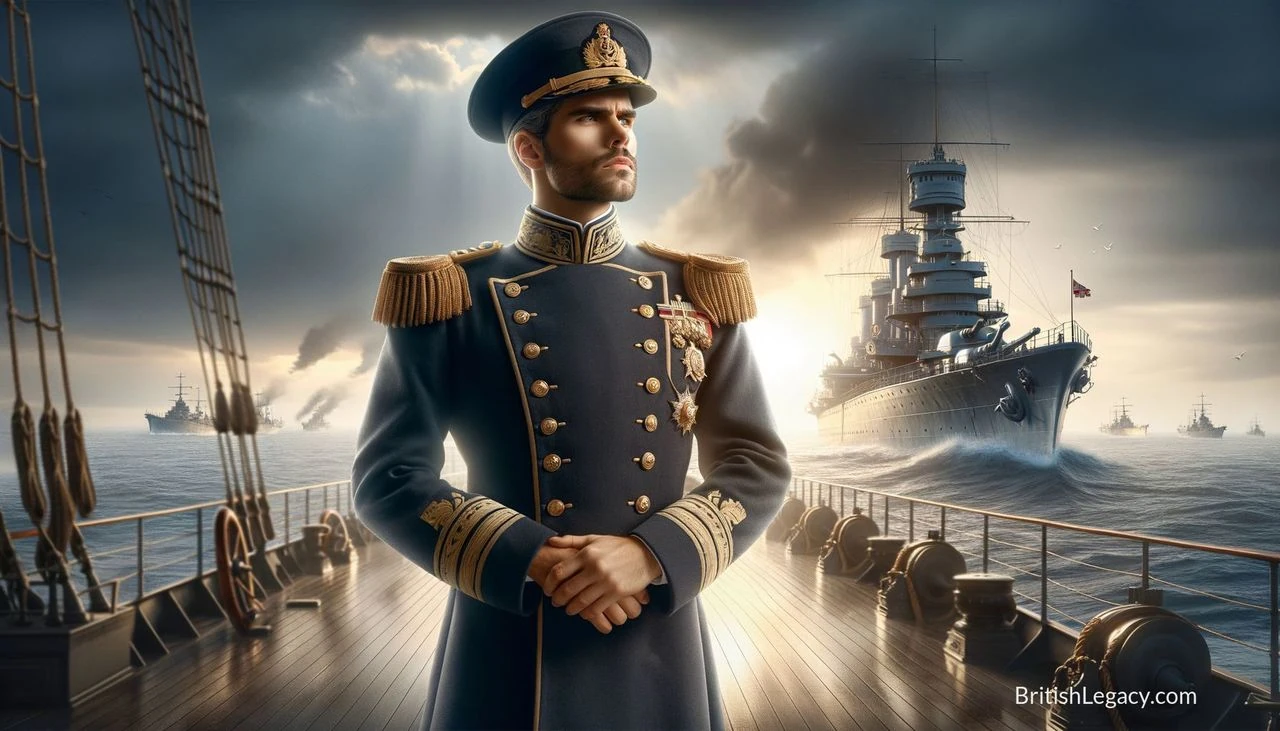
On 21 October 1805, Admiral Horatio Nelson led the British fleet into battle against the combined French and Spanish fleets at Trafalgar. The victory became the defining event of his career, and Nelson was mortally wounded during the fighting. His story is closely tied to Britain’s naval history: it includes earlier service in the Caribbean and Arctic, the Battle of the Nile and a command style associated with breaking the enemy line. Trafalgar made him a lasting figure in British public memory, though the scale of his reputation should not obscure the course of the career that led there.
A naval career formed early
Nelson was born on 29 September 1758 in Burnham Thorpe, Norfolk. He joined the Royal Navy as a midshipman at the age of 12. His early service included action in the Caribbean and the Arctic, experiences that preceded the commands for which he became best known.
In 1794, at the Battle of Calvi, Nelson won a victory and lost the sight of one eye. Four years later, he commanded at the Battle of the Nile. His defeat of the French fleet there established his reputation as a successful commander and strengthened British influence in the Mediterranean. These events formed the prelude to Trafalgar, rather than merely a series of episodes on the way to a single triumph.
Trafalgar and its cost
At Trafalgar, Nelson faced the combined fleets of France and Spain. His plan divided the British fleet into two columns and sent them into the opposing line, disrupting its formation and bringing the ships into close engagement. HMS Victory, Nelson’s flagship, led one of the attacks. The victory was decisive, but Nelson did not live to see its consequences: he was shot during the battle and died of his wounds.
His final words are often given as “Thank God I have done my duty”. The battle’s outcome secured a major British naval victory, while Nelson’s death gave the event a powerful personal dimension. His tactics came to be associated with aggressive engagement and attacks that broke an opponent’s line. The claim that these methods alone secured British superiority for more than a century would overstate what can be established here; the battle nonetheless became a touchstone in accounts of British naval history.
Memory in Britain
Nelson’s name is inscribed in London’s Trafalgar Square, where a statue atop Nelson’s Column commemorates him. The public monument gives the battle a continuing place in the capital’s landscape. His strategic methods are also described as subjects of study in military academies, although the extent of that study is not specified here.
His reputation has often been framed through duty, bravery and sacrifice. Those qualities are interpretations of his legacy, rather than a complete account of a life or a measure of the battle’s wider effects. What can be said from the events recorded here is more concrete: Nelson rose through naval service, commanded at two major victories, lost sight in one eye at Calvi and died at Trafalgar. Together, those episodes explain why his name became so closely associated with British naval history.
Why Horatio Nelson deserves a place in British Legacy
Nelson’s place in British Legacy rests first on the specific record of his naval command. His service included the Battle of the Nile and culminated at Trafalgar, where his fleet defeated the combined French and Spanish forces. His attack in two columns, aimed at breaking the opposing line, became a defining feature of how the battle is remembered. This is a more substantial legacy than a general reputation for courage: it connects a named commander, a consequential battle and a tactical approach that has continued to attract attention.
His story also shows how military history becomes public memory. Nelson died during the victory at Trafalgar, and the monument in Trafalgar Square keeps his name visible in the British capital. Remembering him need not mean repeating claims that one battle alone guaranteed British naval supremacy or treating national virtues as self-evident. A careful account can recognise both his documented achievements and the limits of broad praise. Nelson belongs in British Legacy because his career and death became bound to a major British naval victory, while the lasting commemoration of that event shows how a military figure can shape the way a nation remembers its past.