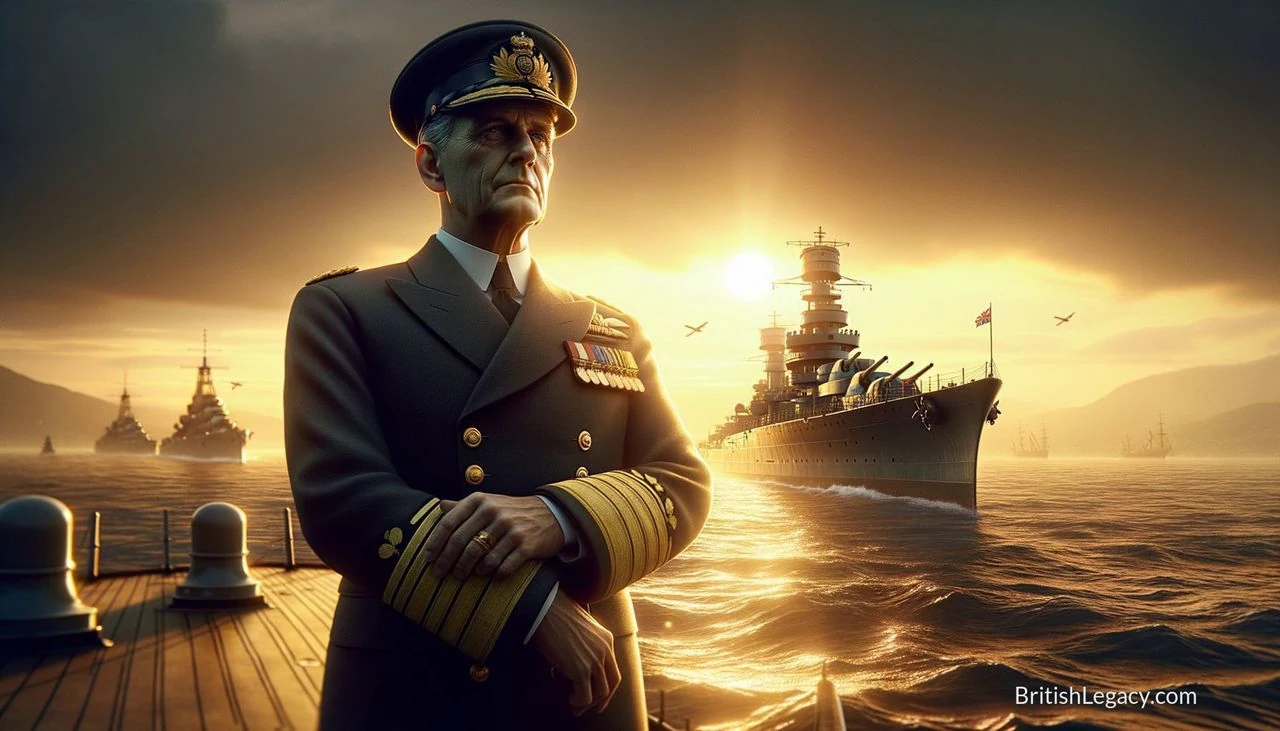
Admiral Sir Andrew Cunningham commanded the Royal Navy’s Mediterranean Fleet through some of the Second World War’s most demanding naval operations. Known as “ABC”, from his initials, he directed campaigns against Italian and German forces, including the carrier-aircraft raid on Taranto, the Battle of Cape Matapan and the evacuation of Crete. The record presented here is chiefly a wartime one: a commander responsible for keeping a fleet in action across a strategically important theatre, while facing serious military and operational risks.
From Dublin to the Mediterranean command
Cunningham was born in Rathmines, Dublin, on 7 January 1883. He entered a naval career that extended across five decades, rising from midshipman to senior command. He served in the First World War, before taking on his defining role in the next conflict. In 1939 he was appointed Commander-in-Chief of the Mediterranean Fleet, placing him in charge of British naval operations in a region central to the Allied war effort.
The Mediterranean connected Europe with the Middle East and North Africa. Control of its waters mattered to the movement of forces and supplies, and the fleet faced the Italian Regia Marina as well as German naval power. Cunningham’s command therefore involved more than fighting individual engagements: it required the Royal Navy to continue operating in a contested sea while protecting routes and supporting Allied forces.
Taranto and Cape Matapan
In November 1940, the Royal Navy attacked the Italian fleet at Taranto in a night-time air raid launched from carriers. Fairey Swordfish biplanes struck the ships at anchor and damaged Italian battleships. The operation demonstrated how carrier-based aircraft could be used against a fleet in harbour. The existing account also links the raid to the later Japanese attack on Pearl Harbor; that connection is not necessary to describe Taranto’s importance, so the article focuses on the operation and its immediate significance rather than presenting a line of influence as established fact.
In March 1941, Cunningham commanded the Royal Navy at the Battle of Cape Matapan. British forces surprised an Italian naval squadron and inflicted heavy losses. The result checked the prospect of Italian naval dominance in the Eastern Mediterranean and helped preserve Allied use of important sea lanes. Taken together, Taranto and Matapan show two different parts of the campaign: an air attack on ships in port and a fleet action at sea.
Crete and the demands of command
The evacuation of Crete in May 1941 tested the fleet under severe pressure. German air power threatened the ships sent to rescue British and Allied soldiers, and the operation brought heavy losses. Cunningham nevertheless committed the navy to the evacuation. He is credited with saying: “It takes three years to build a ship, but three hundred years to build a tradition.” The remark expressed the importance he placed on the service’s obligations, even when meeting them carried a cost in ships and lives.
Across these operations, the Mediterranean Fleet continued to serve the wider Allied war effort. Its work included fighting enemy naval forces, maintaining the use of supply routes and supporting the movement of troops. Cunningham’s command is associated with these results, but the campaigns were collective undertakings involving ships, aircrews and personnel throughout the fleet. Their significance lies both in the battles themselves and in the navy’s continued ability to operate in the region.
Rank, honours and remembrance
After the war, Cunningham was promoted to Admiral of the Fleet, the Royal Navy’s highest rank. He was knighted and elevated to the peerage as Viscount Cunningham of Hyndhope. He died on 12 June 1963. His career, from service in the First World War to senior command in the Second, spanned a period in which naval warfare and the demands placed on the fleet changed substantially.
His public reputation rests particularly on the Mediterranean command and the decisions made during its best-known operations. Taranto demonstrated the reach of carrier-launched aircraft; Cape Matapan was a major defeat for an Italian squadron; and the evacuation of Crete placed the rescue of Allied personnel against the danger to the ships carrying it out. These episodes provide a more concrete account of Cunningham’s wartime role than general claims about character or national spirit.
Why Andrew Cunningham deserves a place in British Legacy
Cunningham’s place in British naval history is grounded in command during a campaign that connected military action with the practical work of keeping sea routes open. At Taranto, the Royal Navy used carrier aircraft to attack the Italian fleet in harbour. At Cape Matapan, British forces defeated an Italian squadron at sea. During the evacuation of Crete, the fleet accepted grave risks to bring British and Allied soldiers away from the island. These operations show the range of responsibilities attached to his Mediterranean command, rather than reducing his record to a single battle or a generalised portrait of leadership.
His legacy also belongs to the people and institutions of the Royal Navy. The fleet’s continued activity depended on those who served aboard its ships and aircraft, while its operations supported the broader Allied campaign in the Mediterranean. Cunningham’s promotion to Admiral of the Fleet and elevation to the peerage marked formal recognition of his service. Remembering him in British Legacy offers a specific account of how naval command, air power and evacuation shaped Britain’s wartime effort, while keeping the achievements in view as collective military work rather than attributing every outcome to one man.