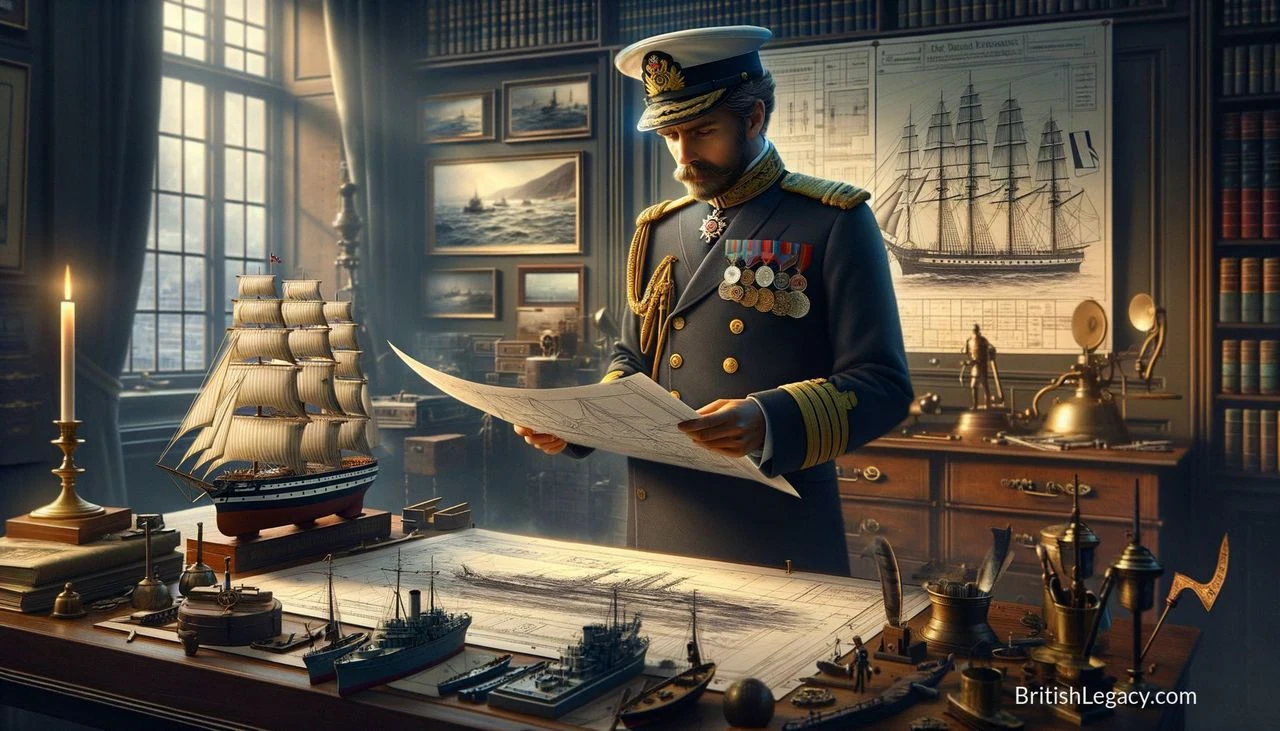
Admiral Sir John Fisher: The Modern Architect of the Royal Navy
The annals of British history are replete with titans who shaped the destiny of the nation and its impact on the world. Among them, Admiral Sir John Fisher, a name that resonates profoundly within naval circles, stands tall as a monumental figure. Not just a distinguished naval officer, Fisher was a visionary reformer whose indefatigable efforts redefined the fabric of the Royal Navy in the early 20th century. His enduring legacy is marked by his zealous pursuit of modernisation and technological innovation, which propelled Britain to the forefront of naval supremacy.
A Trailblazing Career
Born on 25 January 1841 in Ceylon, now Sri Lanka, John Arbuthnot Fisher embarked on his naval career at the precocious age of thirteen. Rising through the ranks with a commendable blend of aplomb and adeptness, Fisher's ascent was punctuated by several pivotal appointments that showcased his exceptional leadership attributes.
Fisher's career culminated with his appointment as First Sea Lord, the highest professional head of the Royal Navy, a position he held in two separate terms (1904-1910 and 1914-1915). It was during these tenures that he effectuated sweeping reforms that irrevocably altered the trajectory of British naval power.
The Vanguard of Naval Reform
Imagine the Royal Navy in a period of stasis, equipped with relics of a bygone era. When Fisher took the helm, he endeavoured to overhaul this inertia, pivoting the Royal Navy towards modernity. One of his foremost implementations was the emphasis on “efficiency,” a watchword around which Fisher orchestrated myriad reforms.
1. Creation of the Dreadnought: Perhaps Fisher's most notable contribution was the conception and launch of the HMS Dreadnought in 1906. This revolutionary battleship, incorporating steam turbine engines and unprecedented firepower, rendered all preceding battleships obsolete. The advent of the Dreadnought initiated a naval arms race, underlining Britain's maritime dominance.
2. Technological Innovations: Fisher was a staunch advocate for the incorporation of cutting-edge technologies. Under his guidance, the Royal Navy saw the advent of submarines, oil-fired ships replacing coal-fired ones, and advances in naval gunnery and fire control systems. Fisher’s unwavering belief in technological superiority breathed new life into the naval establishment.
3. Structural Reforms: Beyond ships and armaments, Fisher’s reforms permeated the organisation and operational aspects of the Navy. He streamlined the naval command structure, instigated rigorous training regimes, and encouraged intellectual and strategic ingenuity among naval officers.
Advocate for a Strategic Doctrine
Fisher’s foresight was not limited to technological advancements; he was equally as visionary in terms of strategic naval doctrine. He envisaged a balanced fleet equipped to respond to the varying demands of naval warfare, including arena-specific strategies encompassing both the expansive oceans and coastal waters.
1. Home Fleet Reorganisation: Understanding the strategic imperatives of guarding the British Isles, Fisher restructured the Home Fleet to ensure a formidable deterrence to potential adversaries. His strategic doctrines emphasised the necessity for readiness and rapid mobilisation.
2. Global Presence: Fisher also understood the importance of maintaining a global presence. He advocated for an agile and adaptable navy, capable of projecting power worldwide and safeguarding Britain's far-flung empire.
Enduring Legacy
Fisher's influence cascades beyond his tangible reforms. He was a polymath whose ideas instilled a culture of perpetual innovation within the Royal Navy. His legacy is manifested in the renascent naval policies that underscores technological attainment, operational dexterity, and strategic sagacity.
1. Inspiration for Future Admirals: Sir John Fisher inspired generations of naval officers and contributed to the intellectual capital of the Royal Navy. Admirals who followed in his wake, including Sir Jackie Fisher, often drew upon his extensive body of work and forward-thinking principles.
2. Promoter of Naval Thought: Fisher's written works and lectures disseminated his ideas far beyond Britain's shores, shaping naval thought and maritime strategies globally. His influence extended to contemporaries and successors, inducing a paradigmatic shift in naval doctrines worldwide.
Wrap-Up
In chronicling the illustrious history of Great Britain, Admiral Sir John Fisher emerges as a pivotal figure whose contributions were instrumental in fortifying British maritime pre-eminence. Through his relentless drive for modernisation and reform, Fisher ensured that the Royal Navy remained a guardianship of British interests and an emblem of unparalleled naval prowess. His visionary endeavours not only shaped the Royal Navy but also entrenched a legacy of innovation and strategic forethought that continues to resonate through the corridors of naval history.
Admiring the spirit of innovation and excellence that Fisher embodied, we are reminded of the profound impact that dedicated individuals can have on their institutions and, by extension, their nation’s heritage. Indeed, Admiral Sir John Fisher’s imprint on the Royal Navy stands as a testament to his indomitable spirit and enduring legacy, contributing significantly to the great British legacy that continues to be revered around the globe.