Founded in 1948 by Benjamin Britten, Peter Pears and Eric Crozier, the Aldeburgh Festival began in a Suffolk seaside town and developed around a close relationship between performers, audiences and place. Its early concerts took place in Aldeburgh’s Jubilee Hall; from 1967, the converted maltings at Snape provided a much larger concert venue. The festival’s history links Britten’s work and the performance of new music with a continuing programme that has included established musicians, emerging performers and other art forms.
A festival takes shape in Suffolk
Britten, Pears and Crozier established the festival in 1948. The first edition was held in the Jubilee Hall in Aldeburgh, a modest venue that offered an intimate setting for concerts. The festival’s founders wanted to bring music to the area and create opportunities for performers. Its location mattered: rather than being based in a major city, the event brought artists and audiences to a coastal Suffolk town.
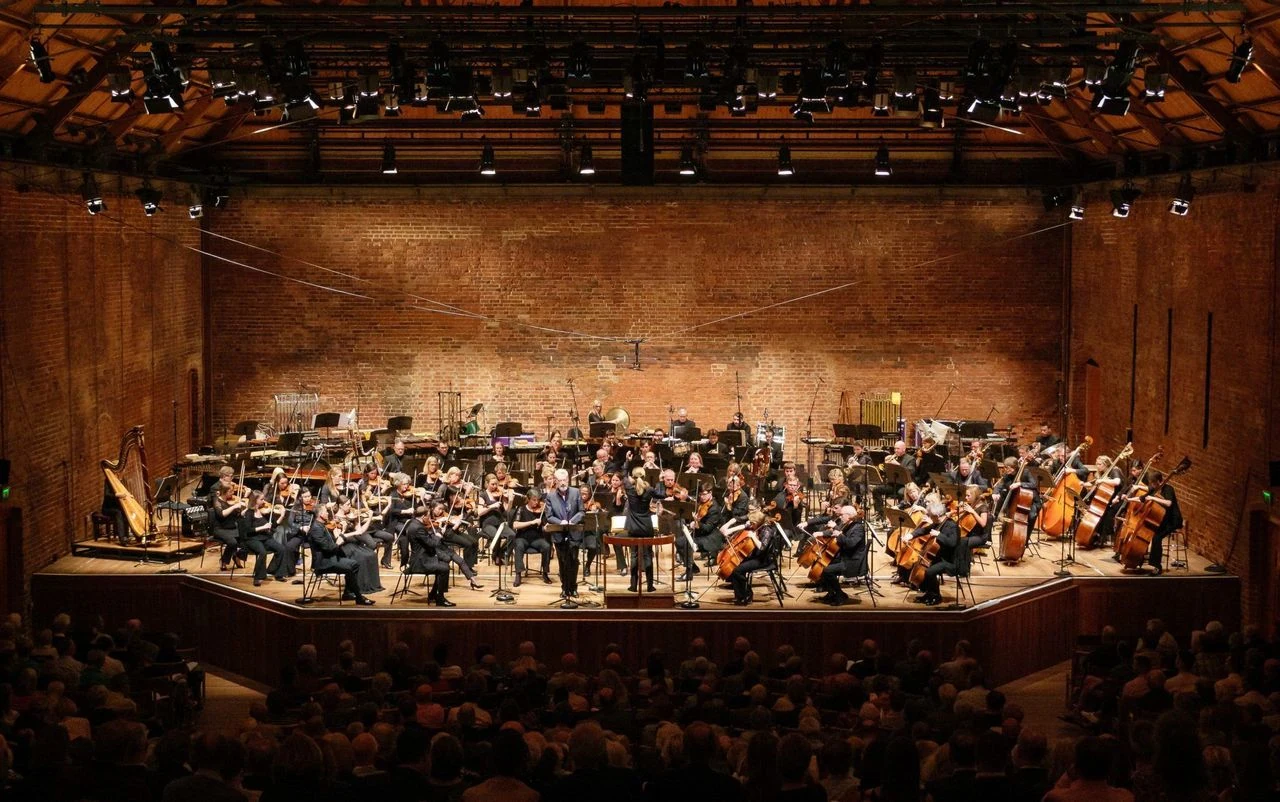
As the festival grew, it needed a larger home. In 1967, a former maltings complex at Snape was converted into a concert hall. The move gave the festival a venue on a different scale while keeping it rooted in the surrounding area. Snape Maltings Concert Hall became closely associated with the event, and the festival’s identity came to encompass both the town of Aldeburgh and its principal concert venue nearby.
That development marks a practical change in the festival’s story: an event first staged in a local hall could expand without losing its connection to Suffolk. The contrast between the Jubilee Hall’s intimate scale and the larger Snape venue also reflects the festival’s growth from its beginnings. Britten’s role as founder and composer remained central, but the festival was also shaped by its co-founders and by the audiences and performers who gathered there.
Britten’s music and a wider programme
Britten’s compositions formed an important part of the festival’s musical identity. Among the works associated with premieres at the event are Saint Nicolas and the Spring Symphony. The festival provided a setting in which audiences could encounter his music as part of a living programme, rather than only as established repertoire. Its wider offering has also brought together well-known performers and emerging talent, giving the event a role both as a concert platform and as a place for musicians at different stages of their careers.
The programme has not been limited to familiar concert forms. The festival has included avant-garde performance and collaborations across genres, placing newer approaches alongside established musical work. This combination of tradition and experimentation has helped shape its character. Rather than treating classical music as a fixed inheritance, the festival has made room for different ways of performing and presenting it.
Music remains its defining focus, but the programme has also extended to poetry readings, theatrical performances and visual art exhibitions. These events broaden the range of experiences available to visitors while keeping the festival centred on artistic work. The mix of concerts and other disciplines gives the event a wider cultural scope, without obscuring the importance of music or Britten’s contribution to its history.
Local roots and international reach
The festival draws performers and visitors from beyond Britain, bringing an international dimension to its Suffolk setting. That reach connects a locally based event with musicians and audiences from elsewhere, while its history remains tied to the places in which it is held. The move from Aldeburgh’s Jubilee Hall to Snape enlarged the festival’s capacity; it did not detach the event from the landscape and community that gave it its name.
Its relationship with the area has also included educational and outreach programmes involving local schools and organisations. Festival visitors contribute activity to the local economy, although the scale of that contribution is not quantified here. Britten’s former home, the Red House, is another part of the area’s musical heritage: it offers visitors an opportunity to learn about his life and work. Together, the concert venues, educational activity and the Red House connect the festival’s public programme with a broader account of Britten’s presence in Suffolk.
Why Aldeburgh Festival deserves a place in British Legacy
The Aldeburgh Festival deserves a place in British Legacy because it shows how a cultural institution can grow from a specific local setting. Founded in 1948 by Britten, Pears and Crozier, it began in the Jubilee Hall and later gained a larger home at Snape. That history is not simply a change of venue: it records the development of a festival able to welcome more performers and audiences while retaining its Suffolk base. The connection between Britten’s music and the festival has also given the event a distinctive place in the presentation of British composition.
Its contribution extends beyond celebrating the work of one composer. The programme has included emerging as well as established performers, new approaches to classical music and activities across poetry, theatre and visual art. Outreach involving local schools and organisations links the festival to its community, while international visitors and artists bring a wider exchange to the region. These specific strands—composition, performance, education and place—make the festival a meaningful part of Britain’s cultural story. Its legacy lies not in abstract claims about national prestige, but in a continuing framework for hearing music and encountering the arts in Suffolk.