At Goodwood Revival, the past is not just on display: historic cars race around the circuit where they once might have competed, while visitors bring mid-20th-century dress and atmosphere to the grounds. Held at Goodwood Circuit in West Sussex, the annual event connects motor racing with the fashions and popular culture of the period. Its appeal rests on that combination: the machinery is on the track, but the experience extends well beyond it.
A circuit with a racing past
Goodwood Circuit opened in 1948, inaugurated by the Duke of Richmond. Stirling Moss and Graham Hill were among the drivers associated with victories there. Regular racing ended in 1966, and the circuit remained out of use for that purpose until the first Goodwood Revival in 1998. The event was established by the then Duke of Richmond, Charles Gordon-Lennox, bringing historic racing back to the track.
The Revival’s races feature vehicles from different eras, including 1930s Grand Prix cars and 1960s saloon cars. Their presence makes the circuit itself part of the event’s subject: cars are not simply displayed as objects, but driven around a track with its own history of competition. The sight and sound of racing machinery give the gathering a different character from a static exhibition, while the range of vehicles links several decades of motoring.
Restoration and maintenance are central to the event’s presentation of historic cars. The Revival gives visitors the chance to see these machines in motion and to encounter the work involved in keeping them running. It places engineering and the practical care of vehicles alongside the spectacle of a race, renewing attention to cars that might otherwise be encountered only as preserved objects.
Dress, entertainment and a sense of period
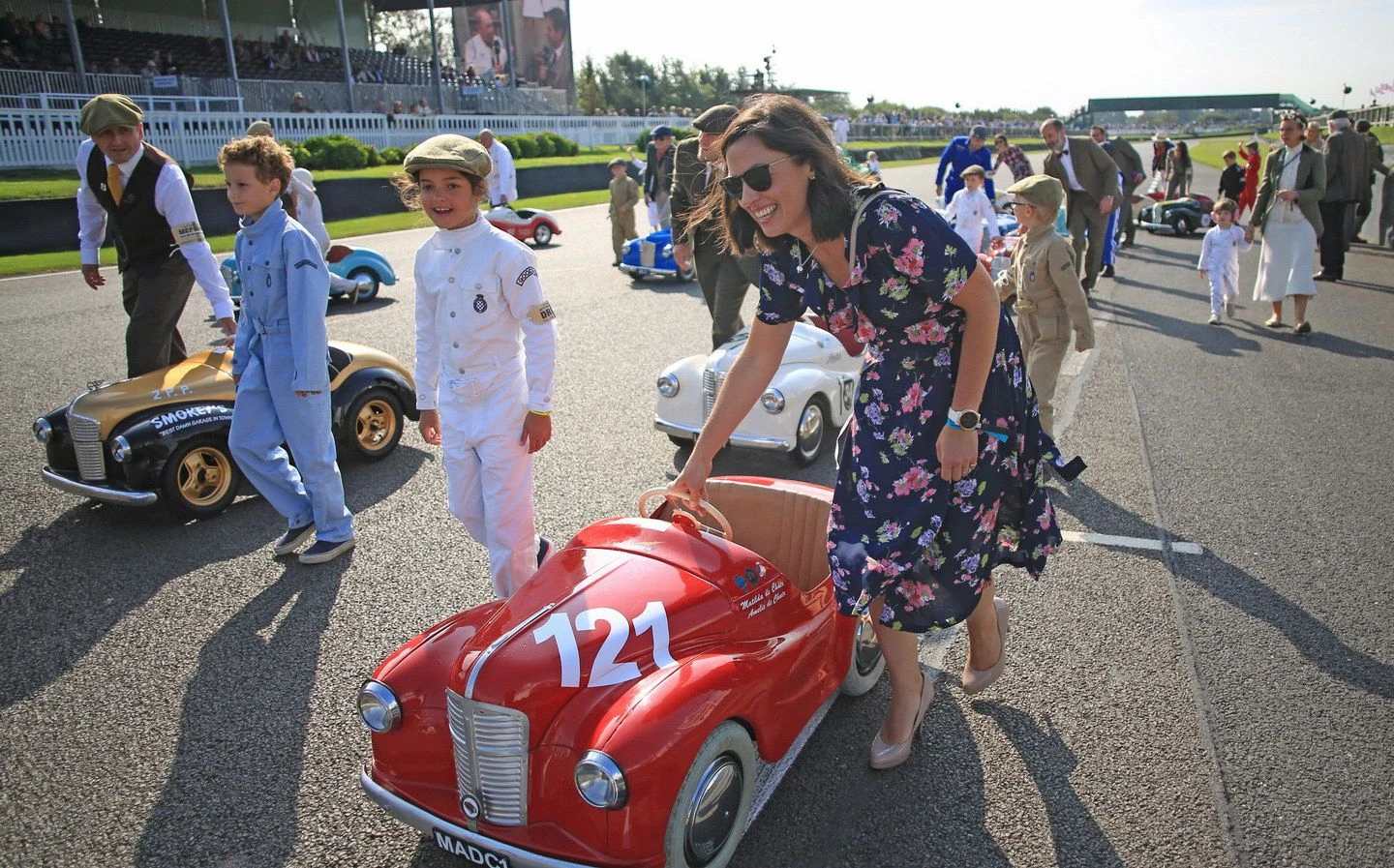
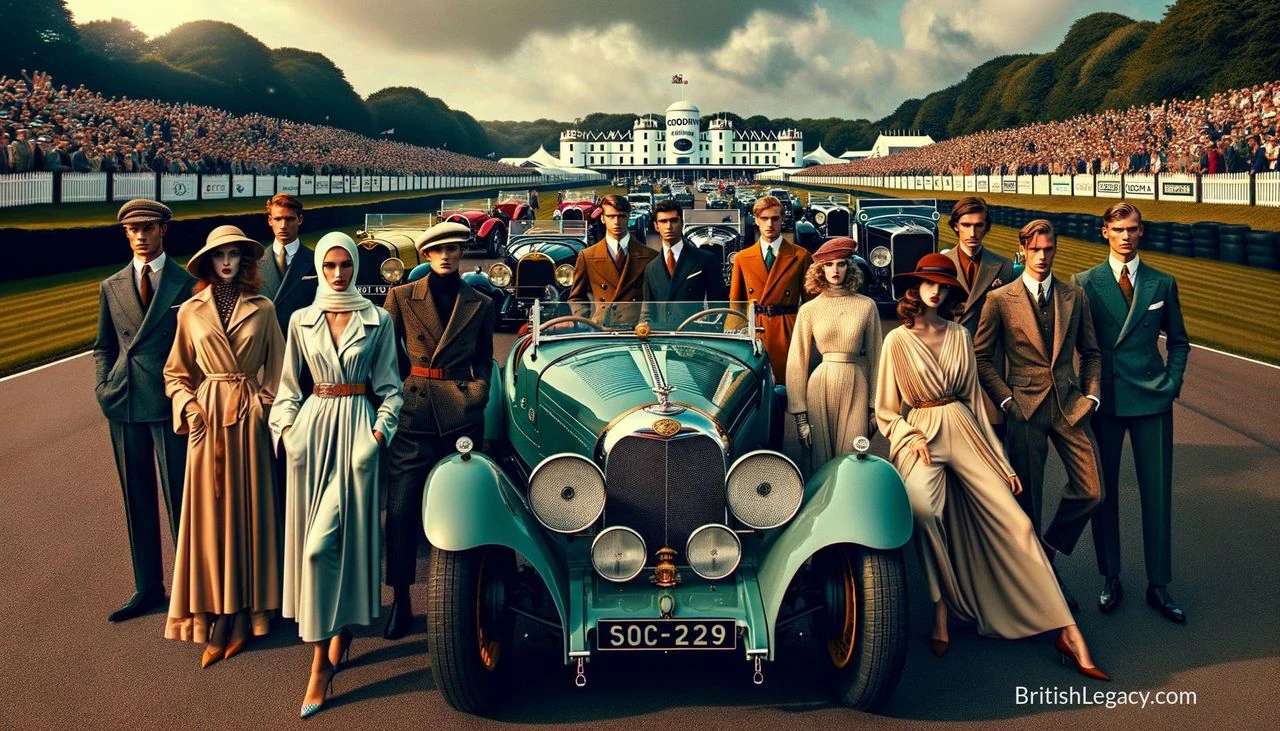
Visitors are encouraged to dress in period styles, and clothing becomes part of the occasion rather than a detail on its margins. Suits and flat caps sit alongside dresses and hats; hairstyles and make-up also contribute to the effect. The shared dress code changes the appearance of the event, placing the crowd within the visual world the Revival seeks to evoke.
The programme and themed areas extend that atmosphere beyond the circuit. The event has featured 1940s dance halls with live jazz and 1950s diners. These settings bring music and food into a gathering otherwise defined by motor racing, giving visitors different ways to engage with the period. Cars, clothing and entertainment work together to create an experience that is as much about mid-century culture as it is about competition.
That combination also gives the Revival its distinctive identity among historic motoring events. Racing supplies the action, while dress and entertainment invite visitors to take part in the event’s interpretation of the past. The emphasis is not only on looking back at particular cars, but on setting them within a wider cultural scene. The result is a meeting point for motor racing, design, fashion and popular entertainment.
Preserving motoring history
The event promotes the restoration and maintenance of historic vehicles, making preservation visible to a public audience. Its races allow visitors to see the cars being driven; exhibitions, talks and interactive displays provide further ways to encounter Britain’s motoring history and the social changes of the mid-20th century. Taken together, these elements give the Revival an educational role as well as an entertaining one.
That role depends on bringing different kinds of history together. A car on the track speaks to engineering and racing; period clothes and themed spaces evoke everyday style and entertainment. Rather than treating those subjects as separate, the Revival places them in the same setting. Its format encourages visitors to move between the races and the surrounding displays, and to consider the vehicles as part of a broader account of the period.
The gathering also attracts visitors from beyond the local area, including motoring enthusiasts from around the world. The original account describes benefits for local hotels, restaurants and businesses, but does not provide figures with which to assess the scale of that effect. Its broader claims about influencing other events and inspiring new enthusiasts are similarly difficult to quantify. What can be seen directly in the event’s format is a substantial public celebration of historic racing and period culture at a West Sussex circuit.
Why the Goodwood Revival deserves a place in British Legacy
The Goodwood Revival belongs in a British legacy of motoring because it returns historic racing to a British circuit with its own competition past. Opened in 1948, Goodwood became the setting for the Revival in 1998, after regular racing had ended in 1966. The event makes that continuity tangible: cars from several decades race on the circuit, bringing engineering history out of storage and into public view. Its contribution is not simply to remember older vehicles, but to keep them moving and to make their preservation part of a shared experience.
It also broadens the story beyond machines. Period clothing, dance halls, diners, talks and displays place racing within the design and popular culture of the mid-20th century. Visitors can encounter that history through the cars and through the event’s wider setting. By joining competition, preservation and public participation at Goodwood Circuit in West Sussex, the Revival gives British motoring history a vivid, accessible form. That specific connection between place, machinery and period culture is what makes the event a worthwhile part of British Legacy.