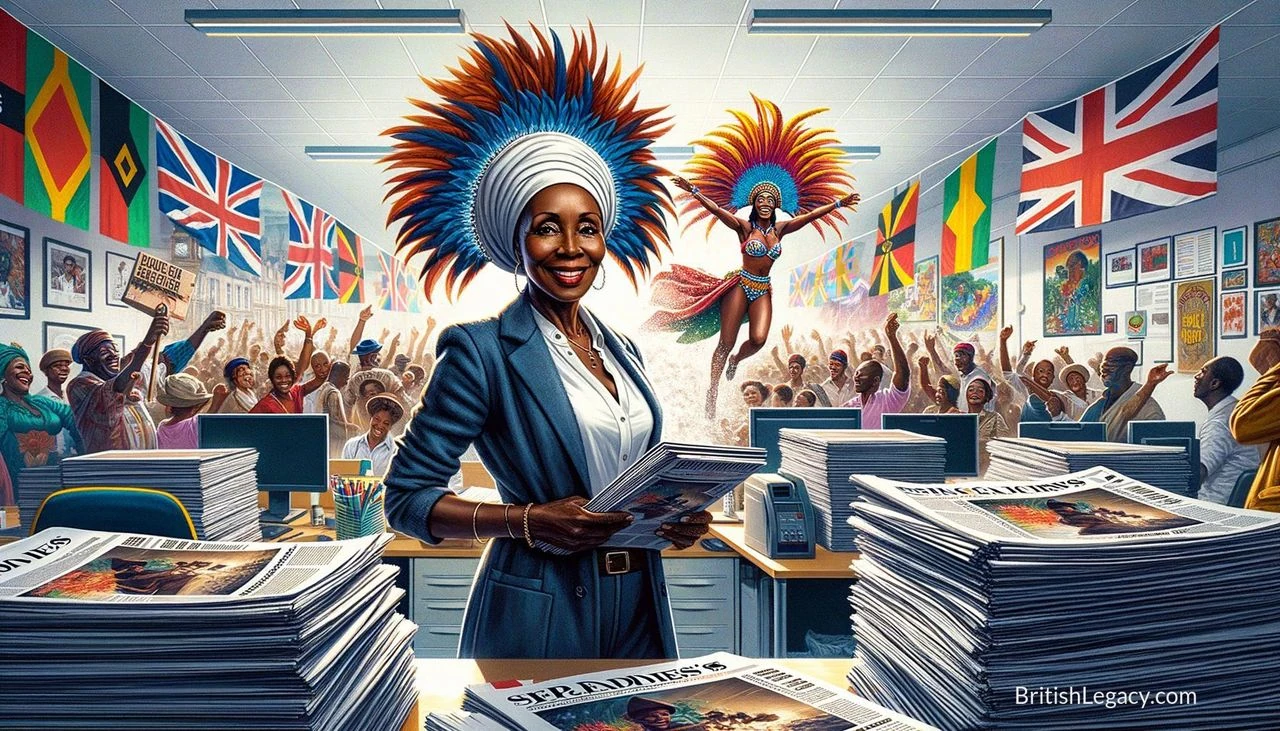
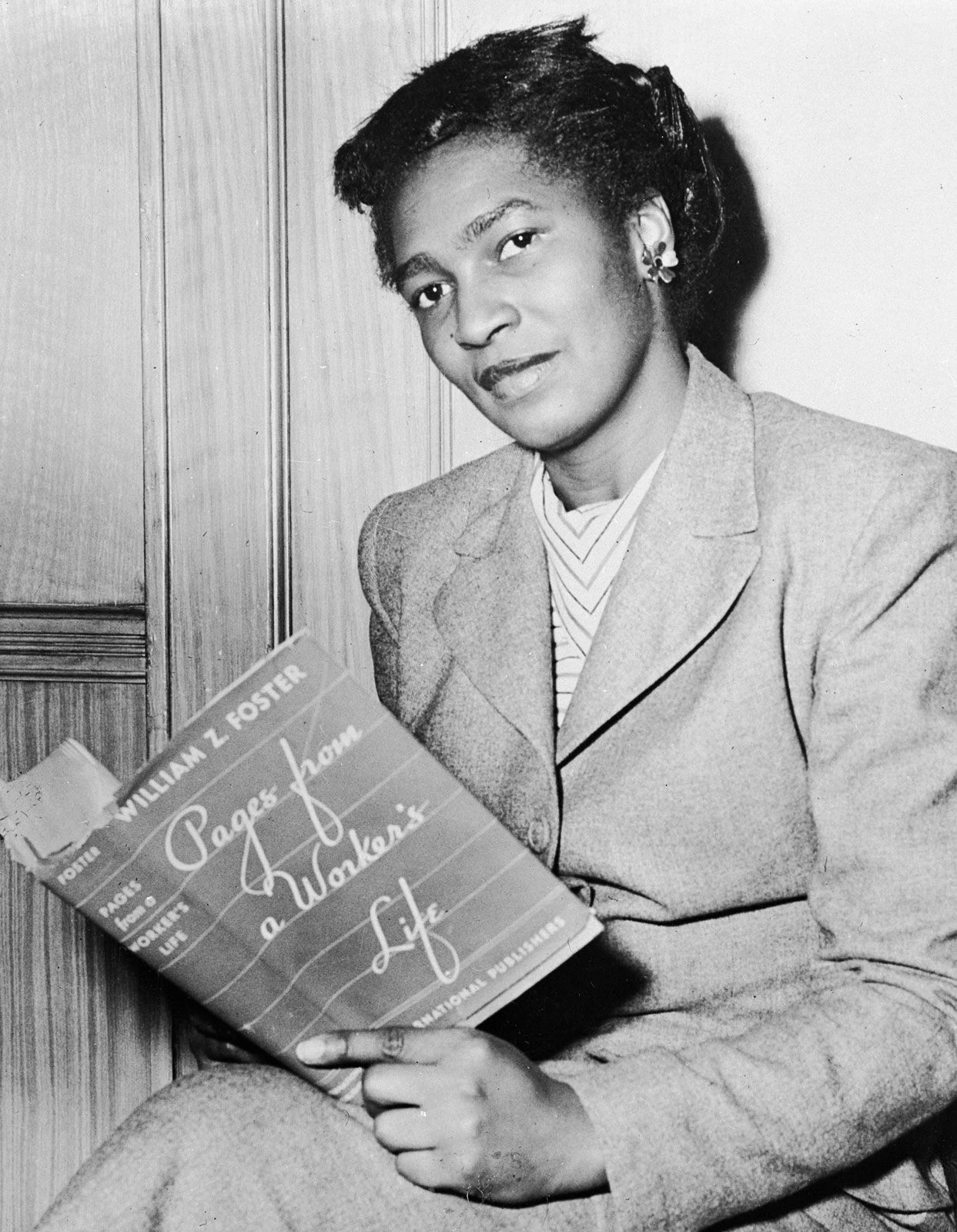
Claudia Jones arrived in Britain in December 1955 not as a celebrated guest but as a deportee from the United States. Born in Trinidad, she had become a Communist organiser and writer in America, where political persecution led to imprisonment and, eventually, expulsion. Britain was the place she was permitted to settle; London became the setting for work that changed the country’s public and cultural life. She founded the West Indian Gazette, a major Black newspaper, and organised indoor Caribbean carnivals that are recognised as precursors to Notting Hill Carnival.
Jones’s achievement was not simply to speak against prejudice. She helped create places where Black people in Britain could report their own experiences, find one another in print and celebrate Caribbean culture in public. Her politics connected race with class and women’s lives. Journalism, organising and carnival were different expressions of the same conviction: people shut out of power needed a voice, a community and the means to make themselves visible.
From Trinidad to Harlem to London
Claudia Vera Cumberbatch was born on 21 February 1915 in Belmont, Port of Spain, then part of the British Empire. When she was eight, her family moved to New York after the collapse in cocoa prices in Trinidad. The move brought new possibilities but also financial hardship. Her mother died when Claudia was young. At 17, Jones contracted tuberculosis, which permanently damaged her lungs and affected her health throughout her life.
In Harlem, her choices were limited by poverty and discrimination. She left school after graduating from Wadleigh High School and worked in a laundry and in retail. She joined a drama group and began writing, including a column called “Claudia Comments” for a Black nationalist newspaper. Her early experience of having her work passed off as someone else’s sharpened her sense of who controlled public representation and whose words received credit.
In 1936, Jones joined the Young Communist League USA. She had been impressed by the Communist movement’s defence of the Scottsboro Boys and its opposition to Italy’s invasion of Ethiopia. She became a writer and editor for the organisation’s publications, later taking on educational and leadership roles. Her work addressed racism and the lives of Black people, while her organising brought her into the politics of women, work and peace.
Her 1949 essay, An End to the Neglect of the Problems of the Negro Woman!, argued that Black women faced overlapping pressures as Black people, women and workers. Jones framed that argument through the political language of her time, insisting that any movement for social justice had to address the conditions Black women actually faced. Later readers have described the essay as an early form of intersectional analysis. For Jones, the point was practical: a movement that left Black women’s needs aside could not claim to be fighting oppression in full.
Her activism brought state surveillance and prosecution. She was arrested in 1948 and later convicted under the Smith Act; a separate immigration case found her in violation of the McCarran Act because she was a non-US citizen who had joined the Communist Party. In 1955, after serving a prison sentence, she was released and deported. Trinidad and Tobago refused her return. She was allowed to settle in Britain on humanitarian grounds, and arrived in London in December that year.
A newspaper for a changing Britain
Post-war migration was changing Britain, while Black residents faced discrimination in housing, education and employment. The press did not reliably represent their lives on their own terms. Jones understood that this absence mattered: without a platform, communities could be discussed as a problem by others, rather than heard as people with their own accounts, ideas and ambitions.
In March 1958, above a barber’s shop in Brixton, she founded and edited the West Indian Gazette. Its full title later appeared as the West Indian Gazette and Afro-Asian Caribbean News. The paper became an important voice for Britain’s Black community. It reported racism, campaigned against economic and social exclusion, and covered the lives and culture of Caribbean and African-descended people. Jones’s work as an editor made the newspaper more than a source of news: it helped readers recognise shared concerns and see their lives represented in print.
Jones believed that “people without a voice were as lambs to the slaughter”. The Gazette was her response. Its masthead also expressed a wider outlook. By including “Afro-Asian Caribbean News”, it placed Caribbean life in Britain alongside anti-colonial politics and the experiences of other communities. The paper could be grounded in London and still speak to a larger international argument about migration, labour, equality and human dignity.
That reach was built through practical effort as well as conviction. Jones had to bring together contributors, readers and supporters, and give the paper an editorial purpose broad enough to address both local experience and international politics. Her final published essay, “The Caribbean Community in Britain”, described the newspaper as a catalyst for the social and political awareness of West Indians, Afro-Asians and their friends. The Gazette did not last indefinitely: always short of money, it closed in 1965, several months after her death. Its short life does not diminish the importance of the space it created.
Carnival after violence
In 1958, racial violence in Notting Hill and disturbances in Nottingham made the hostility facing Black communities impossible to ignore. Jones and others associated with the Gazette responded by organising a public celebration rather than withdrawing from public life. On 30 January 1959, at St Pancras Town Hall, she organised the first of a series of indoor Caribbean carnival events in London.
The event was directed by Trinidadian musician Edric Connor and featured the Boscoe Holder Dance Troupe, jazz guitarist Fitzroy Coleman and singer Cleo Laine. The BBC televised it nationally. Its slogan, “A people’s art is the genesis of their freedom”, captured the place Jones gave to culture in political life. Music, dance and celebration were not distractions from the struggle for equality; they allowed a community to affirm its presence and value in public.
Jones and the Gazette went on to organise further annual indoor carnival events at venues including Seymour Hall, Porchester Hall and the Lyceum Ballroom. The gatherings offered Caribbean communities an opportunity to meet and celebrate their culture in a country where racism could make everyday life hostile. They also made a larger claim: Caribbean life belonged in Britain’s public spaces.
Jones did not create the modern outdoor Notting Hill Carnival single-handedly. Her indoor events are understood as important precursors to the later street carnival, which took shape through the work of other organisers too. The distinction does not lessen her contribution. She helped establish a tradition of public Caribbean celebration in London at a time when doing so challenged the idea that Black communities should remain marginal or unseen.
Politics rooted in everyday life
Jones’s work in Britain also included direct campaigning. She spoke at peace rallies and trade union gatherings and opposed discrimination in housing, education and employment. As the Commonwealth Immigrants Bill advanced in the early 1960s, she helped organise resistance to the measure, which restricted migration rights for Commonwealth citizens. She founded the Conference of Afro-Asian-Caribbean Organisations as part of that work. Her political commitments were shaped by the links she saw between racial inequality, working conditions and the unequal position of women.
That approach had developed over years of organising in the United States. Jones worked for women’s organisations within the Communist Party USA and argued for measures including equal pay, job training and childcare. She believed that women had to be able to take part in political activity, not merely be discussed by others. In Britain, her politics continued to insist that questions of dignity involved employment, housing and education as well as representation and culture.
Jones joined the Communist Party of Great Britain on arriving in Britain and remained a member until her death. Her time in the country was not free of political difficulty; she found that some British Communists were hostile to a Black woman. Still, she worked with activists and community members to organise for equal rights and access to basic facilities. She also campaigned for Nelson Mandela’s release and spoke against racism in the workplace.
The editor of the Gazette, the organiser of carnival and the anti-racist campaigner were not separate figures. Each part of Jones’s work responded to a related problem: communities were denied power over how they were represented and over the conditions in which they lived. Her emphasis on Black women’s experience helped make that connection clearer. Justice, in her account, could not be reduced to a single issue or achieved by asking those carrying several burdens to wait their turn.
A short life and a continuing inheritance
Jones died in London on 24 December 1964, aged 49. Her funeral in January 1965 was a large political gathering, and she was buried in Highgate Cemetery beside the grave of Karl Marx. Her health had been poor for much of her life, and she had spent years working under political and financial strain. The Gazette closed the following year, but the paper’s disappearance did not erase the community it had helped to address or the example it set for Black journalism in Britain.
Her work has been remembered in a number of ways. The Claudia Jones Organisation was founded in London in 1982 to support women and families of African-Caribbean heritage. A blue plaque marks her former home in Vauxhall, and her name has been included in lists of significant Black British figures. A memorial lecture organised by the National Union of Journalists’ Black Members’ Council recognises her contribution to Black-British journalism.
These commemorations point to different parts of her inheritance: political writing, community organisation and a public culture that made Caribbean life visible. They do not make Jones’s story simple. She was an international radical whose arrival in Britain followed deportation, and her work was conducted amid hostility and limited resources. Remembering her well means holding that history alongside the newspapers and celebrations she helped bring into being.
Why Claudia Jones deserves a place in British Legacy
Claudia Jones deserves a place in British Legacy because she helped change who could speak in British public life. The West Indian Gazette gave Black readers in Britain a paper that reported racism, recognised community life and treated its readers as participants in the country’s future. It was not simply a record of events. It helped create a shared forum for people whose concerns were often described from outside, and connected local experience in London with wider questions of migration, labour and equality. That work is a lasting contribution to journalism and to the democratic life of Britain.
Her carnival work made a different but equally specific contribution. In the wake of racial violence, Jones helped organise indoor events where Caribbean music, dance and performance could occupy a public stage. Those celebrations helped establish a tradition that later organisers developed into the outdoor Notting Hill Carnival. Their importance lies both in that cultural influence and in the immediate assertion they made: Caribbean communities belonged in Britain, and their art belonged in its public life. Jones’s political writing and campaigning also insisted that race, class and women’s lives had to be considered together. She arrived from Trinidad by way of the United States, but her British legacy is not incidental to her biography. London was where she built institutions and traditions that continue to matter to the country’s journalism, political memory and cultural identity.
Sources
Adapted in part from Claudia Jones by Wikipedia contributors, under CC BY-SA 4.0. Text has been edited and combined with the existing article; this adapted text is shared under the same licence. Contributor history.