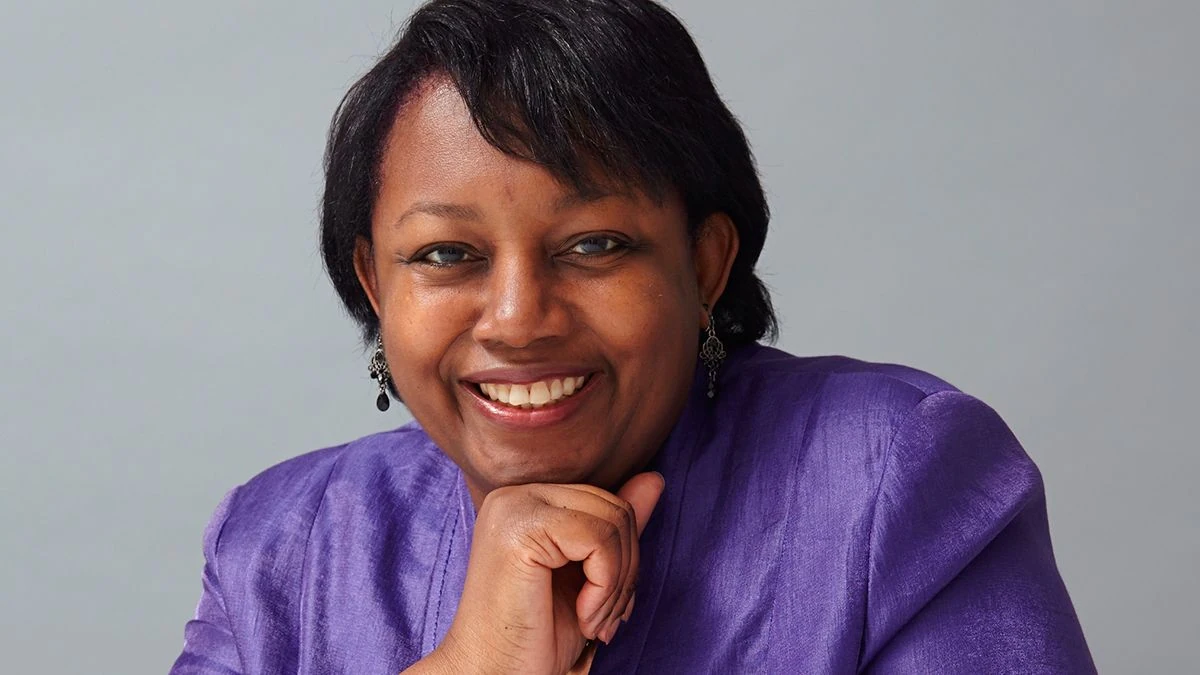
Malorie Blackman changed the scale of what British children’s fiction could ask of its readers. Her books range across science fiction, suspense, family drama and alternative history, but share a respect for young people’s capacity to follow difficult ideas through to their human consequences. In Noughts & Crosses, an imagined reversal of racial power makes familiar structures of prejudice newly visible. Elsewhere, Blackman has explored medical ethics and teenage parenthood. These are stories built to grip; their seriousness comes from trusting readers with the questions they raise.
Her writing has travelled beyond the page. Blackman was Children’s Laureate from 2013 to 2015, helped establish a convention for young-adult readers and co-wrote the Doctor Who episode “Rosa”. Her career links a south London upbringing and an early working life in computing with a major place in British children’s writing. In 2026, she was appointed a Dame Commander of the Order of the British Empire for services to literature.
A south London childhood and a route into writing
Blackman was born in London in 1962 and grew up in south London, one of five siblings. Her parents came to Britain from Barbados as part of the Windrush generation. The supplied description of her memoir presents childhood as a mixture of warmth and everyday racism. She has also recalled wanting to study English and become a teacher, but being discouraged from applying to study literature at university. These details do not offer a single explanation for her fiction. They locate her life and work within a changing Britain, where belonging and opportunity are lived realities rather than abstract themes.
Instead, Blackman pursued computing. She trained in the subject and worked in computing before her first book appeared; her jobs included systems programmer and database manager. Her route from technical employment to writing was a change of career, not an overnight transformation. She would go on to write across forms and subjects, from speculative fiction and thrillers to family stories, picture books, poetry, scripts and memoir. That range is part of the story of a writer who was never confined to one readership or one kind of book.
Publication came after persistence. The supplied description of her memoir reports that she received 83 rejection letters before breaking through. Her first book, Not So Stupid!, a collection of horror and science-fiction stories for young adults, appeared in 1990. Its genres offered room for uncertainty, suspense and fear: the emotional territory of children’s fiction need not be limited to the reassuring or the familiar.
Blackman’s subsequent career has crossed age groups as well as genres. She has written novels for teenagers and younger children, short stories, picture books, poetry, television scripts and a stage play. Her memoir, Just Sayin’: My Life in Words, revisited her own life. The breadth of this work makes “children’s author” an accurate description, but not a narrow one. Her books meet readers at different ages while treating their concerns as worthy of serious attention.
Stories with moral pressure and narrative drive
Blackman brings challenging subjects into stories through plots that make them matter to particular people. Pig-Heart Boy turns a question of medical ethics into a story about a child and the adults making decisions around him. Its television adaptation became a BAFTA-winning BBC drama. The achievement is not simply to place an ethical issue in a book; it is to make the debate part of character, family and consequence, so that the reader follows an urgent story as well as an idea.
Boys Don’t Cry centres on teenage fatherhood, another subject that could be reduced to a warning or a moral. Blackman’s fiction places difficult circumstances within the lives of young protagonists and attends to the relationships and choices that follow. Across her work, science fiction, mystery, thriller and horror provide different routes into questions of responsibility and power. A speculative setting does not make the emotional stakes remote; it can give readers a fresh angle on recognisable pressures.
Her television writing extended that reach. She wrote for children’s drama, including Byker Grove, and scripts connected with adaptations of her books. In 2018, she co-wrote “Rosa”, a Doctor Who episode about Rosa Parks, with Chris Chibnall. The supplied biographical material identifies her as the first writer of colour to work on the series. The episode brought a civil-rights story into a popular science-fiction programme, connecting historical memory with a familiar format and a broad audience.
This range resists reducing Blackman to a writer concerned only with race. Questions of race and representation are central to some of her most influential work, but her subjects also include medicine, family, technology, violence, fatherhood and the exercise of power. What joins them is a dramatic approach: ideas are carried by people, relationships and choices. Accessibility, in this work, does not mean that the questions are easy.
The reversal that made Noughts & Crosses endure
The first Noughts & Crosses novel appeared in 2001. Its alternative Britain reverses the racial hierarchy familiar to the reader: black Crosses hold power, while white Noughts are subordinated. At the centre are Sephy, a Cross, and Callum, a Nought. Their relationship gives the series an intimate focus, but the books reach beyond romance. They examine what happens when social division is carried into institutions, education, public life, language and private relationships.
The reversal is an imaginative device, not a claim that different histories of racism are interchangeable. It unsettles expectations and makes discrimination harder to leave at the level of general principle. A hierarchy that might otherwise pass as normal is made strange; its rules and consequences come into view. As readers follow characters they care about, the social argument becomes part of the drama rather than an interruption to it. The series asks how prejudice shapes opportunity and feeling, and how the arrangements of a society can come to seem inevitable to people living within them.
Blackman has said that before writing the series she had not made her protagonists’ ethnicities central to their plots. She has also described wanting black children to read about characters simply having adventures and solving problems, as in the books she read as a child. Representation is not served only by stories in which identity is the subject; it also depends on who is allowed to be an ordinary protagonist. Her fiction makes room for both: black characters at the centre of adventure, and direct examinations of racial power.
The series has travelled across forms, including television and a stage adaptation for the Royal Shakespeare Company. Its presence in books, schools and libraries has brought its imagined Britain to successive readers. Blackman has recalled finding few books in which she could recognise herself as a child. The British Library exhibition on her work highlighted James Berry’s A Thief in the Village as the first Black-centred children’s book she discovered. That detail helps explain why the question of who occupies the centre of a story matters alongside the subjects the story addresses.
A laureateship that made space for young readers
Blackman was Children’s Laureate from 2013 to 2015. The role gave her a public platform, but her work in it was practical as well as representative. She helped establish the first UK Young Adult Literature Convention, an event for teenage readers and writers. She also launched Project Remix, a nationwide creative-writing competition for teenagers inspired by online fandom, fan art and fan fiction.
Both initiatives recognised that young people already participate in literary and creative culture. A convention gives readers and writers a place to gather around books for their age group. A competition drawing on fandom acknowledges that young people make and share stories in forms they value, not only in formats traditionally endorsed by institutions. These projects carried an impulse found in Blackman’s fiction into public life: teenagers are an audience with serious imaginative interests, not simply a group to be instructed.
Her honours include the Eleanor Farjeon Award in 2005 and appointment as an Officer of the Order of the British Empire in 2008. She received the PEN Pinter Prize in 2022. The British Library’s exhibition, Malorie Blackman: The Power of Stories, ran from November 2023 to February 2024, presenting her career in the context of Black British writing and the questions raised by her books. In 2026, she was appointed a Dame Commander of the Order of the British Empire for services to literature.
These milestones accompany work that has reached readers through books, television, theatre, schools and public programmes. They also mark a wider recognition of children’s writing as a significant part of national culture. Blackman’s career demonstrates that young readers can be offered suspense and emotional force alongside political and ethical complexity, without being talked down to or burdened with a sermon. Popular storytelling and intellectual seriousness are not opposing aims.
Why Malorie Blackman deserves a place in British Legacy
Malorie Blackman deserves a place in British Legacy because her work has changed both the stories available to young readers and the expectations attached to children’s literature. Noughts & Crosses uses an alternative Britain to make racial hierarchy visible through the lives of Sephy and Callum. Its force lies in the combination of imaginative invention and human consequence: readers are invited to consider how power shapes opportunity, relationships and the language a society uses about itself. Across her wider body of work, Blackman has refused to confine young readers, or black characters, to a single subject. Her fiction ranges through science fiction, suspense, medical ethics and family life, trusting its audience with difficult material while keeping the stories vivid and involving.
Her contribution is public and practical as well as literary. As Children’s Laureate, she helped create the Young Adult Literature Convention and launched Project Remix, giving teenage readers and writers opportunities to gather and make work in forms that recognised their interests. Her television writing, including “Rosa”, carried her storytelling into a popular cultural form; adaptations of her books brought it to audiences beyond the page. These are specific contributions to British public culture: a writer raised in south London, from a family with Windrush roots, helped widen the imaginative life of British children’s literature and create spaces for its teenage readers.
Blackman’s achievement is not a general promise that books can change the world. It is a record of stories, adaptations and initiatives that have made difficult subjects discussable and given young people demanding, memorable work to read, watch and debate. Her books put black characters at the centre of varied lives and invite readers to examine the structures surrounding them. Her laureateship turned respect for teenage readers into public projects. Together, those achievements offer a lasting reason to preserve and share her work as part of Britain’s literary and cultural inheritance.
Sources
Malorie Blackman — supplied Wikipedia revision
Adapted in part from Malorie Blackman by Wikipedia contributors, under CC BY-SA 4.0. Text has been edited and combined with the existing article; this adapted text is shared under the same licence. Contributor history.