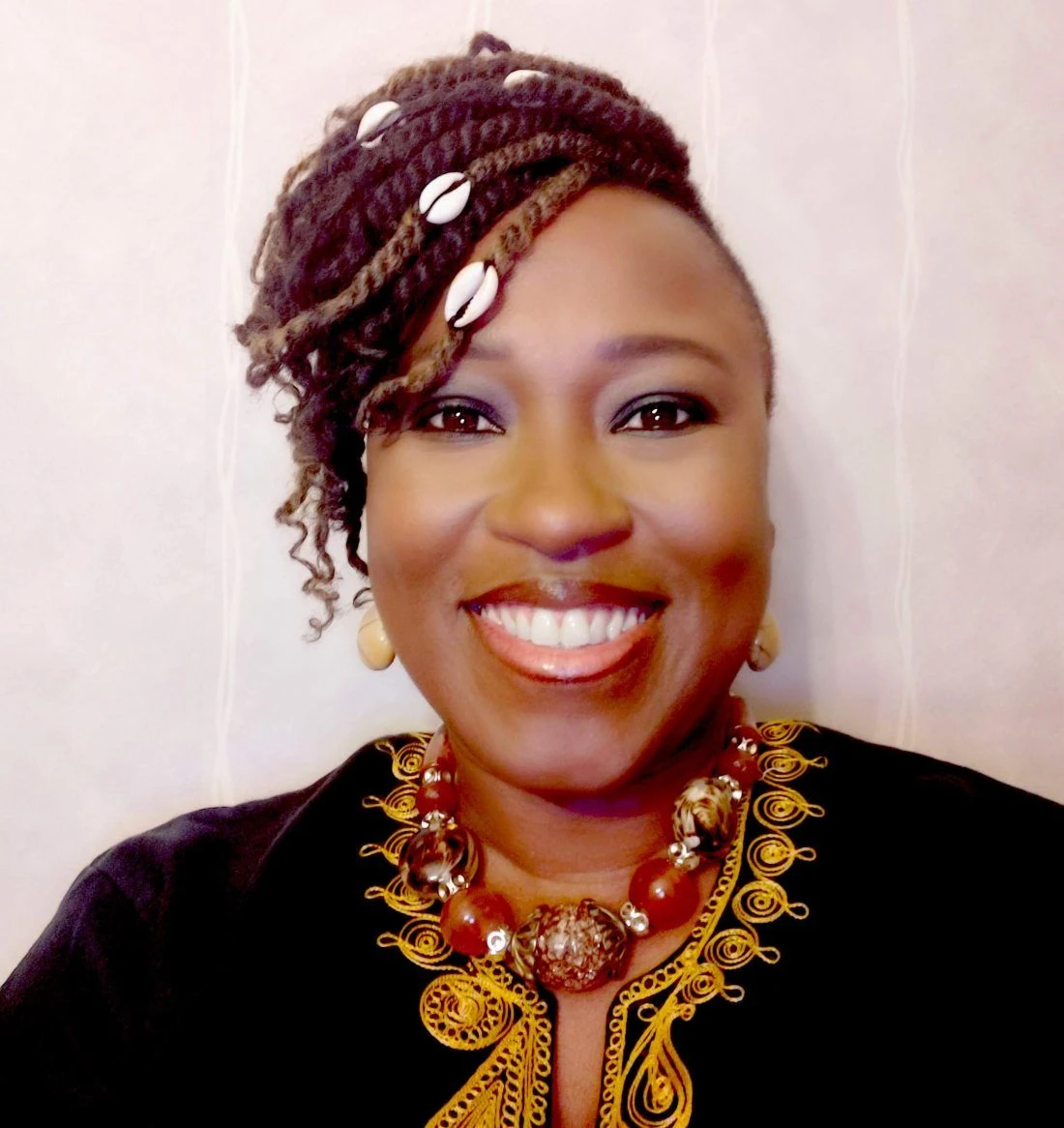
Dr Shola Mos-Shogbamimu’s public work brings legal argument into conversation with questions of race, gender and belonging. A lawyer by training, writer and commentator, she has addressed these subjects through broadcasting, teaching, public speaking, publishing and activism. Her connection to Britain is personal and professional: the supplied account identifies Hackney as her birthplace and records education and legal qualifications in the United Kingdom. Her work also takes a wider view, connecting discussion of inequality in Britain with debates beyond it.
That combination has shaped a career extending beyond legal practice. Mos-Shogbamimu has written about anti-Blackness, taught intersectional feminism to female refugees and asylum seekers, helped organise women’s marches and developed platforms concerned with women’s leadership. The supplied account describes her public style as forthright, but her work is not limited to broadcast argument. It includes education, writing and efforts to widen access to professional and public life.
A London beginning and a broad education
The supplied account places Mos-Shogbamimu’s birth in Hackney and describes her upbringing as spanning Britain, Nigeria and the United States. That international dimension provides context for her later work, though it should not be treated as a simple explanation for it. Her public arguments address how identity, power and belonging are shaped by institutions and by the language used to describe them. She has brought those questions into British debate while drawing on a perspective that is not confined to one country.
Her education crossed several fields. The current article records an LLB from the University of Buckingham, an MA from the University of Westminster, an LLM from the London School of Economics, a PhD in law from Birkbeck, University of London, and an Executive MBA from the University of Cambridge. Together, these qualifications span law, social and political study, and business education. They provide context for a career that has moved between legal work, leadership, media and public discussion, without reducing that career to academic credentials alone.
The supplied account also describes Mos-Shogbamimu as a New York attorney and a solicitor of England and Wales. Her legal training is relevant to the way she approaches public questions: her commentary has addressed not only individual experiences but also the rules, institutional practices and assumptions that shape them. That does not mean every public argument is a legal argument. Rather, a grounding in law forms one part of a wider body of work concerned with who holds power, how it is exercised and whose interests are overlooked.
Her professional experience has included work in financial services, according to the account supplied here. She later became widely known as a commentator and advocate. That shift brought legal and political questions into a less specialised setting. In media appearances and public writing, she has discussed how institutions can appear neutral while still reflecting unequal arrangements. Her contribution lies in making those questions available to audiences beyond a classroom or legal setting.
Taking questions of equality into public life
Mos-Shogbamimu’s work on gender equality and anti-racism has appeared in several forms. The supplied material describes her campaigning for greater inclusion and teaching intersectional feminism to female refugees and asylum seekers. That teaching matters to the account of her career because it shows an educational strand alongside her public commentary. It also places questions of feminism in practical settings, where access to knowledge and the ability to speak with confidence can be important parts of participation.
Her approach to feminism, as represented in the supplied material, connects representation and leadership with safety, opportunity and whose voices are heard. This is broader than a call for individual advancement. It asks how access is distributed and how institutions respond to people whose experiences are often marginalised. Teaching and public speaking allow her to address those issues with different audiences; media appearances give her a route into wider conversations, though a broadcast exchange is only one part of the work described here.
In June 2020, British Vogue included Mos-Shogbamimu in a feature titled “8 Educational Black Voices To Listen And Learn From Now”. The supplied article associates that recognition with her campaigning, teaching and public role. It is a marker of visibility, rather than a measure of the effects of her work. More broadly, her appearances in public debate have made her a recognisable participant in discussion of race and gender. Her manner is notably forthright, and she has argued for addressing racism and sexism directly rather than treating them as questions of taste or etiquette.
That directness has helped bring a more explicit vocabulary about inequality into everyday discussion. Mos-Shogbamimu has spoken about racism, misogyny and historical memory as present concerns, not simply as subjects for specialist study. The supplied material presents this as a challenge to habits of understatement and euphemism in British public life. It is a claim about her contribution to conversation, not evidence that public attitudes or policy have changed as a result. Making an issue harder to ignore is not the same as resolving it.
Her anti-racist work also examines systems, not only individual prejudice. Her book, This Is Why I Resist, published in 2021 according to the supplied account, discusses racism and anti-Blackness in the United Kingdom and the United States. The material describes its subjects as including performative allyship, identity politics, racial gatekeeping and abuse directed at Black trans people. The book gives her an extended format in which to explore issues that a short public appearance can only introduce. Its stated concern with ordinary as well as structural racism connects personal experience to larger patterns.
In 2019, Mos-Shogbamimu delivered a TEDxLeicesterWomen talk titled “This why I resist”, according to the supplied text. It describes her argument there as a refusal to be reduced to categories imposed by others, including skin colour, gender and religion. The talk’s framing links self-definition with public life: who is permitted to describe a person, and which descriptions are treated as authoritative. This concern runs alongside her writing and commentary, where the language used to classify people is itself part of the subject.
Building platforms and opening routes
Mos-Shogbamimu’s work has included creating or developing platforms as well as contributing to existing media. Her biography is described in the supplied material as identifying her with Women in Leadership, a publication addressing issues affecting women through leadership stories, commentary and advice. The original import describes it as an initiative and calls her a co-founder; the current article says she founded and edits the publication. Since the supplied accounts differ on the precise founding description, this feature avoids assigning a more specific title. The common point is her association with a platform focused on women’s leadership.
That work gives her a role beyond that of commentator. A publication can provide a continuing place for stories and ideas, rather than relying on an invitation to contribute to someone else’s agenda. The material describes Women in Leadership as addressing women’s experiences across the world. Its stated focus on leadership and advice complements Mos-Shogbamimu’s public discussion of representation and opportunity. The supplied information does not establish the publication’s reach or measurable effects, so its significance here lies in the platform she is associated with.
Another initiative mentioned in the supplied article is She@LawTalks, described as promoting women’s and minority-ethnic leadership in the legal profession through universities and secondary schools. This connects her professional background with efforts to broaden ideas about who can enter and lead in law. The educational setting matters: it addresses potential routes into a profession before careers are established. The available account does not specify outcomes or participant numbers, but it identifies the initiative’s focus and intended audiences.
Public organising has also formed part of her work. British Vogue’s coverage of the 2018 Women’s March London identified Mos-Shogbamimu as a co-organiser, according to the supplied article. A march is a collective civic act, distinct from writing or broadcast commentary. Her involvement places her advocacy in public spaces where people gather to make a shared concern visible. It also connects arguments about women’s rights and inclusion with organised activity, rather than leaving them solely at the level of individual opinion.
These different forms of work reinforce one another without being interchangeable. Teaching provides a setting for explanation; a book allows a sustained argument; a publication can offer an ongoing platform; and a march makes collective participation visible. Media commentary reaches a different audience and can bring a subject into wider conversation, but it is not a substitute for those other forms. The breadth of Mos-Shogbamimu’s activity is therefore a defining feature of her public career.
Recognition and the scope of her contribution
Universities have recognised Mos-Shogbamimu’s work through honorary degrees. The supplied article records a December 2023 citation from Newcastle University for the degree of Doctor of Civil Law, honoris causa, and a 2024 honorary Doctor of University award from London South Bank University. The Newcastle citation, as described in the material, praised her actions against “the intersectional oppressions of our time”. Such recognition is one measure of how institutions have assessed her public contribution, though it does not replace consideration of the work itself.
That work connects areas of public life that are often discussed separately: law and campaigning, feminism and anti-racism, education and media, individual experience and institutional practice. Mos-Shogbamimu has addressed these subjects as a lawyer, teacher, writer, organiser and commentator. Her career cannot be captured by a single public appearance or by the force of her speaking style. The supplied material points instead to a range of activity built around explaining inequality and challenging assumptions about who is heard, represented and able to lead.
The original imported account made broad claims that her advocacy had contributed to significant policy changes, inspired movements internationally and effected change. Those claims are not supported by the evidence supplied for this edition, so they are not presented as established outcomes. The article instead describes the activities specified in the supplied material: teaching, writing, public speaking, organising, developing platforms and receiving university honours. This distinguishes influence on public discussion from proof of particular policy results.
Why Dr Shola Mos-Shogbamimu deserves a place in British Legacy
Dr Shola Mos-Shogbamimu deserves a place in British Legacy because her work has brought questions of race, gender and institutional power into British public discussion through more than one route. Her legal training and education in the United Kingdom form part of that story, but her contribution is not simply a list of qualifications. She has written This Is Why I Resist, taught intersectional feminism to female refugees and asylum seekers, spoken publicly about how people are defined by social categories, and taken part in organising a women’s march in London. These activities give shape to a career concerned with explaining exclusion and widening the terms in which it can be discussed.
Her record also matters because it includes efforts to build platforms and encourage participation, not only to criticise existing arrangements. The supplied account associates her with Women in Leadership and She@LawTalks, which addresses women’s and minority-ethnic leadership in law through schools and universities. Those initiatives connect public argument with education and professional access. Her university honours recognise the seriousness with which institutions have regarded her work, while the limits of the available evidence counsel against overstating its effects. Her legacy lies in the specific work described here: using law, teaching, writing, organising and public commentary to make inequality more clearly discussable, and to create spaces in which women’s leadership and marginalised experiences receive attention.
Her contribution also includes a sustained insistence that Britain examine its habits of thought. The supplied account argues that legacy is not made only by builders of empires, founders of parties or writers of statutes; it is also made by people who challenge a country to examine how it understands itself and who builds platforms through which others may enter public life. In Mos-Shogbamimu’s case, that argument rests on concrete activity: she has taught, organised, published, argued and written about who counts, who leads and who gets defined by others. The original account anticipates that future generations may inherit a public language less willing to disguise inequality and a wider sense of who has authority to challenge it. That is an argument for her place in British Legacy, grounded in the connection between her public work and the civic life of Britain.