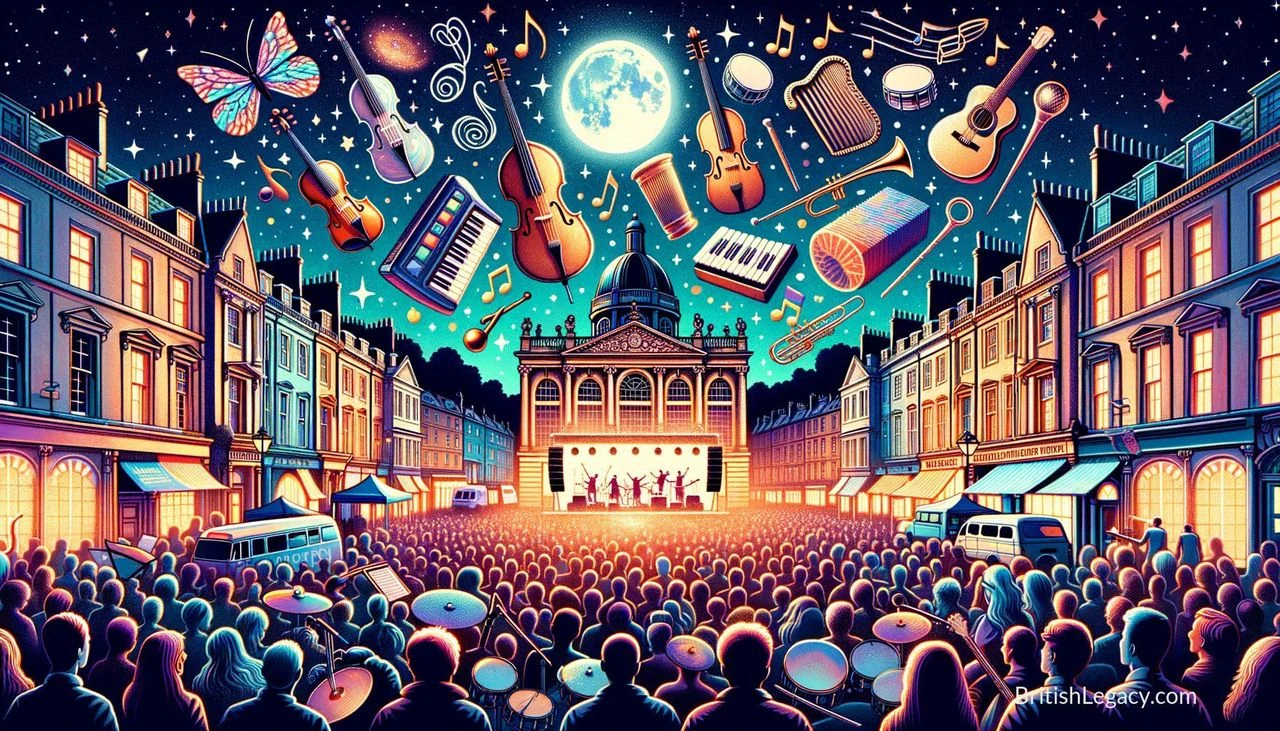
Since its founding in 1948, the Bath International Music Festival has brought performances in classical music, jazz, folk and world music to the historic city. Its programme connects different musical traditions, while its use of Bath’s established venues gives the event a distinctly local setting. The festival’s story is one of widening musical scope: from a classical foundation to a programme that also makes room for contemporary work and sounds from beyond Britain.
From a post-war beginning to a broader programme
The festival began in post-war Britain, when the country was rebuilding. It was established as a platform for classical music and, over time, developed into a broader event. That change is central to its identity: classical performance remained part of the programme, alongside jazz, folk and world music.
The festival’s range brings together forms with different histories and approaches. Classical music has included orchestral performances and soloists, as well as opportunities for emerging talent. Jazz adds improvisation; folk brings music rooted in regional traditions and storytelling; and world music introduces audiences to sounds from different parts of the globe. The programme’s value lies not in treating these strands as interchangeable, but in placing them alongside one another.
Performances in the city
Bath’s buildings and public spaces provide settings for the event. Performances have taken place at venues including Bath Abbey, the Assembly Rooms, the Roman Baths and the Theatre Royal. The festival has also used smaller spaces, such as courtyards and gardens, and brought performances into the city’s streets.
That spread of venues links the music to the city’s built environment and offers a contrast between formal concert spaces and less conventional settings. The festival is not confined to one hall: its presence across Bath gives audiences different ways to encounter the programme. The city is therefore more than a backdrop; its varied performance spaces are part of how the event is experienced.
Artists, new work and local participation
Artists named among those who have performed at the festival include violinist Yehudi Menuhin and singer Dame Janet Baker. The event has also presented new compositions, providing a place for contemporary composers and musicians as well as established performers. That combination gives the festival a role in both presenting familiar repertoire and making space for new work.
Its programme has also included workshops, masterclasses and interactive sessions with artists. These activities offer aspiring musicians and other participants opportunities to learn directly through musical practice. Schools and community groups have taken part in the festival’s educational and outreach activity. Such programmes extend the event beyond its scheduled performances, connecting visiting artists and audiences with people in the local community.
Why Bath International Music Festival deserves a place in British Legacy
The Bath International Music Festival merits a place in British Legacy because its history links a British city’s cultural life with a changing programme of music. Founded in 1948, it began with a classical focus and grew to include jazz, folk and music from around the world. That development matters: the festival’s identity rests not only on presenting performances, but on bringing distinct traditions into a shared public programme. Its named performers, including Yehudi Menuhin and Dame Janet Baker, are part of that history, while its presentation of new compositions points towards continuing musical creation.
The festival’s contribution is also grounded in its relationship with Bath and its participants. Performances in venues ranging from the Abbey and Assembly Rooms to gardens and streets connect music with the city’s public spaces. Workshops, masterclasses and activities involving schools and community groups provide ways for people to take part beyond attending concerts. Together, these features make the festival a specific example of cultural life in Britain: rooted in a city, open to varied musical traditions and concerned with passing musical knowledge to new participants.