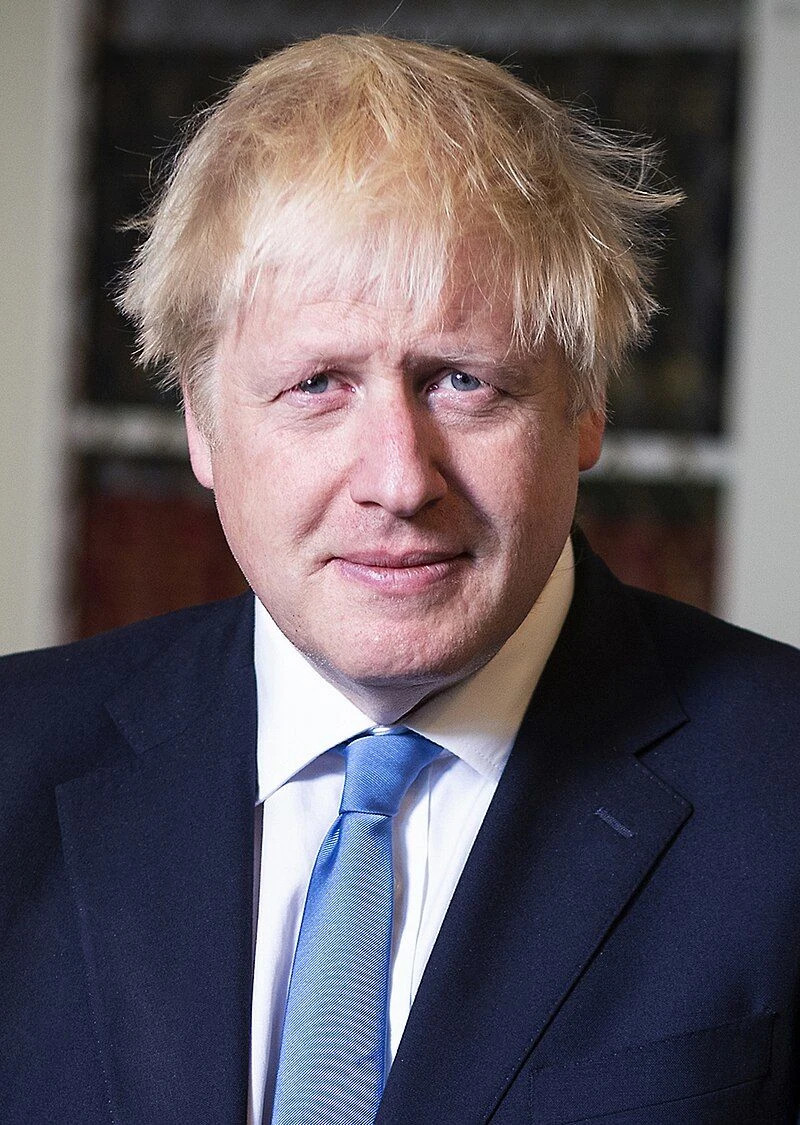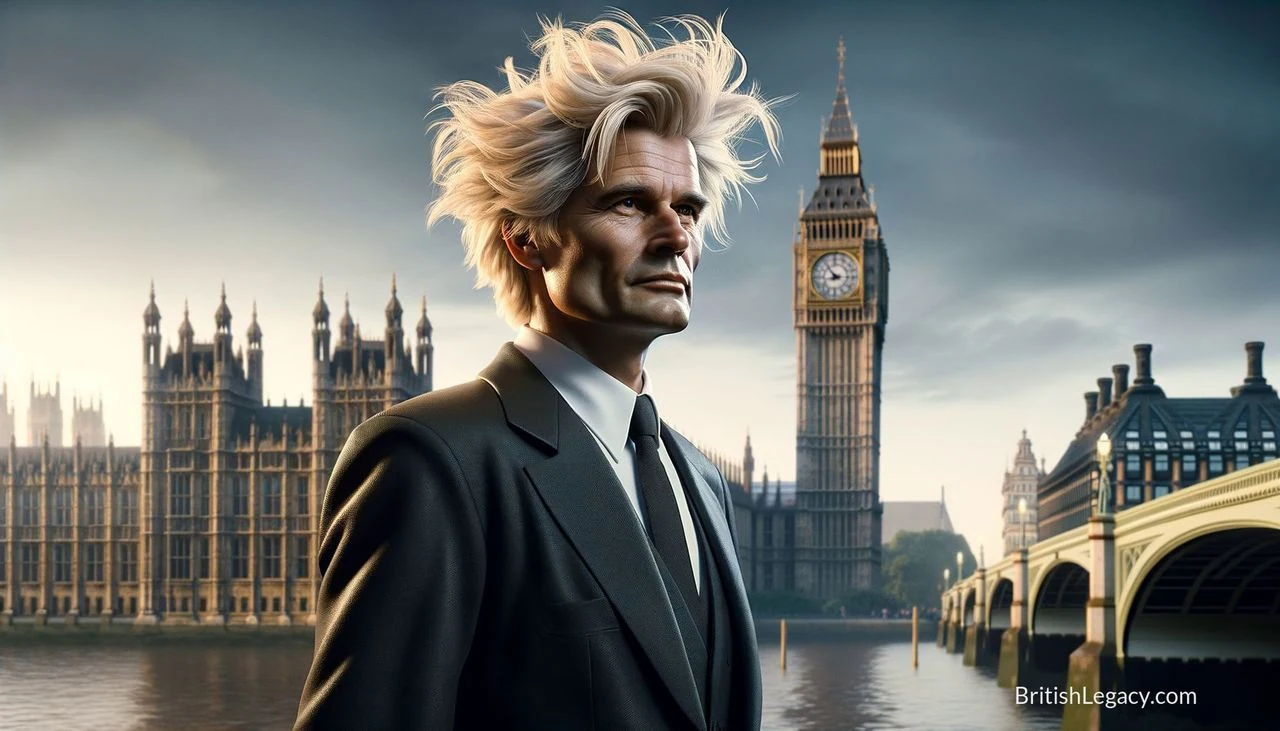
Boris Johnson’s rise to the highest office in British politics was built on two distinct kinds of influence: a journalist’s command of attention and a politician’s ability to win support beyond conventional party boundaries. As Mayor of London, he cultivated a public profile; as a leading campaigner for leaving the European Union, he helped reshape the Conservative Party and the country’s direction. His premiership brought Brexit into effect, but was also marked by the COVID-19 crisis and the Partygate scandal. Johnson left office in 2022 and Parliament in 2023. His legacy remains inseparable from both the political changes he drove and the controversies that brought his leadership to an end.
A journalist’s route into public life
Alexander Boris de Pfeffel Johnson was born in New York City on 19 June 1964 to British parents. His childhood included periods in the United States, Britain and Brussels. He won a scholarship to Eton College and went on to read Classics at Balliol College, Oxford, where he was elected president of the Oxford Union in 1986.
Johnson began his newspaper career at The Times, which dismissed him after he invented a quotation and falsely attributed it to the historian Colin Lucas. He then joined The Daily Telegraph, reporting from Brussels from 1989 to 1994. His dispatches, often critical of European integration, helped make Euroscepticism a more prominent theme in British political debate. From 1999 to 2005 he edited The Spectator, while building a public profile through television appearances and newspaper columns.
He entered Parliament as Conservative MP for Henley in 2001. He later served as shadow higher education minister and, briefly, as shadow arts minister. In 2008 he was elected Mayor of London, resigned his Commons seat and held the mayoralty until 2016, winning re-election in 2012. He returned to Parliament in 2015 as MP for Uxbridge and South Ruislip.
London and the Brexit campaign
Johnson’s mayoralty combined initiatives associated with his public image and projects begun under his predecessor, Ken Livingstone. His administration introduced the cycle-hire scheme that became popularly known as “Boris Bikes”; it proved popular, although it made a significant financial loss. Johnson also commissioned the New Routemaster bus and a cable car across the Thames between Greenwich Peninsula and the Royal Docks. London hosted the 2012 Olympic Games after winning the bid under Livingstone. As mayor, Johnson was co-chair of the organising board and oversaw transport preparations, including extra buses and more tickets for the Underground.
In February 2016, Johnson backed Vote Leave in the referendum on EU membership. He became one of the campaign’s most prominent advocates. The referendum result changed the course of British politics, but Johnson did not immediately replace David Cameron as Conservative leader: after Cameron resigned, Johnson withdrew from the leadership contest. Theresa May appointed him Foreign Secretary in July 2016. He resigned in July 2018, opposing her approach to Brexit negotiations.
Johnson won the Conservative leadership election in 2019 and became prime minister on 24 July. He pledged that the UK would leave the EU by 31 October, with or without a deal. His attempt to suspend Parliament during the Brexit dispute was ruled unlawful by the Supreme Court. After negotiations produced a revised withdrawal agreement, he called a general election. The Conservatives won a parliamentary majority of 80 seats in December 2019. The UK left the EU in January 2020; the later trade agreement with the EU came into force in May that year.
Government in crisis
The COVID-19 pandemic soon became the defining emergency of Johnson’s premiership. The government imposed a nationwide lockdown in March 2020. Johnson tested positive for the virus, was admitted to hospital and spent time in intensive care before recovering. The vaccination programme began in December 2020 and was among the fastest in the world. The response was also widely criticised: scrutiny focused on the timing of restrictions, public communication and the government’s test-and-trace system. Johnson’s defence of senior adviser Dominic Cummings after Cummings travelled during lockdown prompted a further loss of confidence in the government.
Partygate brought the conflict between public rules and conduct at the heart of government into sharp focus. Gatherings took place at Downing Street during pandemic restrictions. Johnson apologised to MPs for attending an event in the Downing Street garden in May 2020, saying he had believed it was a work event. In April 2022 he received a fixed penalty notice for breaching lockdown regulations. He became the first serving British prime minister to be sanctioned for breaking the law while in office.
In June 2022 Johnson survived a confidence vote among Conservative MPs, but the following month a wave of ministerial resignations followed revelations about his handling of allegations concerning Chris Pincher. Johnson announced his resignation as Conservative leader and prime minister on 7 July, remaining in office until Liz Truss succeeded him on 6 September. In June 2023, after receiving a draft of the Commons Privileges Committee report into whether he had misled Parliament over lockdown gatherings, Johnson resigned as an MP. The committee’s published report concluded that he had deliberately misled the House and recommended a 90-day suspension; the Commons accepted the report.
Beyond Downing Street
Johnson’s political communication relied on a recognisable mix of humour, classical allusion and informality. That style helped him become a familiar figure beyond Conservative politics and supported an electoral appeal that reached beyond the party’s traditional base. It also drew attention away from questions of policy and accountability, which repeatedly returned during his time in office. His political identity was not easily reduced to a single doctrine: commentators have described a combination of free-market conservatism, social liberalism and populist appeals to popular sovereignty.
His public record also extended beyond Brexit and the pandemic. His government joined the AUKUS defence pact with the United States and Australia, and responded to Russia’s 2022 invasion of Ukraine with sanctions and military aid. At the 2021 COP26 climate summit, hosted by the UK, Johnson called for greater action to reduce emissions. These decisions form part of an international and domestic record whose consequences reach beyond his time as prime minister.
After leaving Parliament, Johnson continued to write and broadcast. His memoir, Unleashed, was published in 2024. These later activities have kept him in public view, but they do not alter the central measure of his premiership: the United Kingdom’s departure from the European Union, alongside a record of crisis management and political conduct that remains sharply contested.
Why Boris Johnson deserves a place in British Legacy
Johnson deserves a place in British Legacy because his career illuminates a consequential period in the country’s political history. As a journalist reporting from Brussels, he helped give Euroscepticism a more accessible and emotionally forceful voice. As Mayor of London, he became a nationally prominent Conservative and oversaw a capital preparing for the 2012 Olympics, while promoting transport projects that left visible marks on the city. His contribution was not solitary: the Games followed a bid won under Ken Livingstone, and the cycle-hire scheme had been mooted by the previous administration. Recording those distinctions makes his record more, not less, useful to understand.
As prime minister, Johnson led the government that took the UK out of the EU and secured a large parliamentary majority on a promise to “Get Brexit Done”. That outcome changed the country’s relationship with Europe and gave his political project lasting consequences. His response to the pandemic and the events surrounding Downing Street gatherings also show why the legacy cannot be told as a story of electoral success alone. The fixed penalty notice and the Privileges Committee’s findings placed questions of law, trust and ministerial accountability at its centre. For British Legacy, Johnson’s story matters both for the constitutional and political change he helped deliver and for the standards of public office tested during his leadership.
Sources
Boris Johnson (revision 1378518024)
Adapted in part from Boris Johnson by Wikipedia contributors, under CC BY-SA 4.0. Text has been edited and combined with the existing article; this adapted text is shared under the same licence. Contributor history.