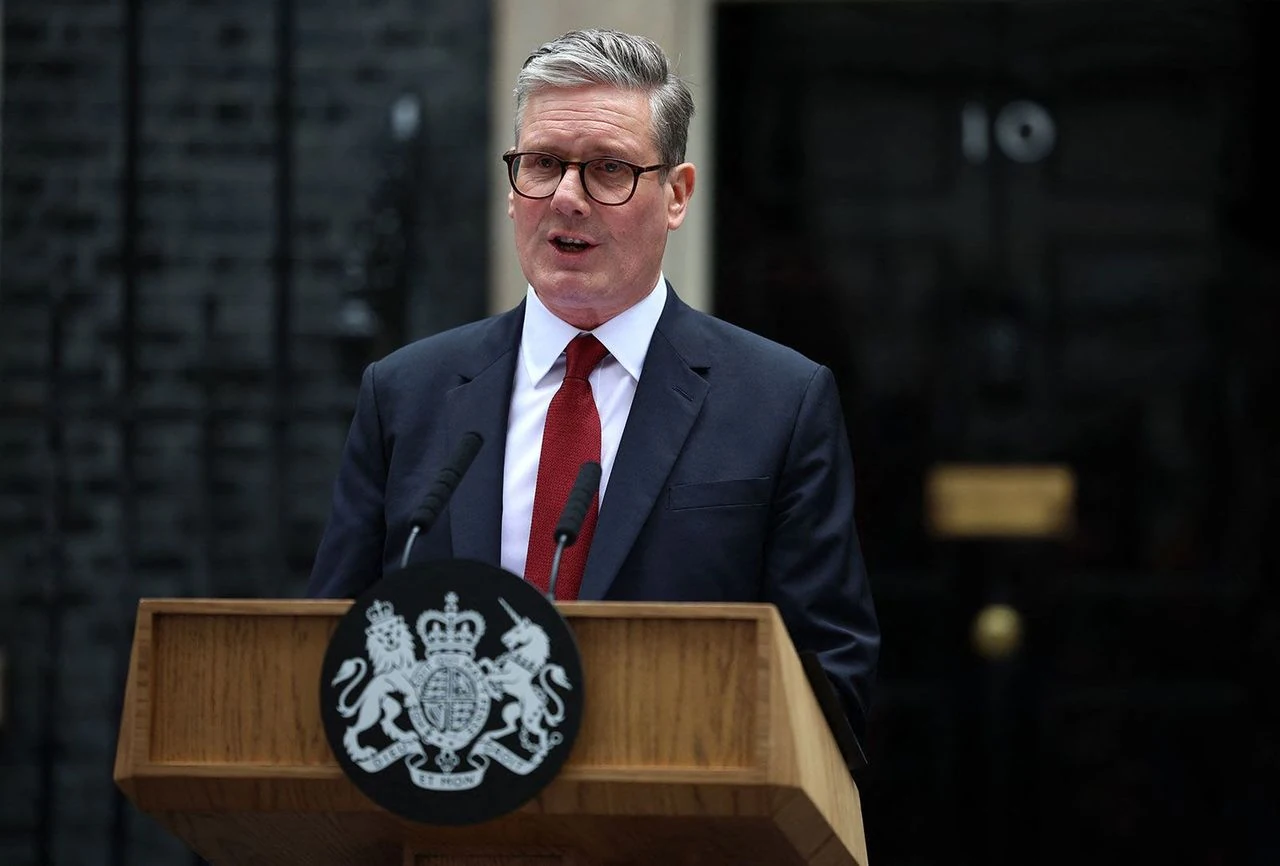
Keir Starmer’s career has taken him from criminal defence and the Crown Prosecution Service to the leadership of the Labour Party and the premiership of the United Kingdom. A human-rights barrister before entering Parliament, he became Director of Public Prosecutions in 2008, Labour leader in 2020 and prime minister in 2024. He left both the premiership and the party leadership in July 2026, then resigned as an MP in September. His record spans legal reform, a historic general-election victory and a turbulent period in government.
From Surrey to the Bar
Starmer was born in Southwark, London, on 2 September 1962, and grew up in Oxted, Surrey. His mother, Josephine, was a nurse; his father, Rodney, was a toolmaker. Both supported Labour. Starmer attended Reigate Grammar School, studied law at the University of Leeds and graduated in 1985. He completed a Bachelor of Civil Law at St Edmund Hall, Oxford, the following year.
Called to the Bar in 1987, Starmer worked mainly in criminal defence, with a specialism in human-rights law. He joined Doughty Street Chambers in 1990 and also worked as a legal officer for Liberty until that year. His cases included the McLibel litigation: he assisted Helen Steel and David Morris in English courts and represented them at the European Court of Human Rights. He defended people facing death sentences in several Caribbean countries and worked on cases concerning civil liberties and the death penalty.
His legal work also brought him into contact with questions of policing and public institutions. He advised the Northern Ireland Policing Board and the Association of Chief Police Officers, and served on the Foreign Office’s Death Penalty Advisory Panel from 2002 to 2008. In 2002 he became a Queen’s Counsel and joint head of Doughty Street Chambers. He later identified his work on policing in Northern Ireland as an influence on his decision to enter politics: it had shown him how change could be pursued from within institutions as well as through litigation.
Leading the Crown Prosecution Service
In 2008 Starmer became Director of Public Prosecutions and head of the Crown Prosecution Service (CPS), serving until 2013. The post placed him at the head of England and Wales’s public prosecution service. His tenure included the Stephen Lawrence murder case and the CPS’s decision to prosecute three Labour MPs and a Conservative peer over false accounting connected with the parliamentary expenses scandal; all were found guilty.
Other prominent decisions tested the independence and public responsibilities of the service. Starmer announced the prosecution of Chris Huhne for perverting the course of justice and oversaw changes to the handling of sexual-abuse investigations after the Jimmy Savile scandal, including the introduction of a panel to review complaints. In 2011 the CPS introduced changes that included its first paperless hearing. Starmer’s time in the role was not free of controversy: the service faced criticism over the prosecution of Paul Chambers in what became known as the “Twitter joke trial”, while the CPS said the decision was not Starmer’s to make.
He left the post in November 2013. In the 2014 New Year Honours he was appointed a Knight Commander of the Order of the Bath for services to law and criminal justice. The honour marked a legal career that had combined individual defence work with leadership of a national prosecution service.
From Parliament to Labour leader
Starmer was elected as the Labour MP for Holborn and St Pancras in May 2015. In his maiden speech, he paid tribute to his predecessor, Frank Dobson, and said he intended to follow his example of representing the constituency. Starmer supported the campaign for Britain to remain in the European Union in the 2016 referendum. After a brief period as Shadow Minister for Immigration, he became Shadow Secretary of State for Exiting the European Union in October 2016.
In that role, he challenged the government over its plans for leaving the EU and called for those plans to be made public. He supported a second referendum. His position reflected his opposition to Brexit, while his parliamentary task was to scrutinise the Conservative government’s negotiations and shape Labour’s response. The work made him a central figure in the party’s Brexit policy during a period of sharp disagreement in British politics.
After Labour’s defeat in the 2019 general election, Starmer stood for the party leadership. He won the contest on 4 April 2020, defeating Rebecca Long-Bailey and Lisa Nandy in the first round with 56.2 per cent of the vote. He took over from Jeremy Corbyn during the Covid-19 pandemic. As opposition leader, he initially said he would work with the government in the national interest, then became more critical of its handling of the pandemic.
His leadership sought to reposition Labour and present it as a credible alternative government. The party made substantial gains in the 2023 local elections and further gains in 2024, although its membership fell during his leadership. Starmer also committed the party to accepting the Equality and Human Rights Commission’s 2020 findings on antisemitism and apologised to Jewish people on Labour’s behalf. The period brought criticism as well as progress: Starmer faced accusations of abandoning pledges made during his leadership campaign, and his approach to the Gaza war caused divisions among Labour MPs and members.
Victory, government and departure
Labour’s 2024 general-election manifesto, Change, set out priorities including economic growth, infrastructure, healthcare, education, workers’ rights and clean energy. It promised a publicly owned energy company, Great British Energy, and the creation of Great British Railways. On 4 July Labour won 411 seats, securing a 174-seat majority and ending 14 years of Conservative government. The victory was decisive in parliamentary terms, though Labour won 34 per cent of the vote, a low share for a party forming a post-war majority government.
Starmer became prime minister on 5 July 2024. His government cancelled the previous government’s Rwanda asylum plan and established a Border Security Command. It agreed public-sector pay settlements and introduced an Employment Rights Bill, which became an Act in December 2025. It also established Great British Energy and announced investment in areas including housing, transport and a new nuclear power station at Sizewell C. Other choices proved contentious. The government restricted winter fuel payments for many pensioners before reversing most of the cuts in 2025; it also introduced an early-release scheme for some prisoners to address prison overcrowding.
Foreign policy formed a substantial part of the premiership. Starmer supported Ukraine and sought a closer relationship with European governments after Brexit. On Gaza, his government called for a ceasefire and increased humanitarian aid, suspended some arms export licences to Israel, and in September 2025 formally recognised the State of Palestine. Domestic pressures mounted alongside these decisions: Labour suffered poor election results, Starmer’s public approval fell, and his leadership faced growing criticism within the party.
On 22 June 2026, Starmer announced that he would resign as prime minister and Labour leader. He remained in office until the leadership contest concluded and formally left Downing Street on 20 July, when Andy Burnham succeeded him. On 1 September Starmer also resigned as an MP, ending his representation of Holborn and St Pancras. His departure closed a parliamentary career that had begun in 2015 and included a rapid rise from the backbenches to the premiership.
Why Keir Starmer deserves a place in British Legacy
Starmer’s place in British political history rests first on the transition between two demanding public roles. As Director of Public Prosecutions, he led the CPS through cases that drew intense public attention, including the Stephen Lawrence murder case and prosecutions arising from the expenses scandal. Earlier, his work in criminal defence and human-rights law included death-penalty cases and the representation of Helen Steel and David Morris at the European Court of Human Rights. Taken together, these roles show the different responsibilities that shape the British justice system: defending individuals’ rights, making prosecution decisions and leading a public institution.
His political legacy is also specific and consequential. Starmer led Labour from opposition to a parliamentary majority in 2024, ending 14 years of Conservative government. The result gave his party the authority to pursue a programme that included a publicly owned energy company, railway renationalisation plans, workers’ rights legislation and public investment. Those policies and the government’s other decisions remain open to political judgement; a place in British Legacy need not mean uncritical praise. It means recognising the scale of the constitutional and electoral change he led, as well as the controversies and reversals that accompanied his government. His career links legal practice, prosecution and elected government, making it a revealing account of how public service in Britain can move from the courtroom to the Commons and Downing Street.
Sources
Keir Starmer (revision 1379408845) · Keir Starmer
Adapted in part from Keir Starmer by Wikipedia contributors, under CC BY-SA 4.0. Text has been edited and combined with the existing article; this adapted text is shared under the same licence. Contributor history.