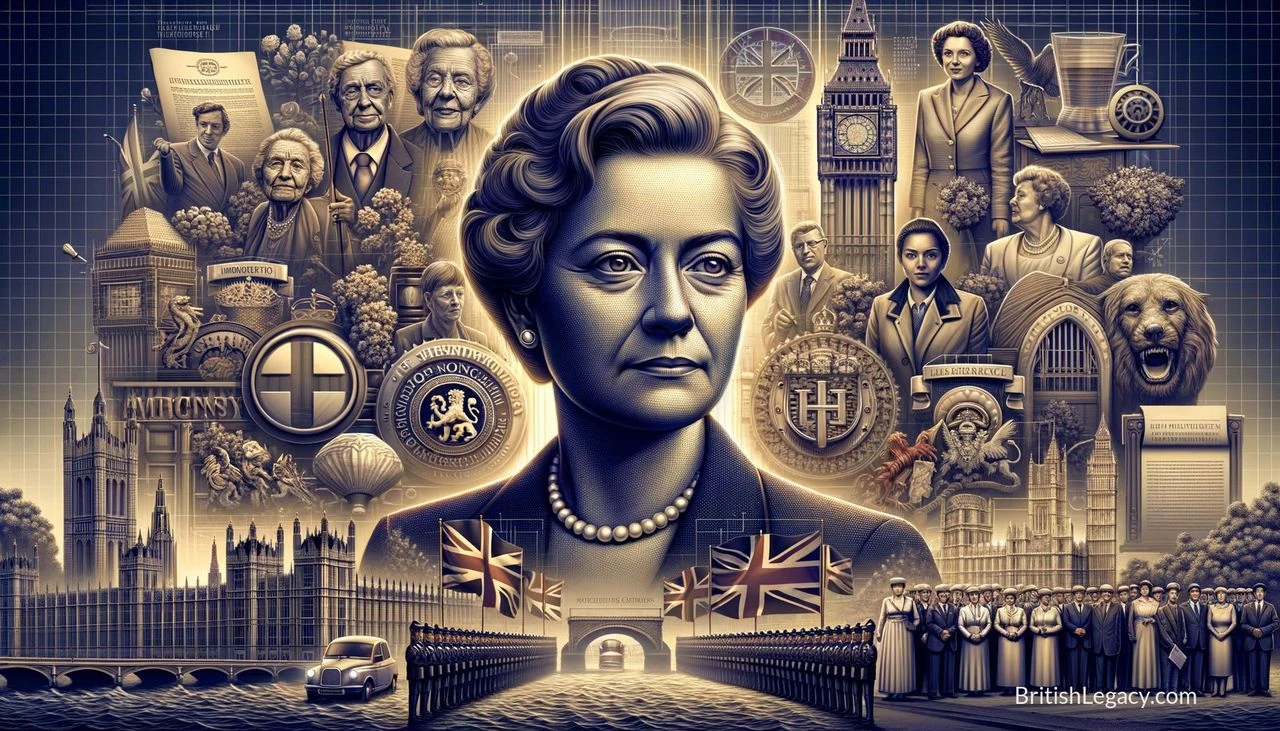
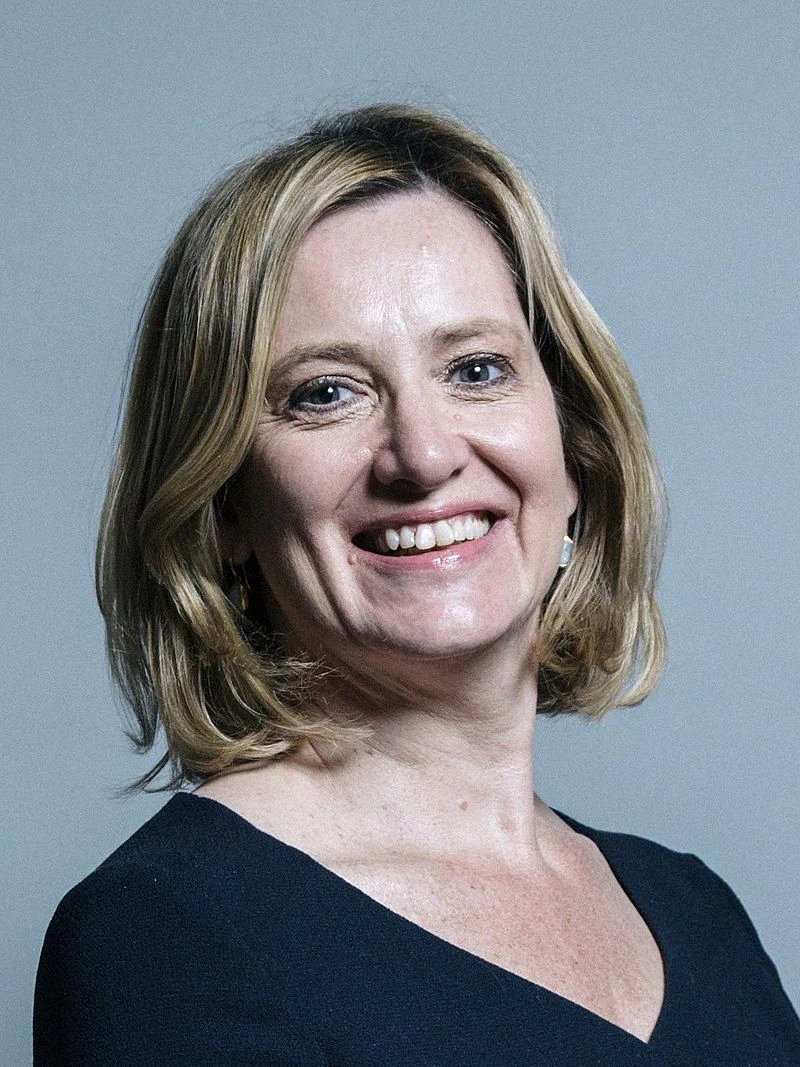
Amber Rudd’s route through British politics took her from investment banking to the Cabinet, where she held two of the country’s most prominent ministerial jobs. As Energy and Climate Change Secretary, she set out a timetable for ending the use of coal-fired power stations. As Home Secretary, she became closely associated with the Windrush scandal, resigning in 2018 after acknowledging that she had inadvertently misled MPs about immigration-removal targets. Her career also included work on local transport and fishing issues in Hastings and Rye, the constituency she represented from 2010 to 2019.
From finance to Hastings and Rye
Born Amber Augusta Rudd in Marylebone, London, on 1 August 1963, she studied history at the University of Edinburgh. After graduating, she joined J.P. Morgan & Co., working in London and New York. Her early career also included directorships at investment companies. In 1994 she helped find extras for the film Four Weddings and a Funeral, receiving a credit as its “aristocracy co-ordinator”.
Rudd first stood for Parliament in 2005, as the Conservative candidate in Liverpool Garston. After being selected for Hastings and Rye, she moved to the constituency in 2007. She won the seat in the 2010 general election, defeating Labour incumbent Michael Foster by 1,993 votes. She served on the Commons Environment, Food and Rural Affairs Select Committee and later held a series of government roles, including Parliamentary Private Secretary to Chancellor George Osborne and assistant government whip.
Constituency matters remained part of her political work. Rudd campaigned for the Hastings to Bexhill Link Road, which received government approval in 2013 after a decade of campaigning, and subsequently pressed for funding for its final stage. She also supported electrification of the Marshlink railway between Hastings and Ashford International, organising rail summits with transport decision-makers. Her maiden speech called for reform of the Common Fisheries Policy, and she took part in a campaign on behalf of the Hastings fishing fleet.
Energy, climate and the coal timetable
Rudd became Parliamentary Under-Secretary of State for Climate Change in 2014. After the Conservatives won the 2015 general election, she was appointed Secretary of State for Energy and Climate Change. The role put energy security, household costs and climate policy together in a department responsible for choices about the country’s future energy supply.
Her proposals included a fuel-poverty strategy published in March 2015, which aimed to improve the Energy Performance Certificate rating of fuel-poor homes to Band C by 2030. She also legislated for energy suppliers to provide a £140 winter discount to certain vulnerable consumers and to install energy-efficiency measures.
In November 2015, Rudd proposed that the UK’s remaining coal-fired power stations should close by 2025, with their use restricted from 2023. This was a timetable for a proposed phase-out, not a record of stations already closed during her tenure. Her approach to climate policy was contested: in 2015, Friends of the Earth criticised her support for addressing climate change while, in its view, dismantling established low-carbon policies. Rudd argued that public support should help technologies become viable without permanent reliance on subsidies.
She also campaigned for the UK to remain in the European Union during the 2016 referendum. In July that year, when Theresa May became Prime Minister, Rudd left the energy brief and was appointed Home Secretary.
The Home Office and Windrush
Rudd was Home Secretary from July 2016 until April 2018. She retained her Hastings and Rye seat in the 2017 general election, but with a majority of 346. Her time in the Home Office encompassed debate about immigration controls, policing, terrorism and the treatment of people who had settled in Britain decades earlier.
The Windrush scandal concerned members of the Caribbean “Windrush generation” who had arrived in the UK before 1973. Some were threatened with deportation when they could not prove their right to remain, despite having lived in the country lawfully; relevant records had been destroyed. Rudd apologised for their treatment. In April 2018 she announced that fees and language tests for citizenship applicants would be waived and that compensation would be paid to people affected.
The dispute intensified over whether the Home Office had targets for removing people from the UK and what Rudd knew about them. She first denied that removal targets existed, then said she had not known about them. After a leaked departmental memo revealed a target for enforced returns, she said she had not seen the memo, although it had been copied to her office. On 29 April 2018, she resigned, saying she had “inadvertently misled” the Home Affairs Select Committee on illegal immigration. Her departure placed ministerial accountability at the centre of the public response to the scandal.
Other Home Office decisions also drew criticism. In 2016, Rudd declined to open an inquiry or independent review into events at Orgreave during the 1984 miners’ strike. In 2017, she proposed requiring companies to disclose how many foreign workers they employed; the proposal was later dropped after criticism. These episodes formed part of a wider argument about how the government should exercise its authority over immigration, policing and public life.
Return to government and departure from Parliament
Rudd returned to the Cabinet in November 2018 as Secretary of State for Work and Pensions, succeeding Esther McVey. She also took on responsibilities as Minister for Disabled People after Sarah Newton resigned. In 2019 she again became Minister for Women and Equalities, a role she had previously held in 2018.
Brexit shaped her final months in government. Rudd had supported Remain in the 2016 referendum and later said a second referendum might be appropriate if Parliament could not agree on a way forward. She opposed a no-deal departure while in Theresa May’s Cabinet, but joined Boris Johnson’s Cabinet in July 2019. On 7 September she resigned from the Cabinet and gave up the Conservative whip, saying she believed the government’s main objective was leaving without a deal. She announced later that year that she would not contest the next general election and left Parliament in 2019.
After leaving Parliament, Rudd took advisory roles in the private sector and became a trustee of The Climate Group. She presented Split Opinion on Times Radio with her daughter, journalist Flora Gill, beginning in 2020. In 2022, Centrica appointed her as a non-executive director. Her career therefore continued to connect public debate about energy with work outside government.
Why Amber Rudd deserves a place in British Legacy
Rudd’s place in a record of modern British public life rests on the decisions she took in government and the consequences against which those decisions were judged. As Energy and Climate Change Secretary, she set out a proposed end-date for coal-fired power generation and worked on measures aimed at energy efficiency and fuel poverty. The proposed timetable was not the same as completing a transition away from coal, but it made the future of the UK’s energy mix a visible part of her ministerial record. Her disagreement with environmental campaigners over the balance between climate action and subsidy also captures a continuing policy question: how government can support cleaner energy while deciding what public funding should achieve.
Her time as Home Secretary gives that legacy a sharper and more difficult dimension. The Windrush scandal exposed the human cost of failures in immigration administration; Rudd apologised, announced measures for affected people and then resigned after the dispute over removal targets and her evidence to MPs. That sequence makes accountability, not uncomplicated achievement, central to her story. Her constituency work in Hastings and Rye adds a local dimension to a career often described through national crises: she pressed for a road link, railway improvements and attention to the fishing fleet. Taken together, these strands show how ministerial power, local representation and public responsibility intersect in British politics. Remembering Rudd requires attention both to the policies she pursued and to the controversy that ended her Home Secretary tenure.
Sources
Amber Rudd — revision 1379434723
Adapted in part from Amber Rudd by Wikipedia contributors, under CC BY-SA 4.0. Text has been edited and combined with the existing article; this adapted text is shared under the same licence. Contributor history.