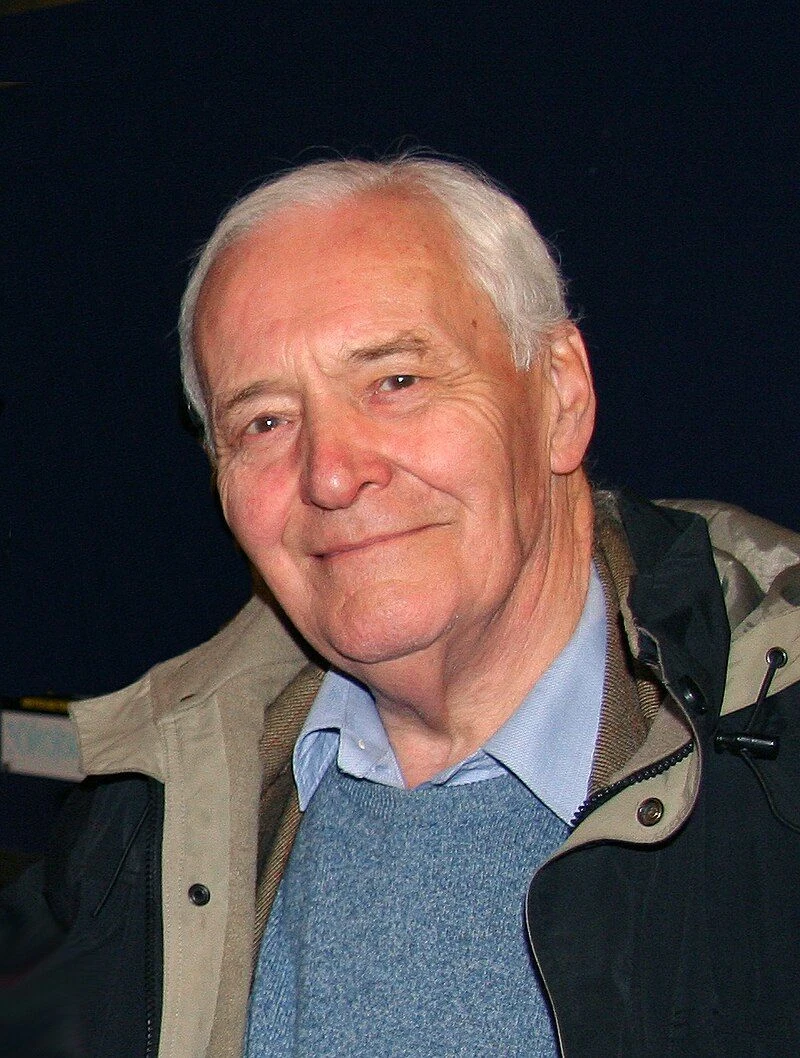
Tony Benn spent much of his political life asking who held power, how it was used and whether ordinary people could hold its holders to account. The questions shaped his campaign to return to the House of Commons after inheriting a peerage, his arguments for greater democracy in the Labour Party and his opposition to wars in Iraq and Afghanistan. A minister in Harold Wilson’s governments and a prominent figure on Labour’s left, Benn became known not only for his socialism but for a style of politics that put conviction and public argument at its centre.
A political inheritance, and a choice of his own
Born Anthony Neil Wedgwood Benn in Westminster on 3 April 1925, he was the son of William Wedgwood Benn, a Liberal MP who joined Labour and became the first Viscount Stansgate, and Margaret Holmes, a theologian and feminist. Tony was educated at Westminster School and New College, Oxford, where he read philosophy, politics and economics and became president of the Oxford Union in 1947.
During the Second World War, Benn served in the Royal Air Force, becoming a pilot officer and training and flying in Southern Africa. After the war he worked briefly as a BBC radio producer. He entered Parliament in November 1950, winning a by-election as Labour MP for Bristol South East after Stafford Cripps stood down through ill health. He was then the youngest MP, a position he held briefly.
His route back to the Commons became one of the most consequential episodes of his career. On his father’s death in 1960, Benn inherited the title Viscount Stansgate. Under the law then in force, the peerage prevented him from remaining an MP. He campaigned to renounce it, stood again in the resulting by-election in 1961 and won, but was disqualified from taking his seat. The Peerage Act 1963 made it possible to disclaim an inherited peerage; Benn was the first to do so. He returned to the Commons after winning a by-election in August 1963.
The episode made his argument about democratic choice tangible: an inherited status had removed him from a seat won at the ballot box. Benn remained a republican and later proposed constitutional changes that included abolishing the House of Lords. He was also a committed diarist, and his published journals recorded political decisions and disagreements as well as his changing views.
Ministerial office and changing views
In Harold Wilson’s Labour government, Benn served first as Postmaster General, from 1964 to 1966, and then as Minister of Technology, from 1966 to 1970. As Postmaster General he oversaw the opening of the Post Office Tower. In the technology role he was involved in the development of Concorde and the formation of International Computers Ltd. These posts gave him experience of government and industrial policy before he became one of the most recognisable voices on Labour’s left.
After Labour returned to government in 1974, Benn became Secretary of State for Industry and, from 1975, Secretary of State for Energy. As Industry Secretary he supported better conditions for workers and was involved in efforts to establish worker co-operatives in struggling firms, including the Meriden factory producing Triumph motorcycles. His proposals for a more self-reliant economy and greater public direction of industry met resistance within Cabinet. The gap between his ambitions and what he believed a government could achieve helped shape his later critique of how power worked in Britain.
Benn’s positions could change. As Minister of Technology and later Energy Secretary, he supported nuclear power. He subsequently opposed it, saying that his experience in office had changed his mind about its cost, safety and relationship to nuclear weapons. He also opposed British membership of the European Economic Community, arguing that the institutions developing around it lacked adequate democratic accountability. These shifts belonged to a wider politics in which he treated arguments and policies as open to reassessment, while continuing to insist that decisions should be answerable to the public.
Labour’s arguments, and the campaign beyond Parliament
By the late 1970s, Benn had become a leading figure on Labour’s left. He argued for more democracy within the party, greater workers’ control and an economy in which public institutions could direct industrial policy. He served as chairman of Labour’s National Executive Committee from 1971 to 1972. In 1981 he challenged Denis Healey for the party’s deputy leadership and lost by a very small margin. In 1988 he also stood unsuccessfully against Neil Kinnock for the leadership.
Benn’s prominence came with sharp divisions. Supporters valued his insistence that policy should be decided democratically and his criticism of concentrated economic power. Opponents feared the programme he advocated or rejected his account of how the country was governed. The terms “Bennism” and “Bennite” came to describe his politics and its supporters. His influence was not simply the result of holding office: he helped make arguments about party democracy, public ownership and economic power part of Labour’s continuing disputes about its purpose.
He remained a committed parliamentarian through defeats and changes in political circumstances. After boundary changes abolished Bristol South East, Benn failed to secure selection for the new Bristol South seat. He lost in Bristol East in 1983, then returned to the Commons as MP for Chesterfield in a 1984 by-election. He continued to argue for socialism, backed the miners during the 1984–85 strike and opposed the use of military force to resolve the Falklands dispute. In 1991 he proposed a Commonwealth of Britain Bill, setting out a vision of a democratic, federal and secular republic. The proposal included a House of the People and elected institutions across the United Kingdom.
Benn chose not to stand again at the 2001 general election. He described the decision as leaving Parliament to “spend more time on politics”. Outside the Commons, he became president of the Stop the War Coalition and a prominent opponent of the wars in Afghanistan and Iraq. He addressed the large London demonstration against the Iraq War in February 2003 and travelled to Baghdad, where he interviewed Saddam Hussein. He also continued to speak at public events and festivals, and toured with a one-man stage show and with folk singer Roy Bailey.
Diaries, public memory and a long afterlife
Writing was a central part of Benn’s public work. Nine volumes of his diaries were published, alongside collections of speeches and political essays. The journals offer a record of his changing outlook and the arguments within government and party politics; they also make it harder to present his career as a simple march towards a settled position. Benn’s own preferred account of political influence was modest: he said he would like his gravestone to read, “He encouraged us.”
He died at home in London on 14 March 2014, aged 88. His funeral took place at St Margaret’s Church, Westminster, and ended with the singing of “The Red Flag”. Tributes came from political leaders across party lines. His connection with Bristol, the city where he first served as an MP, remained visible in later commemorations: a bust was unveiled in City Hall in 2005, and the regional Unite office on Victoria Street was renamed Tony Benn House in 2012.
Why Tony Benn deserves a place in British Legacy
Tony Benn deserves a place in British Legacy because his public life joined a distinctive political argument to practical contests over British institutions. His campaign to disclaim the peerage he inherited helped bring about the Peerage Act 1963 and enabled him to return to the Commons. That was more than an unusual personal episode: it brought the conflict between inherited privilege and electoral choice into view, and changed the law for others in the same position.
His contribution also extended across government and political debate. As a minister, Benn worked on technology and industrial policy, oversaw the opening of the Post Office Tower and supported worker co-operatives. Later, he pressed for more democratic control of the Labour Party and public life, while his diaries preserved an unusually sustained account of political argument from inside and outside office. His campaigns against the wars in Iraq and Afghanistan carried his case for public accountability beyond Westminster. Readers may disagree with many of his conclusions; the importance of his legacy lies partly in how directly he asked who made decisions, who benefited and how the public could challenge them. His career gives British Legacy a specific story of democratic reform, socialist politics and persistent dissent within British public life.
Sources
Tony Benn — Wikipedia revision 1376657529
Adapted in part from Tony Benn by Wikipedia contributors, under CC BY-SA 4.0. Text has been edited and combined with the existing article; this adapted text is shared under the same licence. Contributor history.